ISLAMABAD
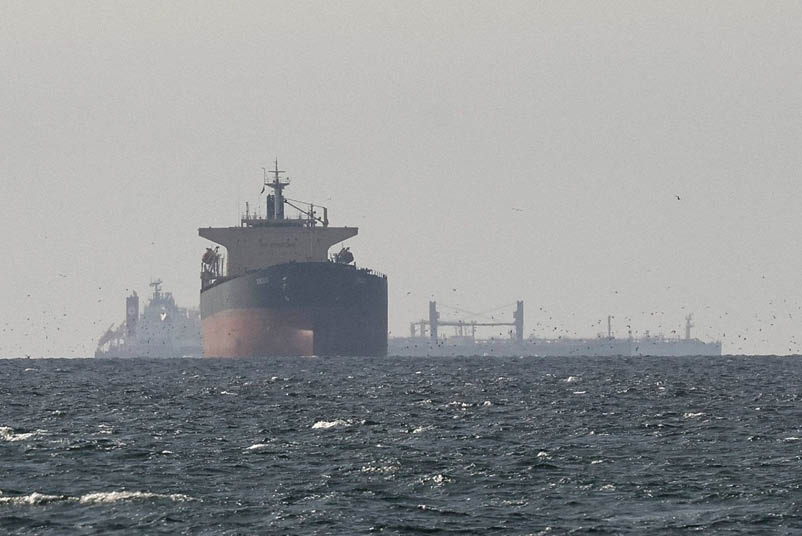
Oil futures fell back slightly on Tuesday, consolidating after a surge in the previous session in reaction to the continued fighting between Hamas and Israel that began on Saturday.
The prices, however, went slightly down as traders weighed the impact of the war on supply. As of 1250 hours GMT, Brent, the international benchmark for two-thirds of the world’s oil, shed $0.35 (-0.40 percent) to reach $87.80 a barrel.
However, the price of Russian Sokol increased by $3.04 (+3.96 percent) to $79.90. Arab Light prices witnessed an increase of $3.09 (+3.54 percent) to reach $90.41 a barrel. On the other hand, the price for Opec Basket decreased to $87.30 with a decrease of $1.21 (-1.37 percent). The OPEC Reference Basket of Crudes (ORB) is made up of Saharan Blend, Girassol, Djeno, Zafiro, Rabi Light, Iran Heavy, Basra Light, Kuwait Export, Es Sider, Bonny Light, Arab Light, Murban and Merey.
A sustained increase in energy prices due to the Israel-Gaza war could affect global economic growth, although it is too early to make any assessment, the International Monetary Fund said on Tuesday.
“One of the things we have observed already is that oil prices have increased somewhat over the past few days, by about 4 per cent,” Pierre-Olivier Gourinchas, director of research at the IMF, said at a press briefing on the sidelines of the IMF-World Bank annual meetings in Marrakesh on Tuesday.
“We see often in situations where there is geopolitical instability in the region … we see spikes in energy prices, in oil prices. We have seen that in the previous crises and conflicts. This reflects the potential risk that there could be of disruption in transportation or production of oil in the region,” he said.
However, it is too early to assess how much of those movements in oil prices will be sustained, he said. “The work we have done at the research department at the fund suggests that if there is something like a 10 percent increase in oil prices, this would weigh down on global output by 0.15 percent in the following year and will increase global inflation by 0.4 percent,” he said.