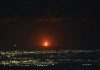
Barely a day after renewed fears of a wider Middle Eastern confrontation, explosions rattled Bahrain early on Sunday as Iran launched its second drone attack against American military assets in the kingdom in three days. Tehran’s Revolutionary Guards claimed to have dispatched six drones against a US air-defence radar installation at the Al-Riffa helicopter base, while Bahraini authorities said their forces intercepted the incoming aircraft. Air raid sirens sounded across the island nation, prompting authorities to urge residents to seek shelter for the first time since September. The incident has brought into sharp focus the dangers of a military confrontation that refuses to end, even as diplomatic efforts appear to be losing what little momentum they had. The assault followed American strikes on Iran’s Qeshm Island, with Tehran presenting its actions as retaliation for Washington’s continued military operations. The exchange reveals the limits of the present strategy. Each side claims to be responding to the other’s aggression, while countries hosting American installations find themselves increasingly exposed to the consequences.
Bahrain’s objection deserves particular attention. Its Foreign Ministry has warned against turning the kingdom into an arena for settling scores. That is a reasonable demand from a sovereign state whose security cannot be treated as collateral in a confrontation between Washington and Tehran. Already, more than eight months of hostilities have exposed how quickly military exchanges can disrupt the commercial arteries upon which the region’s prosperity depends. The Strait of Hormuz remains at the centre of this predicament, with restrictions on shipping and the American naval blockade keeping energy markets on tenterhooks. As for Pakistan, there is little comfort in watching another Gulf neighbour come under attack. Islamabad’s longstanding strategic ties with Saudi Arabia, its close relations with Bahrain and Qatar, and its shared border with Iran require careful diplomacy that protects national interests without adding to the confrontation. Pakistan has consistently supported the sovereignty and security of Gulf states while urging a negotiated settlement to the conflict. There is an economic reckoning to consider as well. Pakistan’s dependence on imported energy leaves it exposed to disruptions in Gulf shipping, while millions of Pakistanis living and working across the region depend on its continued stability. Every fresh military exchange threatens consequences extending well beyond the countries firing the weapons.
Iran’s security concerns arising from American and Israeli military operations cannot be dismissed. Its attempt to strike American facilities in neighbouring sovereign states, however, risks widening the very conflict it seeks to resist. Bahrain’s defences appear to have held against the latest attack. The same cannot yet be said of the region’s fragile political equilibrium. With retaliatory strikes becoming increasingly frequent, the fear is that the next incident may leave far less room for restraint. The Middle East has already paid dearly for this war.
Its neighbours should not be made to pay an even higher price.