ISLAMABAD
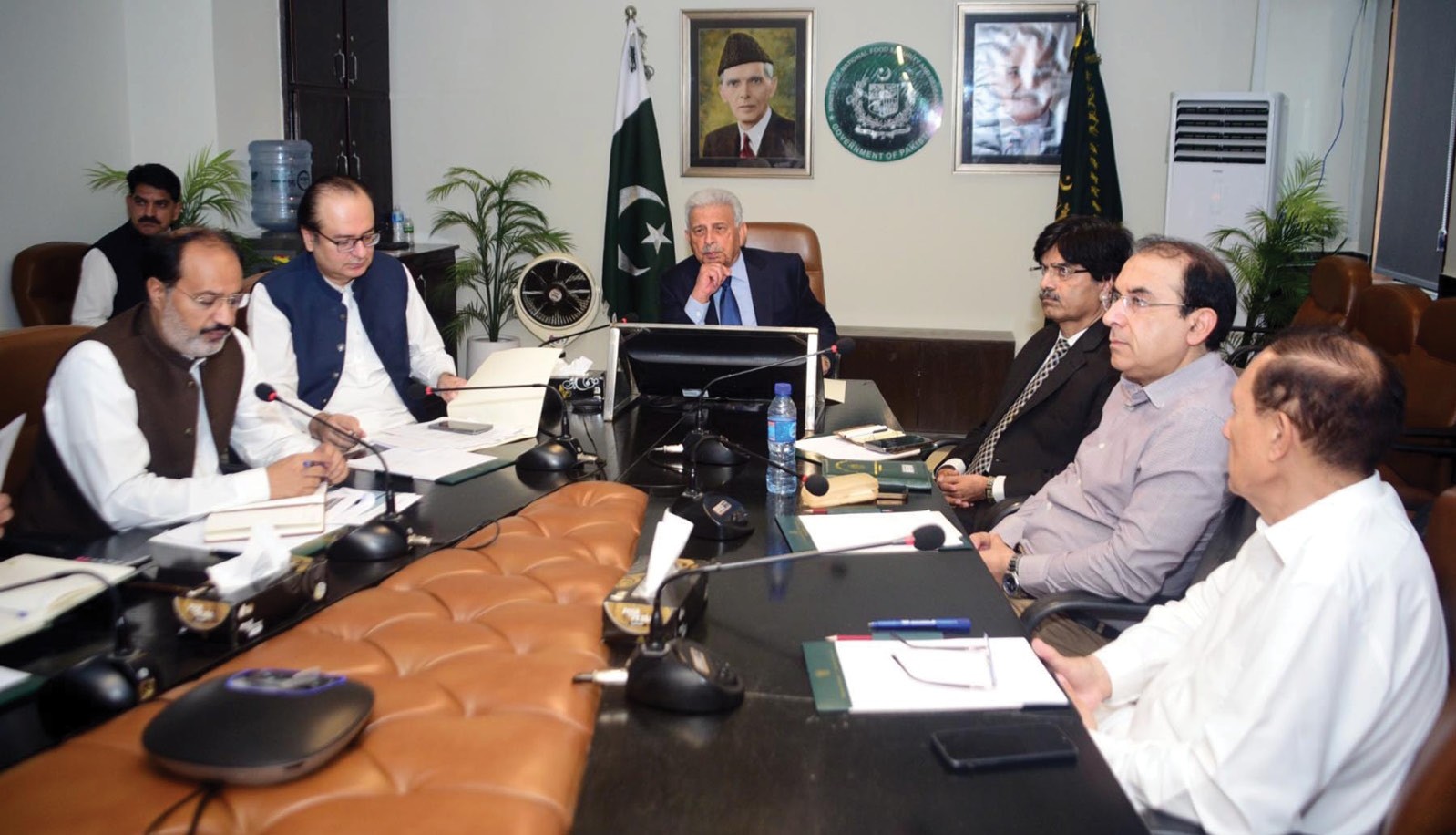
The caretaker Minister for Planning, Development & Special Initiatives Muhammad Sami Saeed on Thursday said Pakistan was committed to the agenda of the International Conference on Population and Development (ICPD) held in Thailand last month.
He made these remarks while addressing the launching ceremony of two reports jointly compiled by the United Nations Population Fund (UNFPA) and Pakistan Institute of Development Economics (PIDE).
“We are committed to the population conference agenda and our delegation to the regional conference made a bit of contribution in it, said the minister while appreciated the research work carried out by the UNFPA and PIDE researchers, adding that “Pakistan is the first country in the region to delve into this kind of effort which is very useful for policymakers, academicians and researchers.”
The reports titled “National Time Transfer of Account (NTTA); and National Transfer of Account (NTA)” have been meticulously developed by PIDE in close collaboration with the UNFPA. The primary objective of the NTA report is to elucidate the intricate linkages between population growth, evolving age structures, economic growth, public finances, and other pivotal facets of the macro-economy, addressing aspects of gender and generational equity. The NTA, however, has limitations in capturing unpaid work falling outside production boundaries.
The study found that in Pakistan, men typically commence their working lives at the age of 10 and reach the peak of their earnings by the age of 49. However, their consumption frequently eclipses their income during both early and later years, a gap often compensated for by other household members who possess a surplus. In stark contrast, women consistently experience a trend where their consumption surpasses their income at all ages, primarily due to their limited participation in the labor force.
The report explains that while men dominate formal market-based economic contributions, accounting for 78 percent of such activities, women take the lead in the informal non-market activities, frequently overlooked by traditional economic metrics. Women’s per capita annual production value in non-market work significantly exceeds that of men, highlighting their critical role in household and caregiving activities and underlining their substantial yet often unrecognized contributions to the economy.
To address this, the study introduced NTTA for valuing unpaid work and its methodology divides unpaid work into general household production, care work and learning activities. The Planning Minister said that the population demographics had changed and the related themes were ‘very important’ as Pakistan was a populous country and had a large youth bulge. “So, any analysis that captures the inter-generational dynamics is very useful and also the computation of the unpaid work that women contribute is also very important,” he said.
Furthermore, the minister also highlighted the significance of the research work that had been done at the provincial level as “We have been struggling for many years to prepare provincial GDPs”. He said the government would use these reports in the process of policymaking and development planning initiatives.
About the report regarding the gendered economy, the minister said these could make a valuable contribution to society in terms of family institutions and societal fabric and the economic well-being of the family and the country. “The report does well to confirm some of the generally known truths about the various aspects of this issue.” He said it was a known fact that the burden of household responsibility fell equally on women and that had implications for women’s participation in the labour market and overall economic development of the country.
“The report also confirms the generally known fact that there is a correlation between the division of unpaid work and economic status of the households,” he added.
The minister said the provincial variations in these situations were also very helpful in addressing the issues of regional disparities, allocation of resources, youth and general specific policies.
“I feel that these reports are very useful and in due course of time, we will take advantage of the research that has been done,” the minister remarked.