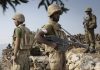
Pakistan faces one of its toughest security challenges in years today. The growing wave of terrorist attacks, especially in Khyber Pakhtunkhwa (KP) and Balochistan, has created fear and instability. A recent report by The Diplomat highlights how political differences inside the country are making this crisis worse.
The report says that both the federal and provincial governments are not on the same page. While the Centre, led by the Pakistan Muslim League-Nawaz (PML-N), believes in strong military action against militants, the KP government under Pakistan Tehreek-i-Insaf (PTI) still gives priority to dialogue with the banned Tehreek-i-Taliban Pakistan (TTP). This difference has made it difficult to form a united national strategy.
History shows that Pakistan’s counter-terrorism policies have often swung between force and talks. When Imran Khan was prime minister from 2018 to 2022, his government supported negotiations. Thousands of TTP fighters were even resettled in Pakistan as part of a rehabilitation plan. The idea was to reduce violence by winning militants back into the fold.
But critics said this was also meant to please the Afghan Taliban, in the hope that they would act against the TTP. The outcome was damaging. Instead of peace, militants felt stronger and freer to cross the border and attack. This has now left Pakistan paying a heavy price.
Learning from the failure, the current government in Islamabad has firmly rejected talks with the TTP. Security forces too now see no space for dialogue, believing that military action is the only way forward. However, the PTI-led KP government has not fully accepted this policy shift.
This gap between Islamabad and Peshawar has raised serious concerns. At a time when the threat of militancy is once again rising, Pakistan cannot afford a divided approach. Unity is essential. Without one clear and strong policy, efforts to bring lasting peace will remain weak.