JAVED KHAN
PESHAWAR
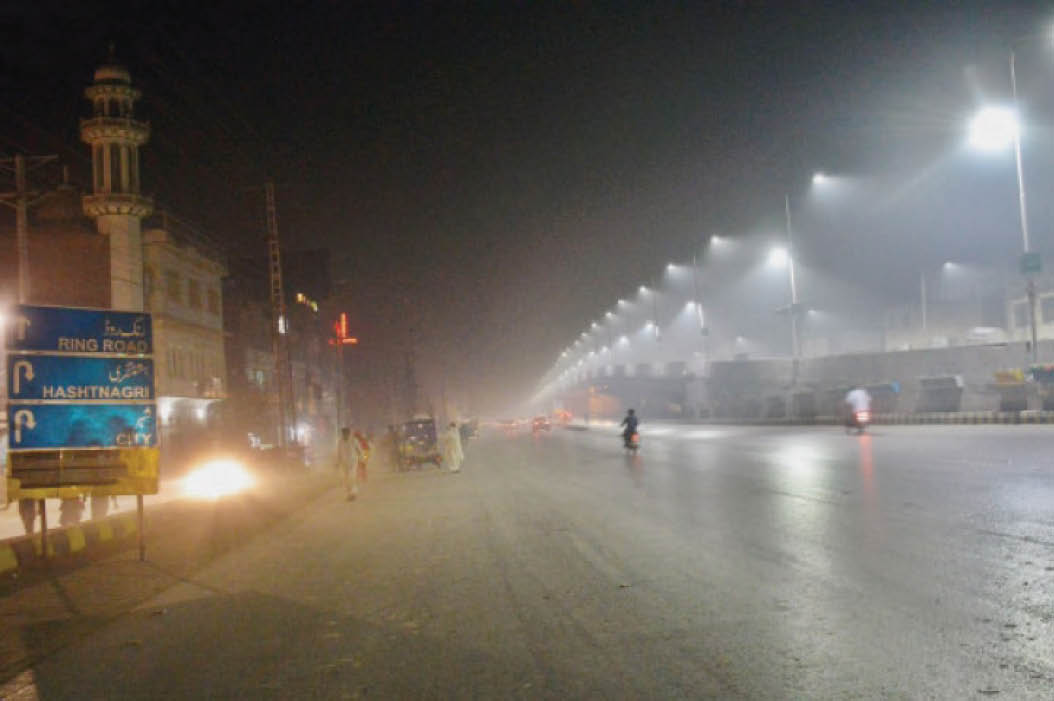
Peshawar has once again emerged as the most polluted city in Pakistan, recording hazardous air quality levels for the second time this week.
At 6:00 pm on Wednesday, the city’s Air Quality Index (AQI) stood at a staggering 579, placing it firmly in the “hazardous” category for PM2.5 (particulate matter) concentrations.
By 8:40 pm, Peshawar had dropped to the third most polluted city nationwide, with an AQI of 395, still classified as hazardous and posing significant health risks, particularly for vulnerable groups such as children and the elderly.
PM2.5 levels in the city were recorded at 14.7 times higher than the World Health Organization’s recommended annual guideline. Air quality readings in Peshawar are compiled from 10 monitoring stations across the city.
Air quality across Pakistan remains alarmingly poor, with many major urban centers reporting AQI readings above 200.
Meanwhile, smog levels in major cities were expected to rise further in the coming days due to persistent dry weather conditions, according to an advisory issued by the Pakistan Meteorological Department (PMD).
The department highlighted that industrial emissions, vehicle exhaust, and stagnant weather patterns are contributing to increased air pollution, posing serious risks to public health and the environment.
The PMD explained that smog, a mixture of smoke and fog, typically develops from November to mid-December.
Current conditions, including low air movement, low temperatures, and high humidity, are favorable for the accumulation of harmful pollutants and fine particles.
Dense smog is likely to affect several areas of eastern Punjab, including Lahore, Gujranwala, Sheikhupura, Kasur, Nankana Sahib, Faisalabad, Multan, Bahawalpur, Rahim Yar Khan, Bahawalnagar, and Khanpur and plain areas of KP, the department stated.
Health experts warn that rising smog levels may increase cases of respiratory illnesses, asthma, and other pollution-related health problems. Children, the elderly, and those with pre-existing medical conditions are particularly at risk.