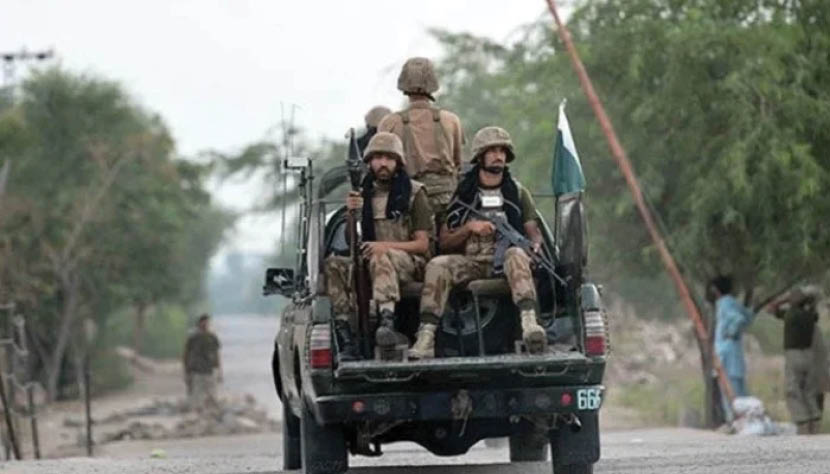
A petition before the Lahore High Court accuses Punjab’s Crime Control Department of turning policing into a conveyor belt of death, with nearly 1,100 citizens killed in encounters since January 2025.
The court is not being approached for the first time. According to Lahore High Court Chief Justice Aalia Neelum, her courtrooms now see roughly 50 such petitions a day. In one hearing, she asked why, whenever police claim a suspect fired first, the bullet always finds its target and never the officers or their vehicle. One sentence in the petition immaculately captured the rot: encounters have become an “alternative to the criminal justice system.”
This is not a new disease. Pakistan has lived with this pathology for decades. What is new is the scale and the administrative blessing. Punjab’s own record shows 544 encounters from 2018 to 2022. When the CCD arrived this year, the pace surged, pulling the covers off the credibility of due process. Other provinces know this story too. Karachi saw it in the era of Rao Anwar, whose name still evokes dread and who has been implicated in nearly 200 fake encounters. Human Rights Watch warned long ago that Pakistani police routinely resort to fake encounters when evidence is weak; the 2016 report documented officers who admitted staging gunfights to show “results.”
The law intended to prevent such abuse sits dormant. The Custodial Death (Prevention and Punishment) Act 2022 specifically mandates FIA inquiries into every custodial death–a straightforward instruction. Petitioners told the LHC that not a single case under this law has been forwarded. A well-written statute is worthless without the will to enforce it. That is where every provincial and federal government has failed, regardless of party.
Police briefings tout every encounter as a gun battle with hardened criminals. Yet there is no independent verification. No body cameras and no third-party witnesses. Only the police, telling their own story. Reform is still possible. Pakistan’s own police laws provide a framework. Public Safety Commissions exist on paper.
Sadly, in the real world, they are starved of power and appointments. Governments have little appetite for oversight that could expose their own role in demanding quick results, but societal prejudice helps sustain this pattern. When a man is labelled a robber or a drug dealer after death, many assume guilt without asking how the police verified anything.
The public conversation too often ends with “they must have done something.” That reflex grants impunity.
There is no mystery about what must come next. FIA should open inquiries into the backlog of custodial and encounter killings. Meanwhile, the courts can direct provincial governments to demand quarterly disclosures, including the number of encounters, location, names, FIRs, and forensic details. These steps are neither radical nor anti-police. They are pro-state. Policing that depends on killing suspects corrodes public trust and turns crime-fighting into theatre. Even officers who follow procedure are overshadowed by colleagues who prefer shortcuts.