KARACHI
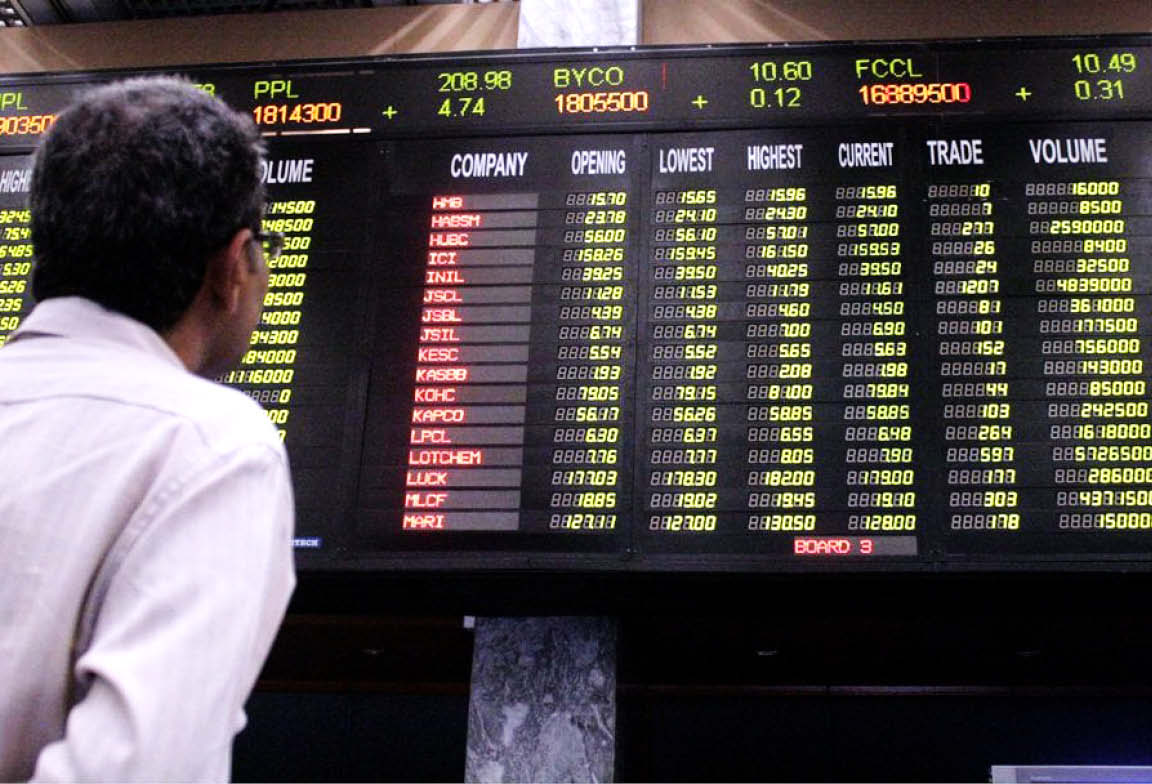
Pakistan Stock Exchange (PSX) managed to rise 0.27 percent last week despite political and economic uncertainties, and the benchmark KSE-100 Index gained 111.58 points to close at 41,599.18 points.
The PSX remained lacklustre amid low-volume sessions last week despite a mix of positive and negative developments. The bullish momentum remained a far cry in any session of the week as cautious investors remained on the sideline due to the current economic situation of the country.
The Finance Division Saturday clarified the International Monetary Fund (IMF) has not raised concerns over the government’s possible use of loans from the international lender for electioneering. Pakistan has to complete actions demanded by the IMF, such as reversing subsidies in its power, export and farming sectors, hikes in the prices of energy and fuel, and a permanent power surcharge, among other measures. The IMF programme will disburse another tranche of $1.4 billion to Pakistan before it concludes in June. Funds from the lender will also unlock other bilateral and multilateral financing for the cash-strapped country.
After losing 754.4 points (-1.79 percent) by the benchmark index in the preceding week, the market recouped losses in the first two sessions of the week and gained 230.84 points and 287.82 points on Monday and Tuesday, respectively, following clarity on political front due to the end of sit-in by ruling parties in front of the Supreme Court building.
The IMF Resident Representative’s dismissal of rumors suggesting that Pakistan would need to raise $8 billion instead of $6 billion to meet external debt repayments, helped improve investor confidence. Furthermore, petrol and high-speed diesel prices dropped by Rs12 and Rs30 per liter respectively, which was also a welcome news.
However, the PSX turned bearish for the next two sessions on the back of rising political temperature. The last session proved well for the bourse and the benchmark index gained 157.11 points, to close the week on a positive note.
Among other indices, the KSE All Share Index surged by 0.87 percent to 27,644.46 points from 27,406.52 points, while KMI All Share Islamic Index increased by 0.81 percent to 19,931.26 from 19,771.47 points on a week-on-week basis. The benchmark KSE-100 Index reached its peak at 42,110 points and lowest point at 41,310 during the week.
Overall volumes during the week remained 652.6 million shares. The average trading volume reached 130.5 million shares, showing a 2 percent decrease on a week-on-week basis. The average traded value settled at $12.1 million, down by 14 percent as compared to the preceding week. The market capitalisation witnessed a notable increase of Rs50 billion during the week, reaching a total value of Rs6,263 billion.
Foreign investors were net buyers last week, with a total of $0.6 million invested as compared to a net buy of $1.1 million the preceding week. The majority of buying activity was observed in exploration and production companies ($0.7 million) and commercial banks ($0.7 million). Locally, selling was reported by insurance companies ($4 million), followed by mutual funds ($1.5 million).
On the economic front, the federal government targets a fiscal deficit at 5pc of GDP for the upcoming fiscal year 2023-24, with a revenue target of Rs9 trillion. The current account posted a surplus of $18 million in April 2023 while the LSM output declined by 8.1pc year-on-year during 9MFY23. Moreover, the State Bank’s forex reserves fell by $72 million to $4.38 billion, while Pakistani rupee slipped against the US dollar for the second straight week and fell by 0.19 percent on a week-on-week basis.
Arif Habib Limited in its report anticipated that the upcoming week may be influenced by the outcome of the International Monetary Fund (IMF) loan programme, specifically its ninth review. They said that realisation of funds and commitments from other countries and financial institutions could help restore market confidence.
The report said that the KSE-100 Index traded at a price-to-earnings ratio (PER) of 3.8x (2023), significantly lower than the Asia Pacific regional average of 11.1x. Additionally, the PSX offered a dividend yield of approximately 11.9 percent compared to the regional average of 3.0 percent.