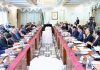
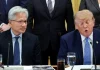
The National Assembly’s failure to conduct a condolence session on Monday-derailed by sloganeering, placards, and walkouts-was less about one man’s death than about the death of parliamentary norms themselves. That the House could not maintain silence long enough to honour multiple former lawmakers, including Mian Azhar, is, in essence, the culmination of a decade-long erosion of institutional seriousness.
There is nothing new here. For years, we’ve grown used to budget sessions devolving into fistfights and opposition benches remaining empty for entire legislative cycles. Speakers, instead of upholding procedural order, have been weaponised to protect party interests.
Calling a spade a spade, this debacle goes beyond mere protest. While the PTI’s grievances about the alleged political victimisation of its leaders are valid (a routine tragically familiar to every political party), the only meaningful path forward lies in dialogue. It’s a point lost on firebrand opposition leaders. Did any of them consider the law minister’s remark about Imran Khan repeatedly ignoring dialogue offers from the PML-N? The principle that controversial rulings are best addressed through legal challenge deserves repeating, as does the call for the higher judiciary to let the law take its course.
The PTI’s strategy of confrontation, from refusing to recognise the Assembly after the 2022 vote of no confidence to disrupting routine proceedings, has made absenteeism and walkouts the new normal for opposition politics. Yet this offers no justification for the government’s conduct. The ruling alliance has shown little interest in reviving Parliament as a forum for debate. It legislates through numerical dominance instead, while bills are rushed through with minimal scrutiny, and committees remain dormant. The Assembly exists only on paper, as in practice, it drifts further from political relevance.
The Senate, once the relatively sober upper house, is following suit. Just days ago, a speech by Mehmood Khan Achakzai was scrubbed from the televised record for containing criticism deemed unacceptable. That, too, has become a tradition. Speeches now face post-facto censorship, not just on television, but even in the official record. The right to speak has, in effect, become conditional.
The deeper risk lies not in disorder, but in design. A political culture that avoids contesting power inside Parliament slowly drains it of meaning. There was a time when even fierce rivals respected protocol, however flawed. That time is over. What remains is a hollow chamber where protest eclipses process, and performance replaces governance.