Moqeem warns of prolonged agitation movement, if harsh provisions weren’t withdrawn
PESHAWAR
Sarhad Chamber of Commerce and Industry on Monday announced full support for the country-wide shutter down strike for July 19 against anti-business tax measures through Finance Act 2025-26 and warned the agitation movement would be prolonged, if the unjust and damaging provisions were not withdrawn immediately.
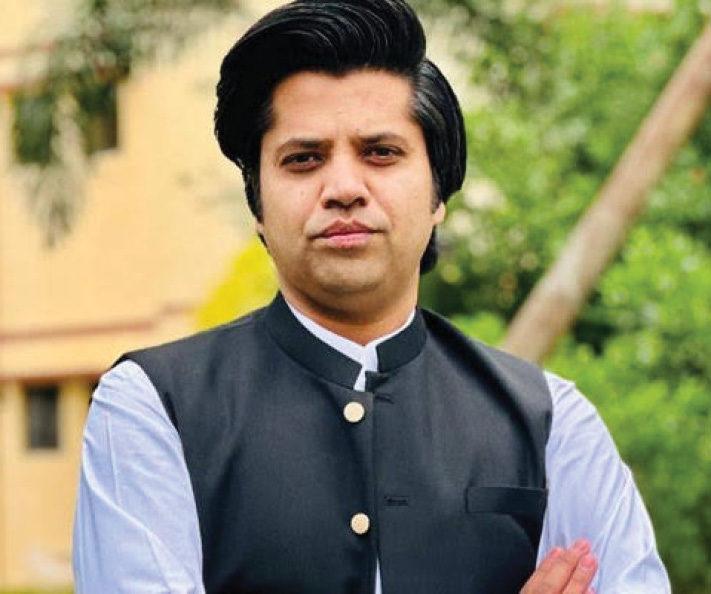
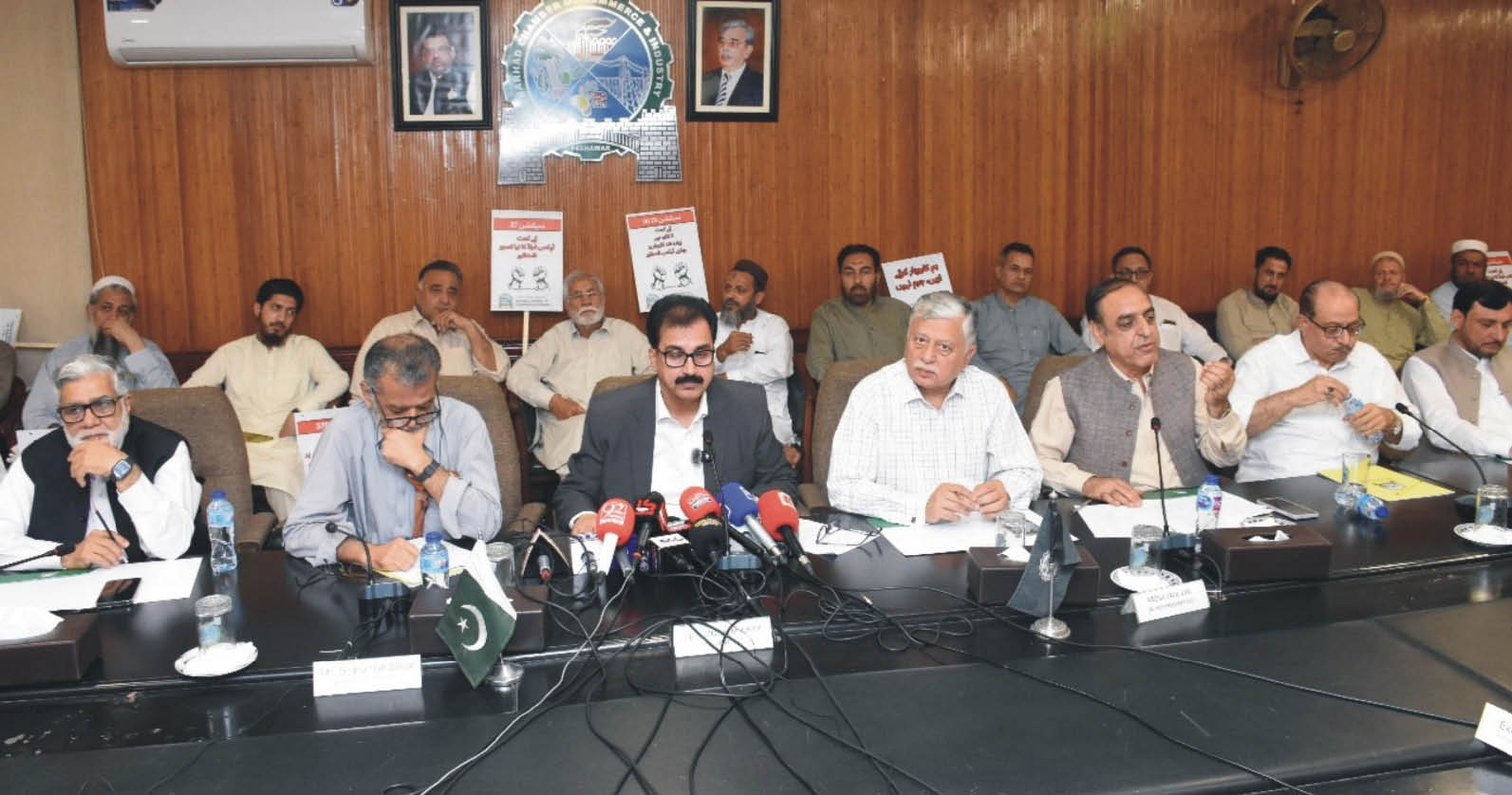
Fazal Moqeem Khan, president of the Sarhad Chamber of Commerce and Industry along with senior vice president Abdul Jalil Jan and members of the SCCI’s executive committee at the chamber house expressed deep concern over the alarming provisions of the Finance Act, which came into force on July 1, 2025.
President SCCI issued a strong warning to the government, stating that if the unjust and damaging provisions are not withdrawn immediately, the strike will likely be prolonged, and business owners may be compelled to take even more drastic steps, including suspending the filing of Sales Tax and Income Tax Returns. He noted that such sentiments are being increasingly echoed by SCCI’s members, who have lost faith in the prevailing economic environment due to the government’s oppressive policies.
Fazal Moqeem Khan expressed deep concern over the alarming provisions of the Finance Act, which came into force on July 1, 2025. He voiced full solidarity with the Karachi Chamber of Commerce & Industry (KCCI), which has identified thirty harsh tax and customs measures that pose a serious threat to the survival of businesses across Pakistan.
He emphasized that the SCCI stands shoulder to shoulder with all business organizations demanding the immediate reversal of these unjust laws.
He highlighted, in particular, the extreme dangers posed by the introduction of Sections 37A and 37B of the Income Tax Ordinance, terming them as draconian and unprecedented.
“Another alarming aspect of the Finance Act is the amendment introduced through Section 21(S), which effectively disallows any cash transaction amounting to Rs. 200,000 or more for tax deduction purposes.
This means that if a customer pays a supplier in cash, even by depositing cash directly into the supplier’s account, the supplier could be penalized by losing 50 percent of the expense in tax calculations, he added.
Chairman, Anjuman e Tajran Khyber Pakhtunkhwa Shaukat Ali Khan, former presidents Zahidullah Shinwari, Haji Muhammad Afzal, Fuad Ishaq, members of the SCCI’s executive committee Junaid Altaf, Nadeem Rauf, Abbas Fuad Azeem, Mujeebur Rehman, Sajjad Zaheer, Saifullah Khan, Abdul Naseer, Shamsur Rahim, Adnan Nasir, Aftab Iqbal, Hassan Zahideen, former senior vice presidents Naeem Butt, Sanaullah Khan, Imran Khan Mohmand, former vice president Javed Akhtar and Saddar Gul, Faiz Rasool, Fazal e Wahid, Ihsanullah, Monawar Khurshid, Sikandar Iqbal, Mushtaq Ahmad, Pervez Khan Khattak, Qurat Ul Ain, Pir Dilawar, Tahir Nawaz, Secretary General Muqtasid Ahsan, and others were present during the press conference.
The SCCI chief also voiced serious reservations about the mandatory implementation of E-Bilty and digital invoicing systems for all sales tax-registered entities.
He criticized the FBR for attempting to enforce complex digital systems in a country where general and computer literacy remains significantly low.
Why taxpayers are being forced to perform the FBR’s duties at their own expense and warned that this would only widen the gap between the business community and the tax authorities, Moqeem questioned.
In his view, he said businessmen should be encouraged to focus on productivity and revenue generation rather than bureaucratic red tape that stifles operations and increases costs.
The SCCI chief also condemned the government’s complete disregard for the established consultative process traditionally followed before the passage of the Finance Bill.
Historically, the Business Anomaly Committee engages with stakeholders and the FBR in a series of meetings to address anomalies and formulate mutually agreed-upon recommendations.
These discussions are held with the participation of Member Inland Revenue, Member Customs, and eventually the Finance Minister and Chairman FBR.
This year, however, the process was unilaterally bypassed for the first time, leaving no room for dialogue or consensus. In protest, several committee members resigned and walked out.
Despite vocal objections not only from the business community but also from parliamentary standing committees of the National Assembly and Senate, the Finance Bill was rushed through without incorporating key recommendations that had been previously agreed upon during deliberations.
In conclusion, President Fazal Moqeem Khan appealed directly to the Prime Minister of Pakistan to immediately withdraw Sections 37A and 37B, the Rs. 200,000 cash transaction penalty under Section 21(s), the digital invoicing requirement under SRO 709, and the mandatory E-Bilty provision under Section 40(c).
He also called for shifting exporters from the Normal Tax Regime (NTR) to the Final Tax Regime (FTR). He reiterated that the business community across the country is united in its demand for urgent and meaningful reforms. If the government fails to take corrective measures, the current protest movement will only escalate, with severe consequences for the economy and the state’s relationship with its business sector.