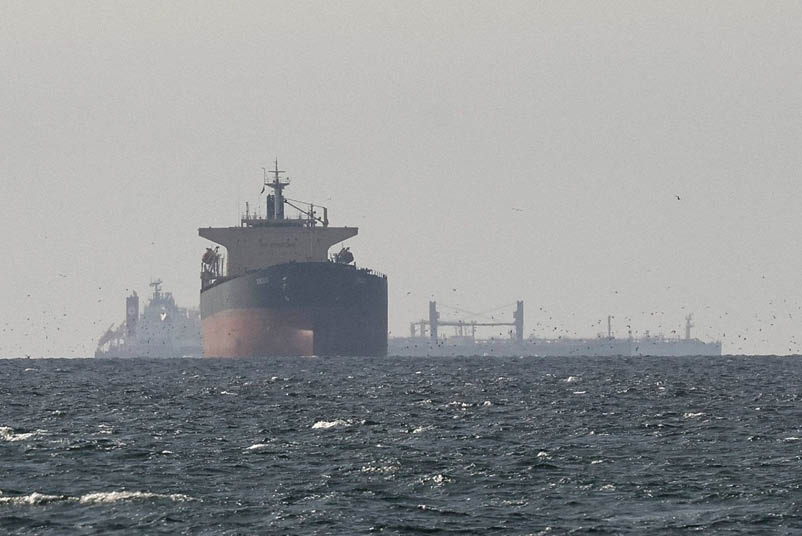
Pakistan has successfully test-fired sea-based Babur-III missile which is capable of carrying nuclear warheads for up to a maximum-distance of 450 kilometers. This delivery system adds to an already boastful list of delivery mechanisms that Pakistan’s missile program contains. The most significant aspect of this missile program is that it gives Pakistan an equal footing on sea-based second-strike nuclear capability with India who had already launched its sea-based missile program capable of carrying nuclear warheads in 2008. It is a huge scientific feat to have indigenously produced a state-of-the-art missile whose functionality ranges from terrain-hugging to sea-propulsion and target hitting with incisive accuracy.
While it is indeed a moment to revel in, it is not a moment to throw caution to the wind as the world is fixated upon the size of Pakistan’s nuclear arsenal and its strategic intentions. Although it is understandable for Pakistan to vie for sea-based second-strike capability given India’s forays into the technology, it could be considered as a slight overstep from Pakistan’s own policy of credible minimum deterrence. Pakistan already possesses six other delivery mechanisms which are more than capable of keeping credible minimum deterrence. What then, could the international community’s question be, the need for adding another missile in its ranks? The answer to that question needs to be anticipated and a careful response needs to be prepared by the Foreign Office that signals transparency in its intentions. Sea-based second strike capability is widely considered as a defensive, stability-inducing capability rather than an offensive one, and that is exactly how it needs to be marketed to the world.
India has for the last few decades been keeping an eye out for China. It is obsessed with matching China’s military might and has invested a lot of resources for that purpose. Pakistan has been playing catch-up with India with its meager resources and has taken all the help it could from China for this purpose. Similarly, the bonhomie between India and the US over nuclear trade has been thriving, foreshadowing a bipolar South Asia backed by international powers in the coming years.