Premier outlines energy, IT and regional connectivity as key priorities for Pakistan’s SCO chairmanship
BISHKEK
Prime Minister Shehbaz Sharif on Tuesday said water was the “lifeblood” of the region and must never be weaponised, as he addressed a summit of the Shanghai Cooperation Organisation (SCO) in Kyrgyzstan.
Speaking at the SCO Council of Heads of States (CHS) meeting in the Kyrgyz capital Bishkek, the premier said the region cannot “realise its full potential without lasting peace”. Without naming India directly, he highlighted the issue of the Indus Waters Treaty (IWT) and demanded that it be honoured.
“Water is the lifeblood of our region. It sustains millions of lives, nourishes our land and secures the very future of our coming generations,” he noted. He stressed that it “must never be weaponised; it cannot be used as an instrument of coercion, nor can it ever be exploited for political leverage”. “The treaties governing our shared waters are solemn, binding international commitments.
They are not matters of political convenience to be cast aside at your will. They must be honoured unconditionally, in both letter and spirit.” The prime minister’s speech comes a day after the Permanent Court of Arbitration (PCA) ordered India to uphold the IWT with Pakistan and suspend work on a hydro project in occupied Kashmir.
The Hague-based court backed Pakistan’s stance, declaring that the IWT between the two countries remained fully in force, as India had no justification for ending or suspending the agreement.
Water and the IWT remain a contentious issue between India and Pakistan, following New Delhi’s unilateral abeyance of the accord in April last year — a move that was followed by a brief military conflict between the two sides in May 2025. ‘Terrorism one of the gravest threats’
Speaking on the issue of terrorism, PM Shehbaz said it remained “one of the gravest threats that has affected our entire region in its various forms and manifestations”. As chair of the SCO Regional Anti-Terrorist Structure (RATS), Pakistan has “worked actively to strengthen regional counter-terrorism cooperation”, he highlighted.
“Few nations have fought against the scourge of terrorism as resolutely and valiantly as Pakistan. In the past two and a half decades, we have sacrificed more than 90,000 lives and endured economic losses of over $150 billion in combatting terrorism.” Pakistan sought a peaceful and stable Afghanistan, he said, adding: “But let there be no ambiguity; so long as terrorists continue to use Afghan territory to shed the blood of innocent Pakistanis and other nations, lasting peace will remain beyond our reach.”
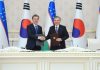
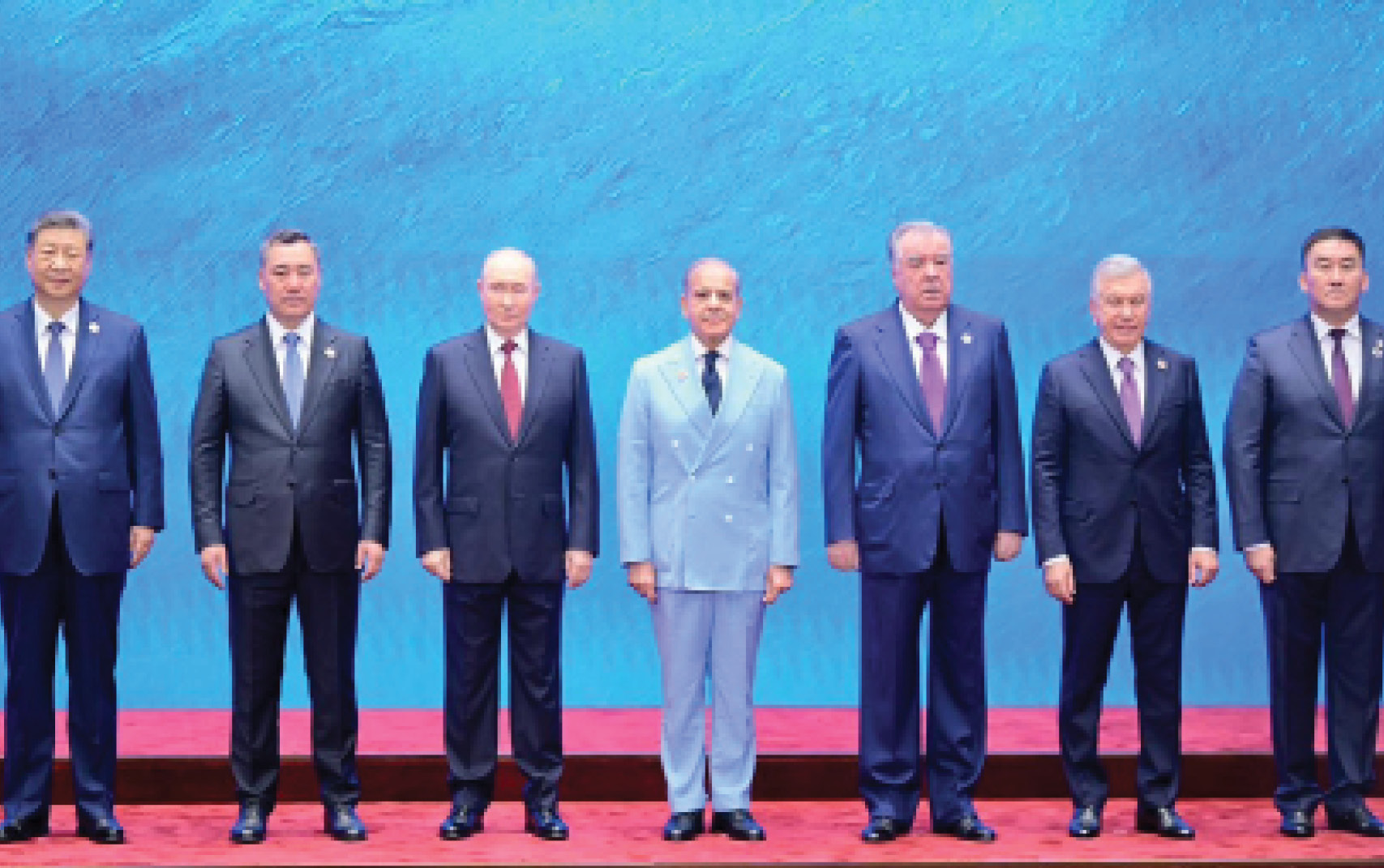
In his speech, the prime minister also mentioned Pakistan’s mediation efforts in the US-Iran war and laid out the country’s plan as it assumed the SCO CHS chair. PM Shehbaz was welcomed by the Kyrgyz president upon his arrival at the summit’s venue on Tuesday, and later posed with other world leaders for a group photo.
Leaders from China, Iran, Turkiye, Russia, and India were also in Kyrgyzstan for the two-day summit. The regional bloc, which also includes Kyrgyzstan, Kazakhstan, Tajikistan, Uzbekistan and Belarus, is celebrating its 25th anniversary. Pezeshkian offers US olive branch. says Tehran will reciprocate if Washington honours interim deal commitments
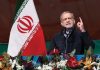
Iran will immediately reciprocate if the United States returns to its commitments under an interim deal signed in June, President Masoud Pezeshkian said on Tuesday. He made his comments at the Shanghai Cooperation Organisation Summit in Bishkek after the first exchange of direct attacks in the US-Iran conflict since late July, with the US striking Larak Island and Iran then launching attacks on two US air bases in Jordan.
“I am stating clearly that if the US returns to its commitments under the Memorandum of Understanding, the Islamic Republic of Iran will immediately reciprocate,” Pezeshkian was quoted as saying by state media. He was referring to an interim deal signed in June between Tehran and Washington in efforts to end the war, which started with US and Israeli strikes on Iran on February 28.
The deal, meant to set the stage for final peace talks, later collapsed, with both sides accusing each other of violating its terms. Tehran has repeatedly said it will allow free navigation through the Strait of Hormuz, a vital waterway for global oil supplies, only if Washington implements the terms of the agreement. Pezeshkian said in Bishkek on Monday that war was in no one’s interest and that Tehran was still open to a negotiated solution in its conflict with Washington.
On Monday, Iranian Foreign Minister Abbas Araghchi also urged the US to “return to its commitments and to what their president signed”. “In that case, everything can be put back on the right track,” he said. US President Donald Trump told Fox News “there will be a response” following the Iranian attacks but told reporters in the Oval Office that the renewed strikes did not signal a return to full-scale war. — DNA