Eight teams recognised for winning solutions across Clean City, City Intelligence and Public Preparedness themes
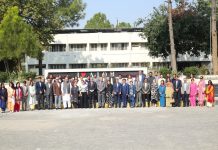
LAHORE: , Code for Pakistan, through its Civic Innovation Lab, hosted the Smart City Hackathon Lahore at Lahore Garrison University on Saturday, bringing thirty student and youth-led teams together with government institutions and development sector organisations for a day of collaborative civic problem-solving.
Ramiz Behbudov, Chief of UNICEF’s Field Office in Punjab, attended as chief guest. He was joined by Maj. Gen. Muhammad Khalil Dar, Vice-Chancellor of Lahore Garrison University, and Umer Abdul Aziz, Director of Special Planning and Initiatives at Code for Pakistan. Representatives from the Environmental Protection Agency Punjab, Suthra Punjab, the Punjab Information Technology Board, the Punjab Green Credit Program, the Punjab Clean Air Programme, The Urban Unit, UNICEF, GIZ, ISP, Impacterra, PAQI, the Prime Minister’s Youth Programme, Cirrus Marketing and KAT Helix also attended, fourteen partner institutions in total.
Thirty teams competed across three themes, Clean City, City Intelligence and Public Preparedness, developing solutions against problem statements defined in partnership with government institutions. Eight teams were recognised as winners. In City Intelligence, Civic Pulse and Area Planner and Urban Spaces were named winning solutions. In Clean City, Litter Lapse, AirHealth Correlate and Saanscare were recognised. In Public Preparedness, Mausamnama, No Smoke Outside and The First Hour First were named winners.
The Public Preparedness theme focused on climate communication and community resilience, organisers said, reflecting the growing frequency of climate-related emergencies across Punjab.
Code for Pakistan said the hackathon was designed around four objectives, to demonstrate that citizens and government can co-create civic solutions together rather than in separate processes, to build a talent pipeline connecting young technologists with institutions that implement civic solutions at scale, to establish the Civic Innovation Lab as a sustained platform for youth-led civic engagement rather than a single event, and to strengthen the relationship between citizens and the institutions responsible for serving them.
Several partner institutions, including EPA Punjab, PITB and PCAP, expressed interest during the event in piloting winning solutions at limited scale, according to organisers.