M. Zahid Raffat
For some time now, Pakistan has been making a relentless push to attract foreign investment, particularly from friendly nations. The mission? To bolster the economy, create jobs, and ensure the country’s financial stability. At the forefront of this drive is none other than Prime Minister Shehbaz Sharif, who has been working tirelessly to secure much-needed economic partnerships.
Shehbaz Sharif’s approach is straightforward—engage, persuade, and secure deals. He has been globe-trotting, meeting top leaders, addressing investors, and painting a picture of Pakistan as a land brimming with opportunity. In early February, this vision took him to the United Arab Emirates once again, where he held a crucial meeting with UAE President Sheikh Mohamed bin Zayed Al Nahyan. The prime minister extended a warm invitation for the UAE president to visit Pakistan, and to Pakistan’s delight, the invitation was accepted. The excitement, however, was short-lived as the visit was postponed for reasons unknown.
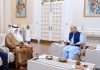
But just when it seemed like a setback, Pakistan was instead graced with the presence of UAE Crown Prince Sheikh Khaled bin Mohamed bin Zayed Al Nahyan, who arrived with a high-level delegation. Though brief, his visit was anything but ordinary. The reception he received was nothing short of grand, with President Asif Ali Zardari, Prime Minister Shehbaz Sharif, cabinet ministers, and diplomats lining up to welcome him. This wasn’t just a formal exchange of pleasantries; it was a reflection of the deep-rooted ties between the two countries.
The real substance of the visit came in the form of five landmark agreements and Memorandums of Understanding (MoUs) covering banking, railways, mining, and infrastructure development. These aren’t just symbolic documents; they signify a concrete step towards a stronger, more dynamic economic partnership. The UAE’s commitment to investing in Pakistan at a time when global markets remain volatile speaks volumes about its trust in Pakistan’s potential.
The warmth and sincerity with which the crown prince was received underscore the depth of the Pakistan-UAE relationship. This isn’t just about diplomacy; it’s about two nations that have stood by each other through thick and thin. The discussions between Shehbaz Sharif and Sheikh Khaled weren’t just routine talks—they were the kind of candid, results-driven conversations that can genuinely transform bilateral relations.
The UAE has long been one of Pakistan’s biggest economic partners in the Middle East. It is not only a major trading ally but also a crucial source of remittances, given the large Pakistani workforce in the Emirates. The fact that the UAE continues to invest in Pakistan, despite the economic uncertainties, is proof that this is a relationship built on more than just business—it is one of brotherhood and shared aspirations.
Following his meeting with the crown prince, the prime minister didn’t mince words when he called it one of the “most fruitful discussions” he has ever had. He emphasised the UAE’s unwavering support and highlighted how the two nations are moving beyond mere diplomatic pleasantries to forge a true economic alliance. Pakistan, a country with immense untapped resources, needs strategic partners, and the UAE is proving to be just that.
If credit is to be given where it’s due, then the strengthening of Pak-UAE relations is the result of persistent efforts by not just Prime Minister Shehbaz Sharif but also President Asif Ali Zardari and Army Chief General Syed Asim Munir. Their personal rapport with the UAE leadership has ensured that diplomatic ties remain robust and that economic cooperation continues to flourish.
What’s especially encouraging is that these high-level discussions are no longer just about promises; they are translating into real, tangible actions. The signing of agreements in mining and railways, for example, marks a shift from rhetoric to reality. Pakistan has long struggled to harness its vast natural resources. With UAE’s expertise and investment, this could finally change.
For years, Pakistan has been knocking on doors, seeking investment in agriculture, minerals, and infrastructure. The UAE’s commitment to helping Pakistan unlock its potential is not only reassuring but also timely. The crown prince made it abundantly clear that the Emirates remains steadfast in its support for Pakistan’s economic growth. This is not charity—it’s strategic partnership at its finest.
One of the most exciting developments is the UAE’s interest in revitalising Pakistan’s ageing railway system. With an MoU focusing on improving operational efficiency and potentially establishing a new railway network, this could be a game-changer. A modern, efficient railway system would boost connectivity, enhance trade, and facilitate mobility, all of which are critical to economic growth.
Looking ahead, if these high-level exchanges continue at this pace, Pakistan and the UAE will not only solidify their existing partnership but take it to new, unprecedented levels. The recent visit of the crown prince, though brief, was a significant step forward. Now, all eyes are on the rescheduling of UAE President Sheikh Mohamed bin Zayed Al Nahyan’s postponed visit. Pakistan eagerly awaits his arrival, not just for the diplomatic symbolism, but for the immense economic opportunities that such engagements bring.
For now, Pakistan can take solace in the fact that its relationship with the UAE is on the right track. The economy may be facing challenges, but with strong allies like the UAE, there is a real chance of regaining stability. So, fingers crossed, and here’s to hoping that these efforts bear fruit sooner rather than later.
The writer is Lahore-based Freelance Journalist, Columnist and retired Deputy Controller (News), Radio Pakistan, Islamabad and can be reached at zahidriffat@gmail.com