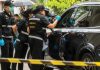
Twelve-year-old Farhan walked back into his madressah in Swat after missing a few days, unaware of what would follow. Three teachers beat him in front of his classmates, then dragged him into a side room where the blows continued until his small body collapsed. One arrest has been made. Two teachers remain at large while institution itself remains open.
This was not the first time a child has died inside a seminary, nor will it be the last unless the state breaks its pattern of inaction. Just last month, an 11-year-old in Shangla was hospitalized after a similar assault. In Kasur, a child was branded with a hot iron for not memorizing his lesson. These incidents and many more are symptoms of a system left to regulate itself, shielded by a political consensus too timid to confront the clerical power structure that governs it. Despite the state’s repeated promises of reform, oversight remains largely theoretical. The 2015 National Action Plan included madressah regulation among its pillars, and the 2019 announcement of federal boards gave the illusion of progress. In practice, however, more than 60 percent of Pakistan’s 37,000 seminaries operate unregistered. Millions of children are enrolled in institutions where there is no enforceable standard for safety, teacher vetting, curriculum, or basic accountability.
Even when abuse is documented, the response is perfunctory. The Khyber Pakhtunkhwa Child Protection and Welfare Act, which criminalizes corporal punishment, has led to few if any convictions since its passage in 2010. Victims’ families are often pressured into silence. Rarely, a judge does his job. Last year, a court in Bahawalpur sentenced a seminary teacher to 20 years in prison for sexually assaulting a student. That conviction only made headlines because it defied the norm. The overwhelming majority of such cases never make it to court, let alone verdict. Last year, the parliament quietly attempted to repeal even the modest provisions allowing federal oversight of seminaries. The move was stopped by the president, not by legislative conscience. No party, including those that brand themselves reformist, has dared to confront the status quo. Seminaries, intended to be places of moral and spiritual learning, have become untouchable zones where the rule of law has no meaning. Cutting through the noise, madressah reform is a matter of child protection, public safety, and basic state legitimacy. The state must act with clarity: register and inspect all seminaries, prosecute abuse, and impose enforceable standards. Religious education cannot be a shield for violence. If the state cannot protect its children from this, it cannot claim to protect anyone at all.