Danish Bhutto
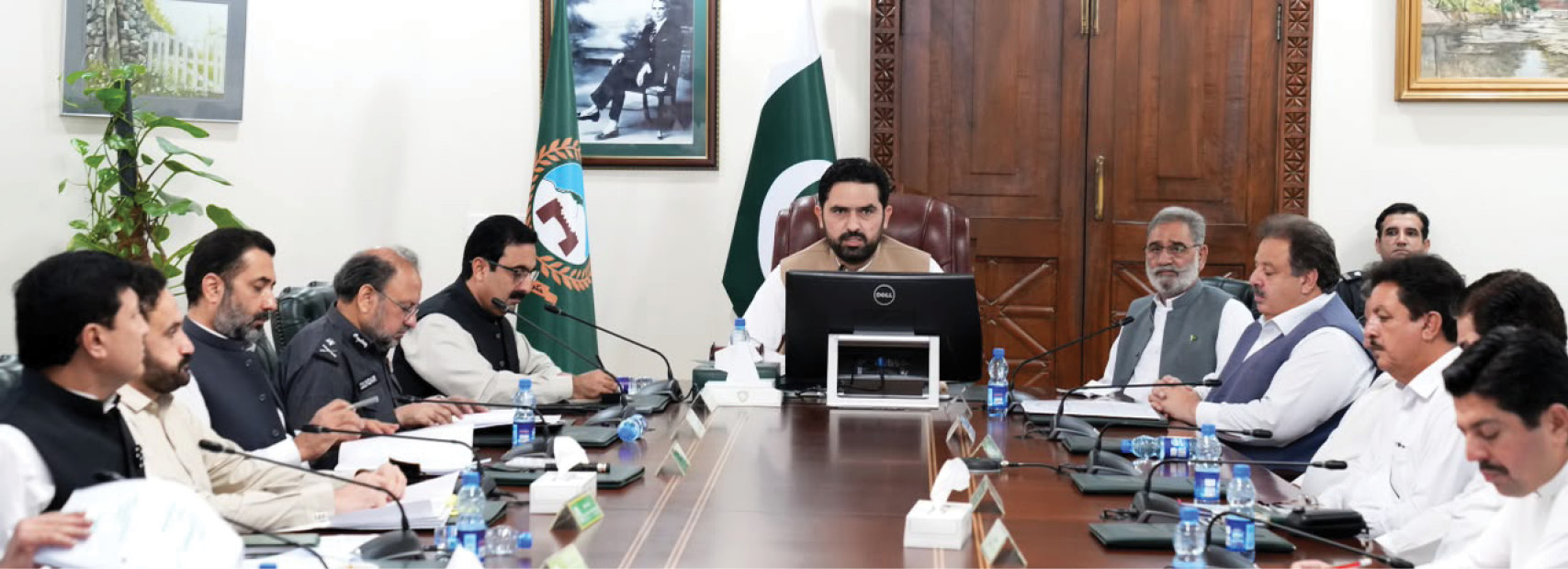
In a recent speech, Sindh Chief Minister Syed Murad Ali Shah expressed concern over the growing exodus of the province’s educated youth. He termed it a brain drain, a phenomenon that is slowly hollowing out Sindh’s intellectual potential. While this moment of acknowledgement is rare and, on the surface, encouraging, it does little to disguise the bitter truth that it is the very system over which he presides that has created this exodus. The real crisis lies not in the migration itself, but in the decay of institutions that make leaving the only rational choice for many.
At the heart of this tragedy is the Sindh Public Service Commission (SPSC): an institution once designed to be a guardian of merit, now reduced to a marketplace of influence and bribery. SPSC is not associated with opportunity anymore but with auction. The rate card is common knowledge, as widespread and ordinary as the price of wheat or milk. A BPS-17 job? Sixty to seventy lakhs. A BPS-7 position? Fourteen lakhs. Even clerical Grade-6 jobs go for fifteen lakhs. This is no longer whispered in corners or alleged on social media—it is known by schoolchildren, spoken of casually in tea shops, admitted with a shrug by candidates who know that degrees, experience, and skill have been displaced by influence, money, and political patronage.
SPSC results, without fail, are followed by protests – angry, disillusioned students pouring onto the streets, holding placards and shouting slogans. The most heartbreaking accounts come from those who top the written examinations with distinction, only to be arbitrarily failed in the interview stage. Even candidates with perfect academic records and the highest marks are dismissed in final selections with no explanation. A pattern has emerged, and it is telling. Summaries of candidate experiences reveal that the interview process is often nonsensical and unprofessional, resembling casual interrogations rather than rigorous evaluation. Questions are vague, irrelevant, and sometimes designed to unsettle rather than assess. The lack of structure is not incompetence – it appears, increasingly, to be a deliberate strategy to justify premeditated results.
This broken interview process is a black hole into which transparency disappears. In an age when even traffic stops can be recorded for accountability, it is inexcusable that these interviews – decisive moments in a candidate’s life – are held in closed rooms with no record, no oversight, and no standard. There is an urgent need for cameras in interview halls, for structured questioning frameworks, for interview boards to be held accountable for every score they assign. Without such reforms, the interview remains a tool of discrimination and manipulation, not assessment.
While no system in Pakistan is entirely free from flaws, there is at least some semblance of merit in provinces like Punjab and Balochistan. The Punjab Public Service Commission (PPSC) and the Balochistan Public Service Commission (BPSC) are not immune to controversy, but they have preserved basic procedural integrity in many cases. Results are often uploaded timely and transparently. Candidates have access to marks. Interviews follow a defined structure. In Sindh, however, even this minimal faith in process has vanished. The system is shrouded in opacity, run on whispers and money trails rather than law and merit. It is not just inefficient – it is predatory.
The implications of this institutional collapse are devastating. When public sector appointments are sold to the highest bidder, governance becomes a matter of entitlement, not capability. The youth preparing day and night for competitive exams are effectively told that their labour is worthless unless backed by cash or connections. Some lose heart. Some leave the country. Others, more tragically, learn to play the same game – saving money not for education, but for bribes.
The SPSC’s descent has been neither sudden nor silent. In 2024, the SST examination scandal exposed just how brazen malpractice had become—answer keys circulating online before exams, results manipulated, and officials suspended only after public outcry. The public memory is littered with such betrayals. In 2018, the National Accountability Bureau filed a reference against 20 officials for tampering with examination results. In 2023, candidates protested again when lectureship posts were allegedly awarded through favouritism. No meaningful reform followed. No institutional cleansing occurred. Corruption was not punished – it was normalised.
So, when the Chief Minister speaks of brain drain, one cannot help but see the irony. The province’s best and brightest are not leaving because they lack patriotism. They are leaving because Sindh has become hostile to excellence. They are leaving because the systems that should reward talent now reward transaction. One cannot, on the one hand, preside over a government that allows or even enables this decay, and on the other hand lament the consequences as if they were acts of God.
The tragedy runs deeper still. Corruption of this nature doesn’t just rob individuals of opportunity – it robs entire generations of good governance. When civil servants are selected not for merit but for their ability to pay, the result is a bureaucracy that is incapable of serving the public with competence or conscience. Schools falter, hospitals decay, infrastructure crumbles – not just because funds are embezzled, but because those tasked with oversight were never fit for the job in the first place.
The writer is a researcher and columnist based in Lahore. He can be reached at danishalee017@gmail.com
Courtesy