India’s heinous covert war against Pakistan is no longer a matter of speculation-it is a documented reality. Over the years, a pattern of proxy warfare, espionage, and disinformation has emerged, which clearly links Indian state agencies to operations intended to destabilize Pakistan from within. The arrest of a serving officer of the Indian Navy Kulbhushan Jadhav in 2016 was a watershed moment. Jadhav confessed to operating under the directives of RAW, orchestrating terror networks, sabotage, and subversion in Balochistan. His arrest exposed the depth of India’s direct involvement in fueling unrest inside Pakistan. This was not an isolated incident.
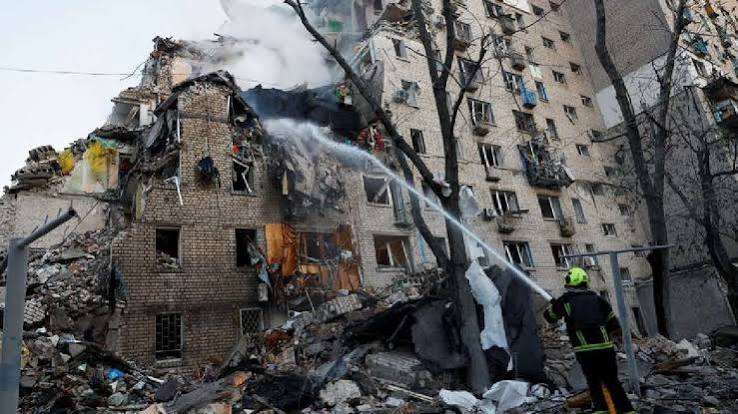
Rather, it revealed a wider and systemic Indian strategy to use terror as a tool of statecraft. The Doval Doctrine, India’s national security policy under Ajit Doval, openly endorses offensive tactics-including support for insurgencies-as a means to counter Pakistan. In Balochistan and Khyber Pakhtunkhwa (KPK), Indian proxies such as the Balochistan Liberation Army (BLA), termed Fitna al-Hindustan, and the Tehreek-i-Taliban Pakistan (TTP), referred to as Fitna al-Khawarij, have carried out devastating attacks. The recent suicide bombing on a school bus in Khuzdar and the hijacking of the Jaffar Express. Both acts of terror were reportedly conducted by BLA militants, with Indian fingerprints evident in planning and execution.
India’s destabilization efforts also exploit cross-border vulnerabilities, utilizing Afghan and Iranian soil as operational corridors. Former US Secretary of Defense Chuck Hagel and CIA official Sarah Adams have both acknowledged that India has used Afghan territory to “finance problems” for Pakistan. Iran, too, has grown wary. In early 2025, Tehran issued a stern warning against illegal activities by Indian intelligence operatives within its Sistan-Baluchestan province, acknowledging India’s growing covert footprint in the region. This strategy of proxy warfare is not new. India’s involvement in the 1971 secession of East Pakistan was publicly acknowledged by Prime Minister Narendra Modi in 2015 which validates long-standing Pakistani claims. India’s admission, along with documented proof of RAW’s role in training and funding separatist movements like MQM-London, proves that India’s subversive tactics have historic roots.
Today, these operations continue under a more aggressive geopolitical doctrine, with India not only targeting Pakistan’s territorial unity but also attempting to reshape regional power dynamics. New Delhi’s aggressive tactics extend beyond Pakistan’s borders. In a dramatic escalation of extraterritorial operations, Canadian Prime Minister Justin Trudeau accused Indian agents of orchestrating the assassination of Sikh activist Hardeep Singh Nijjar on Canadian soil. The United States, too, uncovered and thwarted a plot to kill another Sikh leader, while the United Kingdom has documented Indian attempts to intimidate dissidents within its jurisdiction.
In Qatar, eight former Indian Navy officers were tried and convicted for espionage-yet another reminder that India’s covert agenda is truly global. This network of subversion and coercion is bolstered by a disinformation campaign targeting Pakistan’s global image. India has orchestrated elaborate fake news operations and lobbying efforts, aiming to tarnish Pakistan’s credibility and divert international attention from its own transgressions. Yet, Pakistan has not remained silent. Islamabad has submitted multiple dossiers to the United Nations and major world powers, detailing India’s support for terrorist factions complete with evidence of funding, training camps, and communication intercepts.
Despite these revelations, international reaction remains muted. Western powers-often the loudest advocates of a “rules-based international order”-have largely failed to hold India accountable. This double standard endangers not only Pakistan but the stability of South Asia at large. India’s refusal to engage in multilateral dialogue over Kashmir, Afghanistan, and transboundary water disputes, combined with unilateral actions such as the abrogation of Article 370 in 2019 and the Indus Waters Treaty now has eroded regional trust and destroyed diplomatic momentum.
The cost of inaction is steep. As India’s covert operations intensify, regional conflict resolution mechanisms continue to erode. Pakistan’s consistent calls for dialogue, de-escalation, and transparency have been met not with diplomacy, but with disinformation and belligerence. India’s export of jingoism under the guise of diplomacy-through espionage, political assassinations, and proxy terrorism-threatens global peace architectures. If unchecked, this behavior risks sparking a broader geopolitical crisis with far-reaching implications. Pakistan’s resilience in the face of this hybrid war is rooted in its national unity and strategic clarity. The people of Pakistan have rallied against these divisive forces, demonstrating an unbreakable spirit in the face of Fitna al-Hindustan and Fitna al-Khawarij. The country has taken diplomatic, military, and legal measures to expose the nexus and prevent further destabilization. The international community now stands at a crossroads. It can choose to uphold the principles of sovereignty, international law, and peaceful coexistence-or it can allow strategic expediency to override justice. Turning a blind eye to India’s violations would not only undermine Pakistan’s security, but also embolden aggressive actors elsewhere. Accountability is not optional; it is essential. As long as the Doval Doctrine guides India’s strategy, terror sponsorship, subversion and disinformation will remain a clear and present danger. It is not merely a regional issue-it is a global challenge to the very norms that underpin international peace. The world must respond accordingly!
The writer is an alumnus of QAU, MPhil scholar & a freelance columnist, based in Islamabad. He can be reached at fa7263125@gmail.com)