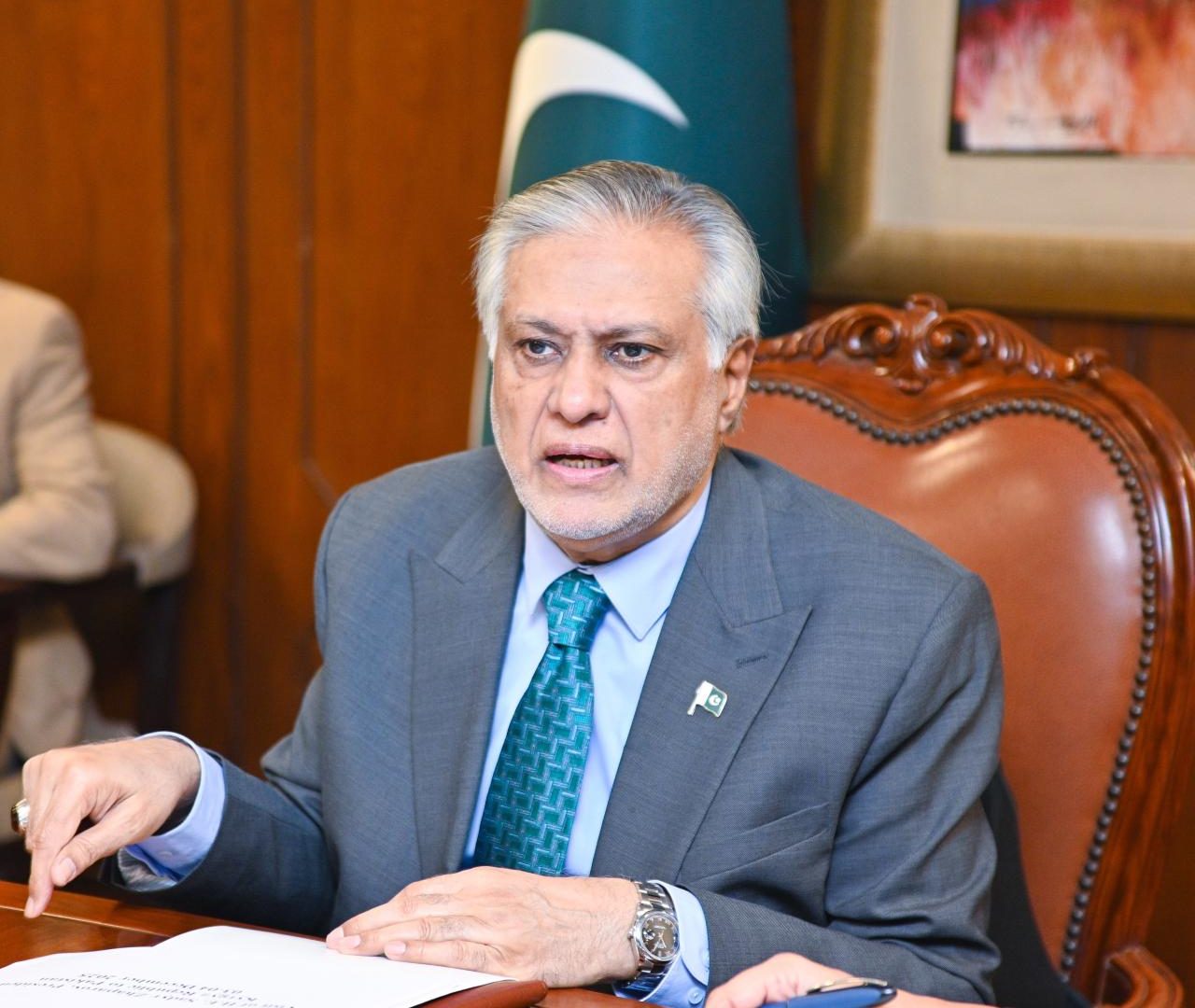
UN chief says country “awash in suffering”; FM Bilawal says the country has become “ground zero” of global warming.
GENEVA
The United Nations made a flash appeal on Tuesday for $160 million to help Pakistan cope with catastrophic floods that have killed more than 1,100 people, destroyed infrastructure and crops, and affected 33 million people.
Early estimates put the damage from the floods at more than $10 billion, the government has said, adding that the world had an obligation to help the country cope with the effects of man-made climate change.
“Pakistan is awash in suffering,” UN Secretary General Antonio Guterres said in a video message for the launch of the appeal in Islamabad and Geneva. “The Pakistani people are facing a monsoon on steroids, the relentless impact of epochal levels of rain and flooding.”
Foreign Minister Bilawal Bhutto-Zardari also spoke on the occasion, urging nations to extend their support to Pakistan in these challenging times.
The FM said the devastation witnessed in Pakistan following the recent spell of unprecedented rains and floods showed that the country had become “ground zero” of global warming, the “biggest existential threat” of this century.
“The current cycle of super flooding we see today is part of extreme weather patterns. Unprecedented levels of cloud bursts and torrential rains have triggered widespread devastation, urban flooding, river floods and landslides, resulting in the loss of human life, livelihoods and livestock,” Bilawal said.
He described this year’s “super floods” as a “climate calamity”, adding that “what we are facing today has been no above average monsoon.
“It is an entirely new level of climate-led catastrophe.”
The FM said rainfall in Pakistan since mid-June had been equivalent to three times the 30-year national average and the southern, central and northern regions of the country were worst affected.
He said it was feared the scale of destruction caused by this year’s floods would exceed the impact of 2010’s “mega or super floods”.
Sharing details about the extent of damage, he said 72 districts were declared calamity-hit, over 33 million people were affected, which is the size of a small country, over 1,000 people had lost their lives and several others were grappling with the loss of livelihoods and displacement.
“Hundreds of thousands of people have been displaced and forced to spend days and nights … under a merciless sky and the lack of access to food, water and shelter are making life harder with each passing day,” he lamented.
Moreover, he said the damage to infrastructure and railway networks was impeding efforts to deliver aid and to shift people from flood-hit areas to safer locations.
The FM said the situation was likely to deteriorate further as more rains continued to pummel already flooded areas.
“For us, this is no less than a national emergency. This is a life-defining experience.”
The floods, the FM said, had taken a toll on the economy and stretched the country’s resources.
He said the government was cognisant of its responsibility and had earmarked $173 million to help flood-hit people through direct cash transfers. This, Bilawal elaborated, would be disbursed through the Benazir Income Support Programme (BISP) to 1.5 million families who will each receive Rs25,000 ($115) in immediate cash relief.
Separately, Rs5 billion ($23 million) had been allocated to the National Disaster Management Authority (NDMA) for relief activities, he added.
“The government is also providing Rs1 million ($4,615) in ex-gratia compensation to the next of kin of each deceased; Rs250,000 ($1,154) for injuries and partially damaged houses; and Rs500,000 ($2,308) for destroyed houses.”
The FM went on that in addition to the financial support, food packs, shelter items including tents, and water, sanitation and hygiene (WASH) supplies were also being provided by NDMA and PDMAs.
“The government’s efforts are being supported by the Pakistani nation with people, civil society and humanitarian organizations stepping forward in a big way to complement the relief work with our characteristic generosity and philanthropic spirit,” he said, adding that the Prime Minister’s Flood Relief Fund 2022 had also been established to facilitate people all over the country and overseas to contribute to the flood relief efforts.
Pakistan needs ‘$10 billion’ for repair and rehabilitation.
Earlier, Planning Minister Ahsan Iqbal said Pakistan needs more than $10 billion to repair and rebuild infrastructure damaged by monsoon rains.
“Massive damage has been caused to infrastructure — especially in the areas of telecommunications, roads, agriculture and livelihoods,” he told.
Iqbal’s statements are a reiteration of an assessment he shared with Reuters (the news agency), a day earlier, where he said he believed that the cost of the damage caused by floods would be “huge.
“So far, a very early, preliminary estimate is that it is big, it is higher than $10 billion,” Iqbal said, adding that there was damage to almost nearly one million houses“.
“People have actually lost their complete livelihoods,” he continued, rating the recent floods worst than those that hit Pakistan in 2010.
The minister said it might take five years to rebuild and rehabilitate the nation, while in the near term it will be confronted with acute food shortages.
Separately, Finance Minister Miftah Ismail has also estimated that the economic impact of floods would be at least $10bn, which roughly translates to three per cent of the country’s gross domestic product.
The estimates have come as Pakistan reels from the impact of torrential rains and unprecedented floods, which have claimed over 1,000 lives, affected more than 33 million, almost 15pc of the country’s 220m population, people and submerged most of the country.
Moreover, the country faces an imminent food security crisis, with crops damaged on a large scale and livestock swept away.
Meanwhile, Chief of Army Staff Gen Qamar Javed Bajwa is visiting flood-affected areas in Swat today to get a briefing about evacuation and relief operations in Kumrat, Kalam and surrounding areas, according to the Inter-Services Public Relations (ISPR).
The statement from the military’s public affairs wing said the army had been sending relief goods to affected areas while more than 50 medical camps had been established in flood-hit districts.
The ISPR said Canada, Azerbaijan and UK had also pledged $5 million, $1.2m and £1.5m in aid, respectively.
Separately, the Provincial Disaster Management Authority (PMDA) said at least eight people lost their lives in floods across the province in the last 24 hours.
In a statement, the PDMA said an additional Rs220m had been released for relief and rehab measures in four districts of the province.
In Quetta, the repair work of 132-KV Sibi-Quetta transmission line had been started on an emergency basis, GM Technical PTCL Shaukat Khawaja Khel said in a statement.
He said the electricity will be restored in all affected areas in three to four days. “The landline and internet services have partially been restored in Quetta.”
The official said the gas supply in Bibi Nani area was affected for a week.
According to a Dawn new reports, of all the provinces, Sindh, in particular, has suffered damages of over $1.6bn (Rs355bn) as all major crops have been destroyed.
While a survey and mapping at the national level for assessing the flood damage is yet to be carried out, Adviser to the Sindh Chief Minister on Agriculture Manzoor Wassan told that heavy rains had destroyed cotton, rice, and date crops, causing a loss of Rs109.347bn in the province.
“Besides, chilli and other crops have also been destroyed by rain,” he added.
Wasan said almost the entire cotton crop standing on over 1.4 million acres, rice standing on 602,120 acres and dates on 101,379 acres had been destroyed.
“Almost 50pc of the sugarcane crop on 729,582 acres has also been damaged,” he said, adding that almost 50pc of sesame, tomato, chilli, Kharif vegetables and onion crops had also been destroyed.
To a question, he said that there would be a great deal of difficulty in sowing wheat, which was due in the next two months. “The flood water is not expected to be completely drained out of the farmers’ fields in two months,” he explained.
Wasan further said in order to compensate farmers struggling in the face of the devastation caused for floods and rains, revenue charges (abiana) would be waived for Kharif season 2022, the possibility of giving date growers case compensation at 50pc of their crop value and a compensation package for the rest of the crops might be announced on a 50pc input cost basis.
To a question, he said that agricultural loans provided to the growers during Kharif 2022 in rain-affected areas might be rescheduled and the interest on the loans might be waived.
To mitigate food shortfalls, Miftah Ismail has said the country could consider importing vegetables from India.
Meanwhile, the federal government has decided to form a National Flood Response and Coordination Centre to provide a proper institutional response to the calamity, which will comprise federal ministers, representatives of the armed forces, chief ministers and experts.
Pakistan has appealed for international help and some countries have already sent in supplies and rescue teams.
For its part, the United Nations will launch a $161 million ‘flash appeal’ today to provide critical food and cash assistance to Pakistan in the wake of unprecedented floods.
Foreign Minister Bilawal Bhutto-Zardari told Reuters on Sunday he hoped financial institutions such as the International Monetary Fund would provide financial aid, taking the economic cost of the floods into account.
However, Iqbal told Reuters that any formal requests for financial help would need to wait until the scale of the damage was known, something Pakistan was now evaluating with partners, including the World Bank and the Asian Development Bank.
Iqbal also said the world owed Pakistan, which was a victim of climate change caused by the “irresponsible development of the developed world.” The world had an obligation to help Pakistan cope with the effects of man-made climate change, he said.
“Our carbon footprint is lowest in the world,” he said. “The international community has a responsibility to help us, upgrade our infrastructure, to make our infrastructure more climate resilient, so that we don’t have such losses every three, four, five years,” he said.
“Those areas which used to receive rainfall aren’t receiving rainfall and those areas which used to receive very mild rains are receiving very heavy rainfall,” he added.
Iqbal said 45pc of cotton crops had been washed away with early wheat sowing in southern Pakistan also affected, as large swaths of land remained inundated with flood water, and severe damage to rice fields as well as vegetable and fruit crops.
Pakistan’s finance ministry in its latest economic outlook update has warned of the impact on critical seasonal crops, particularly cotton, which is key for Pakistan’s textile sector that makes up more than 60pc of the country’s exports.
Ends/Online
SN/AA