Tazeen Akhtar
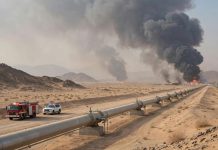
Women’s involvement in terrorism and suicide bombings in Pakistan continues to rise, with another attack on Monday, 3 March, in Balochistan. A woman suicide bomber targeted a Frontier Corps (FC) convoy in Kalat, killing one soldier and injuring several others. This marks the second such attack in Balochistan within a year, following the 26 August attack in Lasbela by Mahil Baloch. If we also count the attack by Shari Baloch at the Chinese Institute in Karachi, that makes three female suicide bombers from Balochistan alone.
The image of the latest bomber has gone viral on social media, though authorities have not officially released her identity, background, or education. Education is a particularly alarming factor—both Shari Baloch and Mahil Baloch were well-educated women from educated families in Balochistan. The FC convoy was travelling from the FC Fort to the security forces’ mess on the N-25 Quetta-Karachi highway when the attack occurred. The Baloch Liberation Army (BLA) claimed responsibility. Deputy Commissioner Kalat, Bilal Shabbir, stated:
“A female suicide bomber struck the security forces’ convoy, killing one soldier of the paramilitary Frontier Corps on the spot and injuring four others, who were shifted to hospital. The bomber was standing outside the FC fort on the highway and detonated herself when the convoy was moving.”
Female suicide bombers are not a new phenomenon in Pakistan. The first documented case dates back to 4 December 2007, when a woman was remotely detonated in front of a check post in Peshawar Cantonment, Khyber Pakhtunkhwa (KPK). The second occurred on 25 December 2010, when a 24-year-old female attacker targeted the World Food Programme office in Khar, Bajaur, KPK, killing 45 people. In the following year, on 25 June, another woman attacked a police station in Kalachi, Dera Ismail Khan. On 11 August 2011, in Peshawar’s Lahore Gate, a teenage girl of around 17–18 years old detonated herself, killing five police personnel. Most of these earlier attacks were concentrated in KPK, then largely unmerged with Pakistan’s provincial structure. The surge in female suicide bombers coincided with the military operation against Lal Masjid in Islamabad during General Musharraf’s regime.
A second wave of female-led suicide attacks emerged after a decade-long gap, expanding beyond KPK. In Sindh, on 26 April 2022, Shari Baloch carried out a suicide bombing on a van near the University of Karachi’s Confucius Institute, killing three Chinese academics and their Pakistani driver. Then, on 26 August 2023, Balochistan witnessed its darkest day in terms of attacks on security forces, with two suicide bombings in Lasbela—one conducted by a 23-year-old student of Turbat University, Mahil Baloch.
Authorities have also claimed the arrest of a woman among three suspects linked to the attack on Chinese nationals at Karachi airport on 6 October 2024. The reasons behind female participation in suicide attacks have evolved. The early wave of attacks in 2007–2011 was largely attributed to drone strikes in the then-Federally Administered Tribal Areas (FATA) and the Lal Masjid operation. The current surge, however, demands a reassessment of its root causes. Security forces must consider several possibilities: Terrorist outfits like the BLA may be coercing women into attacks by kidnapping their relatives or holding family members hostage. Young girls may be radicalised through propaganda that frames their grievances—especially against security forces and the state—as justification for violence. The mass protests led by Mahrang Baloch in Islamabad over missing persons suggest that some women, feeling unheard and desperate, might turn to extremism.
The recent arrest of Ume Hassan, wife of the late Lal Masjid cleric Abdul Aziz, over madrassa construction disputes has triggered protests by her students. Many of these students, already disillusioned with the state, could be vulnerable to terrorist recruitment. This rising trend also highlights deep-seated issues of deprivation in KPK and Balochistan. Both provinces remain at the heart of Pakistan’s security crisis, yet economic and social marginalisation persist. The China-Pakistan Economic Corridor (CPEC) was hailed as a game-changer for these regions, but after a decade, locals see little benefit. In Balochistan, many view the project as a form of economic colonisation, fuelling resentment that extremists exploit. Gwadar’s ongoing unrest is a testament to this discontent.
The writer has an MSc in Mass Communica-tions with media courses in Germany and Denmark. He is a Central Asia expert and can be reached at tazeen303@gmail.com
Courtesy