Sajjad Ahmed
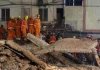
The devastating blast at a Shia mosque in Islamabad during Friday prayers has once again plunged Pakistan into grief, shock, and painful self-reflection. More than thirty worshippers lost their lives, and over a hundred were injured in what officials have described as a suicide attack near the mosque gates in the Tarlai area. Families gathered outside hospitals searching for loved ones, blood donation appeals were rushed out, and scenes of chaos replaced what should have been a moment of peace and devotion. As emergency vehicles and private cars transported the wounded, the nation was reminded of an old and bitter truth that violence continues to find space even in the most sacred places. This was not merely an attack on a mosque. It was an assault on the idea that places of worship remain beyond the reach of hatred. It was a strike against ordinary citizens whose only act was to bow their heads in prayer. The victims were not combatants, politicians, or policymakers. They were fathers, sons, elders, and children. They were people who believed that in the heart of the capital city, during Friday prayers, they would be safe. That belief was shattered in seconds.
Eyewitness accounts suggesting gunfire before the explosion raise troubling questions about security preparedness and response. Islamabad is considered one of the most heavily secured cities in the country, hosting embassies, government institutions, and foreign delegations. If such an attack could occur here, at a known place of worship, during a predictable weekly gathering, it exposes alarming weaknesses in intelligence coordination, threat assessment, and on-ground enforcement. These gaps are not new, yet they remain largely unaddressed.
Pakistan has endured decades of terrorism, sectarian violence, and militant attacks. Each incident is followed by strong condemnations, official statements, and promises of action. Yet the pattern repeats. Investigations move slowly. Reports are rarely made public. Responsibility is diluted across institutions. Over time, public outrage fades, and accountability quietly disappears. This cycle has become tragically familiar.
Sectarian violence, in particular, remains a deep wound. Shia communities across Pakistan have repeatedly been targeted in mosques, processions, markets, and even burial grounds. Despite constitutional guarantees of religious freedom and equality, these citizens continue to live under threat. While security arrangements are often increased temporarily after major attacks, long-term strategies to dismantle extremist networks and counter sectarian ideology remain insufficient.
The attack also highlights the failure to protect vulnerable spaces. Mosques, churches, temples, and imambargahs are soft targets by nature. They are open, communal, and central to social life. Protecting them requires not just barricades and armed guards, but credible intelligence, community engagement, and proactive disruption of militant cells. When attackers are able to reach mosque gates and detonate explosives, it signals that prevention mechanisms have failed long before the moment of impact.
Beyond physical security, there is a moral and political failure that cannot be ignored. Extremist narratives continue to circulate openly, sometimes under the cover of religious rhetoric. Hate speech is inconsistently prosecuted. Groups banned on paper resurface under new names. Funding channels are rarely traced to their roots. Without confronting these realities honestly, no amount of checkpoints will provide lasting safety.
The human cost of this failure is immense. Survivors will carry physical injuries and psychological trauma for years. Children who witnessed the blast will grow up with memories of fear rather than faith. Families who lost breadwinners face economic hardship alongside grief. These are consequences that do not appear in official casualty numbers but shape society long after the headlines fade. Equally troubling is the shrinking space for questioning authority. Transparency is not a threat to national security. It is a requirement for it. Without open discussion and independent oversight, failures repeat unchecked.
Offering prayers for the victims is important, but prayers alone cannot replace responsibility. Condemnations without reform ring hollow. Every attack is followed by vows that such incidents will not happen again, yet history tells a different story. The absence of visible accountability sends a dangerous message that lives can be lost without consequences.
This tragedy also demands reflection on national priorities. Resources are often poured into political rivalries, media battles, and power struggles, while citizen safety becomes secondary. Security is not just about defending borders or state institutions. It is about protecting people in their daily lives. When citizens are killed while praying, the social contract between the state and society is deeply damaged. There is also an urgent need to centre victims rather than perpetrators. Too often, discourse shifts quickly to speculation about groups, motives, and geopolitics, while the stories of those killed are forgotten. Remembering their names, their lives, and their humanity is essential. They should not be reduced to statistics or used as fuel for political point scoring.
Pakistan has the experience, capacity, and knowledge to confront terrorism effectively. It has done so in the past when there was clarity of purpose and unity of effort. What is lacking is sustained political will, institutional coordination, and the courage to confront uncomfortable truths about extremism within society.
The attack on the Islamabad mosque is a moment of national reckoning. It forces a choice between continuing a cycle of reaction and denial or pursuing meaningful change. Security frameworks must be reviewed honestly. Policy gaps must be acknowledged rather than buried. Intelligence failures must carry consequences. And most importantly, the safety and dignity of every citizen, regardless of sect or belief, must be treated as non-negotiable.
If this moment is allowed to pass like so many before it, then the cycle will indeed repeat. Another blast. Another set of funerals. Another round of statements. Pakistan cannot afford this moral fatigue. The cost is measured not only in lives lost, but in trust eroded and hope diminished.
Breaking this cycle will not be easy, but it is necessary. The lives taken at the mosque demand more than sorrow. They demand action, accountability, and a future where faith is not punished with death.
The writer works at College Education Department, Government of Sindh.