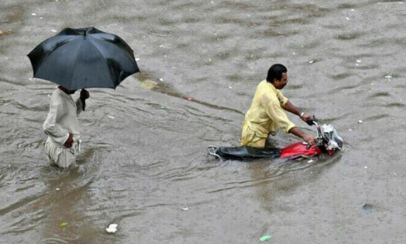
KP bears brunt as Pakistan’s most vulnerable to monsoon floods
ISLAMABAD/PESHAWAR
At least 79 people, including 38 children, have died in floods and rain-related incidents, including landslides and house collapses, since June 26, the National Disaster Management Authority said on Tuesday.
The authority issued fresh alerts for flash flooding and glacial lake outbursts in the northern and northwestern provinces of Gilgit-Baltistan and Khyber Pakhtunkhwa, citing “a significant rise in temperatures and… an upcoming weather system.”
Two boys drowned in the Indus River in the Torghar district and Jabba nullah of Khyber-Pakhtunkhwa’s Mansehra, while the Karakoram Highway was blocked due to heavy landsliding in the Gligit-Baltistan’s Gonar farm and Mola Dad Pari area on Tuesday.
Due to a significant rise in temperature, accelerating snow and glacier melt have triggered flash floods and landslides in various areas of Khyber Pakhtunkhwa and Gilgit-Baltistan.
Khyber-Pakhtunkhwa stands as the most vulnerable province in Pakistan to the ongoing monsoon crisis, revealing critical infrastructural weaknesses and governance gaps that intensify the disaster’s impact.
Despite repeated devastation from floods, K-P continues to lack adequate water management systems, enforcement of construction laws, and sustainable disaster preparedness, leaving its communities exposed and fragile.
As Pakistan faces another season of unpredictable monsoon rains, the death toll has steadily risen over the past 10 days. While fatalities have been reported across all four provinces, K-P has been hit the hardest, with over 29 lives lost, many injured, and extensive destruction to infrastructure, especially in its economic centers.
K-P’s deficient infrastructure for managing excess water results in fatal floods and water-related accidents.
The Pakistan Meteorological Department has issued widespread warnings, forecasting rainfall through July.
Some of the worst-affected areas, Swat, Kalam, and Chitral are among K-P’s premier tourist spots. These regions rely heavily on tourism for economic survival, as breathtaking mountains and rivers draw visitors who support local livelihoods.
Tragically, these natural features that attract tourism also fuel recurring floods, destroying roads, bridges, hotels, and entire villages. These disasters don’t just disrupt tourism; they devastate livelihoods and local economies, while the rugged terrain hinders rescue and reconstruction efforts. Despite frequent destruction, effective preventative measures remain lacking.
Other parts of K-P suffer from damaged roads and agricultural losses. In Mohmand district, heavy rains wiped out livestock and crops overnight. Flooded roads have isolated communities, like in Kandia Tehsil, cutting off transport and trade, while power outages worsen the crisis.