DLP Report
PESHAWAR
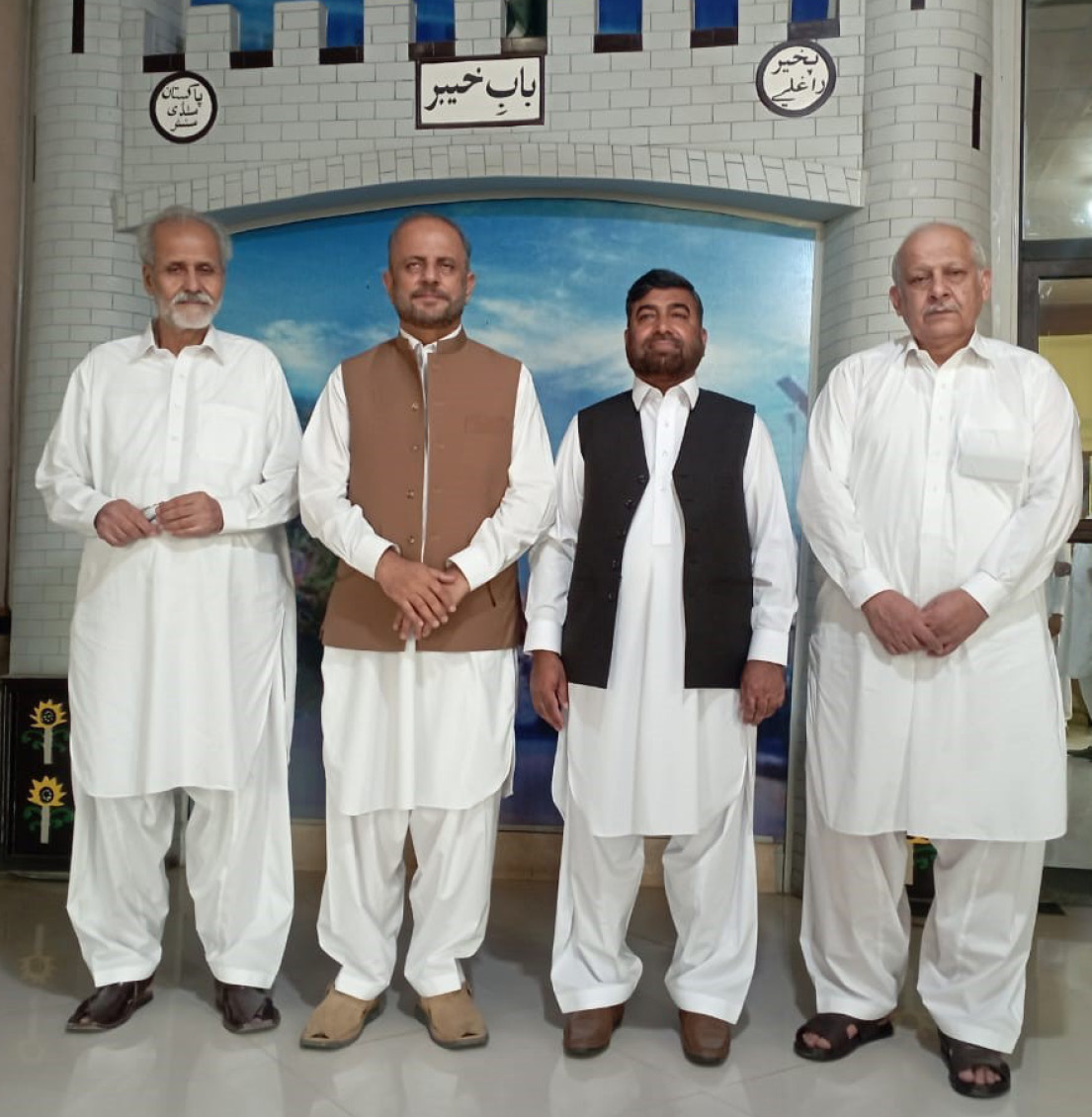
Alamgir Afridi, Deputy Director of Media and Protocol, Khyber Medical University (KMU) Peshawar has successfully defended his PhD thesis in Pakistan Studies from the University of Peshawar.
His dissertation, titled “Leadership of Jamaat-i-Islami Pakistan: A Comparative Study of Mian Tufail Muhammad and Qazi Hussain Ahmad 1972-2009,” offers a significant contribution to the academic understanding of leadership within one of Pakistan’s prominent political parties.
Mr. Afridi’s research employs a mixed-method approach, combining both quantitative and qualitative scientific methods to explore the leadership styles, strategies, and impacts of Mian Tufail Muhammad and Qazi Hussain Ahmad on Jamaat-i-Islami and the broader national political landscape.
His study delves into the transformational leadership theory, analyzing how these leaders influenced, innovated, and empowered change within the party over several decades.
The research was supervised by Professor Dr. Fakhrul Islam, a distinguished educationist and former Director of the Pakistan Study Centre at the University of Peshawar.
The public defense of Mr. Afridi’s dissertation was held at the Pakistan Study Centre, University of Peshawar, with a panel of esteemed external and internal examiners, including Dr. Najeebullah, Associate Professor at Cordoba University of Science and Technology, Peshawar; Dr. Muhammad Abrar, Assistant Professor at the Social Work Department, University of Peshawar; and Professor Dr. Fakhrul Islam.
In attendance at the public defense were Dr. Shahbaz Khan Khattak, Director of the Pakistan Study Centre, along with faculty, staff, and students.
Mr. Afridi’s research also involved extensive fieldwork, including a quantitative survey of 396 core members of Jamaat-i-Islami and 40 in-depth semi-structured interviews with key stakeholders.
The study further included two Focus Group Discussions (FGDs) at Government College Peshawar and Cordoba University of Science and Technology, with participation from relevant experts.
The findings of this comprehensive research highlight the challenges and trajectories of Jamaat-i-Islami’s leadership and electoral performance from the 1970s to the present day.
The study emphasizes the importance of effective leadership in shaping the direction of political parties and raises critical questions about the future of Jamaat-e-Islami in Pakistan’s political landscape.
In summary, if we compare the performance of these two credible leaders, Jamaat-e-Islami has not made any major progress in any election since the 1970s except for the partial victory of MMA in 2002. Its performance in the 2013, 2018 and 2024 elections clearly indicates that the party is on the decline in terms of electoral results.
This situation is a big question mark and a moment of thought for an old, organized, democratic, sectarian and linguistically free nation-wide party like Jamaat-i-Islami Pakistan.