Peshawar
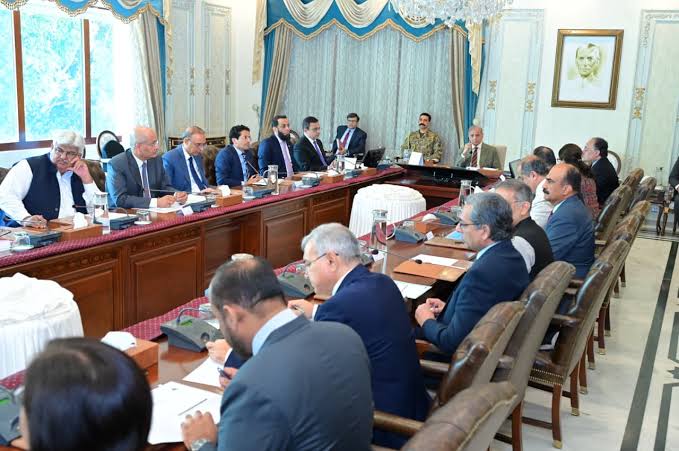
The Khyber Pakhtunkhwa government is taking practical steps to eliminate legal and administrative obstacles hindering urban development, transparent governance, and public welfare projects, Provincial Minister for Law, Human Rights and Parliamentary Affairs Aftab Alam said while chairing a meeting of the Cabinet’s Standing Committee in Peshawar.
The meeting reviewed proposed amendments to urban development laws, financial and administrative matters related to the Bus Rapid Transit (BRT) project, and several other key government issues. It was attended by Minister for Local Government and Rural Development, Special Assistant to the Chief Minister on Transport and Mass Transit Samiullah Khan, Advocate General Khyber Pakhtunkhwa Shah Faisal Utman Khel, Secretary Transport and Mass Transit Muhammad Zubair, the Chief Executive Officer of the Transport and Mass Transit Department, and senior officials from the Law Department, Local Government Department, Urban Areas Development Authority (UADA), Peshawar Development Authority (PDA), Transport Authority and other relevant departments.
The committee conducted a detailed review of the recommendations and minutes of the Cabinet’s sub-committee regarding proposed amendments to the Peshawar Development Authority (PDA) Act, 2017 and the Urban Areas Development Authority (UADA) Act, 2020. Members also examined the legal, constitutional and administrative aspects of Writ Petition No. 1220/2024 to strengthen the government’s position before the court while ensuring that proposed reforms remain aligned with the public interest.
The meeting discussed shortcomings in the existing legal provisions governing plot allotments, deficiencies in the current housing policy, and the need for reforms in light of judicial decisions and prevailing laws. The committee directed the relevant authorities to review the quota policy for regular employees and civil servants and clearly distinguish between employees whose accrued rights are protected and those whose rights are not.
It also ordered the formulation of a minimum market value for plot allotments, the development of clear terms and conditions for residential plot allocations, the early finalisation of regulations required under the UADA Act, and measures to exclude beneficiaries who have already availed themselves of previous schemes from future allotments. The committee further directed that legal advisers of both the PDA and UADA be invited to the next meeting.
The committee also reviewed financial payments and other legal and administrative matters relating to the BRT project involving the Cantonment Board Peshawar. It instructed all concerned institutions to resolve outstanding issues through mutual consultation, transparency and in accordance with legal requirements to ensure that development projects continue without delay and that quality public transport services remain uninterrupted. The Chief Secretary of Khyber Pakhtunkhwa was tasked with finalising recommendations on these matters for presentation at the next meeting.
Addressing the participants, Aftab Alam said the provincial government, under the leadership of the Chief Minister, is committed to strengthening the rule of law, promoting transparent governance and implementing institutional reforms. He said modernising urban development laws is essential to prevent unnecessary legal disputes and administrative bottlenecks in the future.
The minister said the government is prioritising legislation that safeguards the public interest, encourages investment, improves urban planning, enhances institutional capacity and ensures the timely completion of development projects. He stressed that all proposed amendments would be finalised in accordance with constitutional requirements, judicial pronouncements and the broader public interest.
He also directed all relevant departments to strengthen interdepartmental coordination and complete all legal and administrative processes within the prescribed timeframe to eliminate unnecessary delays, improve transparency in urban development and ensure the timely delivery of better civic services to the people.