Sajjad Ahmed Rustamani
Israel’s parliamentary elections have placed the Middle East at a dangerous crossroads. As votes are counted, Prime Minister Benjamin Netanyahu’s political alliance is struggling to secure the parliamentary majority needed to retain power, while opposition leader Gadi Eisenkot is challenging his leadership. Preliminary results suggest that neither camp has secured the 61 seats required to govern. Yet the consequences extend far beyond Israel’s political boundaries.
The question confronting the world is not simply whether Netanyahu will return to office, but whether the Middle East will witness another period of military confrontation, humanitarian suffering and escalating hostility towards Iran, or finally move towards diplomacy, accountability and lasting peace. For Netanyahu, the election represents much more than another political contest. It is a test of his controversial leadership following years of conflict, growing international criticism and deep divisions within Israeli society. His supporters consider him an experienced leader capable of confronting serious security threats. His critics associate his leadership with prolonged warfare, political polarisation and diminishing prospects for peace.
The possibility of Netanyahu returning to power raises serious questions about the direction of Israeli foreign policy. His previous governments have repeatedly relied on military pressure to address regional threats. Although Israel has legitimate security concerns, excessive dependence on force risks creating new conflicts rather than resolving existing ones.
The devastating war in Gaza remains the strongest argument against treating military superiority as a substitute for political wisdom. The destruction of civilian infrastructure, displacement of families and suffering of children have deeply damaged Israel’s international reputation. Military achievements cannot compensate for the humanitarian consequences of policies that leave ordinary people struggling to survive.
International legal concerns have further complicated Netanyahu’s political standing. In November 2024, the International Criminal Court issued an arrest warrant against him over alleged war crimes and crimes against humanity connected with Gaza. Netanyahu rejects the allegations, and Israel disputes the court’s jurisdiction. The warrant is not a conviction, but its existence represents a significant challenge to international accountability and Israel’s diplomatic standing.
If Netanyahu eventually succeeds in forming another government, Gaza could face renewed political and humanitarian uncertainty. Restrictions on reconstruction, continued military operations and the absence of a credible settlement would make lasting stability increasingly difficult. Peace cannot emerge while Palestinian families remain deprived of security, adequate housing and meaningful economic opportunities.
Recent United Nations humanitarian assessments underline the seriousness of these concerns. Large numbers of displaced Palestinians continue to face unsafe living conditions, inadequate shelter and interruptions to essential services. For Gaza’s population, the future cannot be measured through diplomatic declarations alone. It must be measured through access to food, healthcare, education and the opportunity to rebuild shattered communities.
Iran represents an even more dangerous dimension of Israel’s political future. Netanyahu has consistently portrayed Tehran as Israel’s principal strategic adversary. His approach has emphasised military deterrence, confrontation and the prevention of Iranian nuclear weapons capabilities. A renewed Netanyahu government could therefore increase the possibility of further military escalation, particularly if diplomatic opportunities continue to narrow.
The consequences of another major confrontation between Israel and Iran would extend far beyond their borders. Iranian retaliation, Israeli counterstrikes and the involvement of allied military forces could transform a limited confrontation into a broader regional conflict. Even the expectation of another war could deepen insecurity and encourage additional military preparations throughout the Middle East.
Equally important, a change of leadership in Israel would not automatically eliminate hostility towards Iran. Security concerns are shared across much of Israel’s political establishment, including some opposition parties. The difference would depend on whether a new government prioritised diplomatic engagement alongside deterrence or continued treating military confrontation as its principal instrument of foreign policy.
For neighbouring Arab countries, another Netanyahu administration could complicate efforts towards regional reconciliation. Saudi Arabia and other Gulf states have significant economic interests in preserving regional stability. They are unlikely to welcome another prolonged conflict that threatens investment, maritime security, commercial activity and the confidence of international markets.
Lebanon and Syria would remain particularly vulnerable to escalating tensions. Military confrontation involving Hezbollah or armed groups operating near Israel’s borders could undermine fragile security arrangements and place additional civilian populations at risk. Years of conflict have already demonstrated how quickly local confrontations can acquire regional dimensions. The United States would also face difficult decisions. Washington remains Israel’s most influential strategic partner, and American political support substantially affects Israel’s security calculations. Yet unconditional diplomatic backing, without meaningful pressure for restraint and compliance with international humanitarian law, risks weakening America’s credibility as a promoter of a rules-based international order.
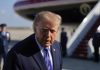
President Donald Trump’s support for Netanyahu adds another political dimension. Close personal relations between national leaders can strengthen bilateral cooperation, but they should never replace independent assessments of regional security. American policy should encourage restraint, protect civilian lives and prevent any unnecessary military confrontation with Iran.
A renewed Middle Eastern conflict would also carry serious economic consequences for the wider world. The region’s importance to international energy supplies and maritime trade means that military instability can rapidly increase transportation costs, insurance premiums and uncertainty in global markets. Any substantial disruption around the Strait of Hormuz would be especially damaging. Countries already struggling with inflation and external financial pressures, including Pakistan, would be particularly exposed. Higher energy prices could increase transport and electricity costs, place pressure on foreign exchange reserves and contribute to rising prices of essential commodities. Thus, political decisions in Israel can have consequences for households thousands of kilometres away.
However, Netanyahu’s possible defeat would not automatically produce a peaceful Middle East. Eisenkot himself comes from a military background, and significant differences remain among Israel’s opposition parties over Palestinian statehood, security arrangements and relations with neighbouring countries. A genuine transformation requires more than replacing one prime minister with another. It requires a political commitment to negotiations, the protection of civilians and recognition of legitimate Palestinian rights. A government genuinely interested in long-term security must understand that Israel’s safety and Palestinian freedom cannot be treated as permanently opposing objectives. Sustainable security depends upon political agreements that both communities can recognise as just.
Israel’s democratic institutions now face an important test. The electorate has the right to choose its representatives freely, while political leaders have a responsibility to respect the outcome and pursue lawful coalition arrangements. Parties representing Palestinian citizens of Israel should not be excluded from meaningful political participation merely because their inclusion challenges established political preferences.
The writer works at College Education Department, Government of Sindh.
Courtesy