Peshawar
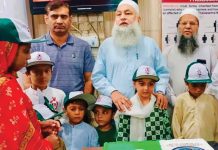
Khyber Pakhtunkhwa’s Health Advisor, Ihtisham Ali, on Thursday underscored the urgent need to prioritise breastfeeding as a public health and policy imperative, while addressing a ceremony marking the World Breastfeeding Month 2025.
The event, held in Peshawar, was attended by Director General Health Services Dr. Mohammad Saleem, former Senator and paediatrician Dr. Mehr Taj Roghani, representatives from the Paediatric Association, UNICEF officials, Director Nutrition Dr Fazal Majeed, Director MCH Dr. Khizar Hayat, KP President Insaf Doctors Forum Dr. Nabi Jan, and other relevant stakeholders.
Speaking as chief guest, Ihtisham Ali said, “Today is not merely a ceremonial gathering to mark World Breastfeeding Month; it is a pledge to every mother and child in Khyber Pakhtunkhwa — that we will integrate breastfeeding into our policies, planning, and implementation mechanisms.”
He emphasized that breastfeeding is not the sole responsibility of mothers. “It is a collective social responsibility and an investment in public health. It directly contributes to reducing infant mortality, improving child development, and cutting healthcare costs,” he added.
Citing provincial data, Ihtisham Ali noted that while 64% of babies in KP are born in hospitals, only 22% are breastfed within the first hour of birth. “This is not due to unwillingness of mothers but a failure of the system to provide timely support,” he remarked.
He urged authorities to move beyond symbolic gestures and adopt breastfeeding as a priority policy issue. “As Health Advisor, I will advocate for dedicated budgeting for breastfeeding, structured lactation counselling services in every hospital, family-friendly workplace policies for expecting mothers, and strict enforcement of the revised Breastfeeding Act,” he declared.
He further criticised the unethical marketing of formula milk, calling it a threat to child health. “Breast milk is not just nourishment — it is a fundamental right of every child. We will not allow the commercialisation of infant nutrition to overshadow this right,” he said, vowing strict action against deceptive advertising in the province.
Ihtisham Ali announced plans to strengthen the KP Breastfeeding Act to include comprehensive regulatory measures, close legal loopholes in formula sales and promotion, and enforce punitive action for violations. “I will personally take these reforms to the cabinet and push for immediate implementation,” he stated.
Referring to international standards, he said the province’s legislative reforms would align with WHA (World Health Assembly) resolutions. He shared that over 40 hospitals in the province were in the process of becoming Baby-Friendly Hospitals, with an additional 15 paediatric care centres under planning.
“With support from UNICEF, more than 20 hospitals now have functional Neonatal Intensive Care Units (NICUs),” Ali noted.
Concluding his speech, he called upon legislators, health officials, partners, and communities to move beyond words and into action. “Let us build a Khyber Pakhtunkhwa where every child gets the best start in life — beginning with the right to breast milk,” he urged.
In a media interaction following the event, Health Advisor Ihtisham Ali also addressed governance challenges within the health department, stressing the need for intelligence-based operations, akin to anti-corruption crackdowns, to eliminate entrenched mafias. “In the coming days, you will witness more such decisive actions. The Centralised Anti-Corruption Health Cell (CATCH) will soon be made fully operational, with the province’s best officers deployed to lead it,” he stated.
He made it clear that corruption — whether in audits, medicine procurement, or postings and transfers — would not be tolerated. “The only sustainable solution is digitisation, which is being implemented rigorously across the department. From drug procurement to HR postings, all systems are being digitised,” he noted.
Ihtisham Ali further announced that the Lady Health Worker (LHW) Programme is being revitalised to improve outreach. Additionally, lists of the province’s top 30 paediatric super-specialists have been finalized. “The Khyber Institute of Child Healthcare will soon host a state-of-the-art facility that sets a new benchmark for paediatric care in the region,” he concluded.