PESHAWAR
A shortage of funds and the lack of required manpower were hampering research activities at the Agricultural Research Institute, Peshawar, preventing the institution from carrying out its work at the desired pace, officials told the Khyber Pakhtunkhwa Assembly’s Standing Committee on Agriculture on Wednesday.
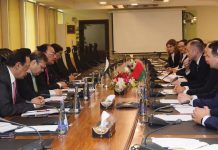
The committee meeting was held at the Agricultural Research Institute, Tarnab, Peshawar, and was chaired by its Chairman Abdul Salam Afridi. It was attended by MPAs Makhdoomzada Muhammad Aftab Haider, Gul Ibrahim Khan and Amina Sardar, along with Senior Director Abdul Bari, Director Abdul Rauf, officials of the Agriculture Department, Law Department, Advocate General’s Office and the provincial assembly secretariat.
Senior Director Abdul Bari told the forum that the Agricultural Research Institute was established in 1908 and had since played a central role in agricultural research in the province.
He said during its 118-year history the institute had developed and introduced 284 crop varieties, with the primary objectives of improving food security and supporting the socioeconomic wellbeing of the farming community.
Officials said the institute currently had 14 specialised sections spread over around 175 acres, where research was being conducted according to the province’s different agro-ecological zones.
Among its recent achievements, the committee was informed, were the approval of a high-zinc wheat variety, Fakhr-i-Tarnab, and an almond-coloured apricot variety during 2025-26.
Besides research, the institute provides training, awareness and advisory services to thousands of farmers and guides them on modern agricultural practices. Researchers are also engaged in scientific studies and the publication of research papers.
Committee member Gul Ibrahim Khan appreciated the institute’s contribution to the agriculture sector and stressed the need to provide research centres with adequate funding and essential resources to improve their performance.
Chairman Abdul Salam Afridi said Pakistan was an agricultural country and a significant part of its economy depended on farming. He said greater emphasis on modern agricultural research could help the country achieve self-sufficiency in commodities currently imported from abroad.
He said strengthening agricultural research could reduce the country’s import bill while increasing farmers’ incomes and boosting agricultural production in the province.
During the meeting, the chairman and committee members also visited various research laboratories at the institute and reviewed ongoing research on different crops and agricultural commodities.
Makhdoomzada Muhammad Aftab Haider appreciated the research work being carried out in the laboratories. Amina Sardar stressed the need for stronger coordination among relevant institutions and a joint strategy to address agricultural challenges and improve the province’s production capacity.
The institute’s senior director told the committee that inadequate funding and a shortage of required human resources were creating difficulties in expanding research activities and achieving the desired targets. Mr Afridi assured the institute authorities of the committee’s cooperation in addressing the issues.
At the conclusion of the meeting, the committee chairman directed the authorities to explore the use of solar energy to address electricity shortages at the research institute.
He also directed officials to approach the relevant authorities for dedicated electricity feeders for research centres so that scientific activities could continue without interruption.
Mr Afridi further directed the Agriculture Department to ensure timely guidance and awareness for farmers about agricultural requirements and modern production techniques.
He stressed that the findings of research conducted in laboratories should reach farmers so they could benefit directly from scientific advances and improved farming methods.
The chairman also called for regular awareness programmes for farmers and measures to encourage researchers, saying stronger links between research institutions and the farming community were essential for improving agricultural productivity in the province.