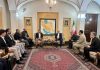
For nearly half a year, our legislature operated with a vacancy that should have set off louder alarms: the office of the leader of the opposition was left unfilled. On Friday, the Speaker formally notified Mehmood Khan Achakzai as the opposition leader, ending an avoidable lapse. Yet the larger question endures–why did the system permit the lapse to become routine in the first place?
Parliament is designed to be adversarial by intent and by extension, an organised opposition, with a recognised leader, is the instrument through which scrutiny is structured: questions are coordinated, committee work is asserted, floor strategy is disciplined, and accountability is forced out of the realm of spectacle and into procedure.
Veteran parliamentarian Raza Rabbani captured the constitutional impropriety in plain terms when he warned that leaving both houses without opposition leaders was a self-inflicted democratic wound.
The defence offered for the delay leaned on legal uncertainty. The Speaker’s office had indicated the matter was sub judice, linked to challenges filed against the disqualification of the previous opposition leader, Omar Ayub. However, the litigation itself did not justify paralysis as petitions were withdrawn, and the process was repeatedly reset through procedural interpretations.
None of this absolves the opposition of responsibility. After the disqualification of its parliamentary leaders, Pakistan Tehreek-e-Insaf hesitated, leaving posts vacant in what was framed as a protest strategy. That indecision ceded institutional ground. The record further suggests a gross mishandling of paperwork. Submitting papers elsewhere may be a technicality, but in law and politics, technicalities are often the point. An opposition that claims institutional space cannot afford to treat procedure as optional, because procedure is the very terrain on which its rights are either secured or surrendered.Pakistan Travel Guide
Mr Achakzai now assumes an office that should never have been left vacant long enough to become a headline. His call for national dialogue gestures toward repair, yet no single figure can restore habits that institutions have unlearned. The responsibility lies heavier on the government, which should welcome scrutiny rather than treat it as sabotage. The opposition, for its part, must remain actively engaged, even when the situation becomes challenging.
The Election Commission’s suspension of lawmakers for non-filing of asset statements is a much-needed reminder that the state has begun to reassert the primacy of rule-based governance. Compliance with disclosure requirements is a constitutional obligation, and its enforcement strengthens parliamentary credibility.
That same commitment to process must now extend across the institutional spectrum. Just as legislators are expected to meet their legal duties, parliamentary authorities are expected to fulfil theirs in a timely and consistent manner. To repair public trust and fairness, lawmakers must obey both the letter and the spirit of the law.