ISLAMABAD: Crude oil prices remained on a downward slide on Tuesday amid concern over excessive supply and slowing demand growth. As of 1230 hours GMT, Brent, the international benchmark for two-thirds of the world’s oil, shed $0.42 (-0.55 percent) to reach $75.61 a barrel. The West Texas Intermediate (WTI), the main oil benchmark for North America, went down by $0.34 (-0.48 percent) to $70.98 a barrel. Both benchmarks hit their lowest levels since late June on Thursday last. However, the price of Russian Sokol increased by $0.19 (+0.27 percent) to $71.49. Arab Light prices witnessed an increase of $0.31 (+0.39 percent) to reach $80.36 a barrel. On the other hand, the price for Opec Basket remained unchanged at $77.47 a barrel. The OPEC Reference Basket of Crudes (ORB) is made up of Saharan Blend, Girassol, Djeno, Zafiro, Rabi Light, Iran Heavy, Basra Light, Kuwait Export, Es Sider, Bonny Light, Arab Light, Murban and Merey. TLTP
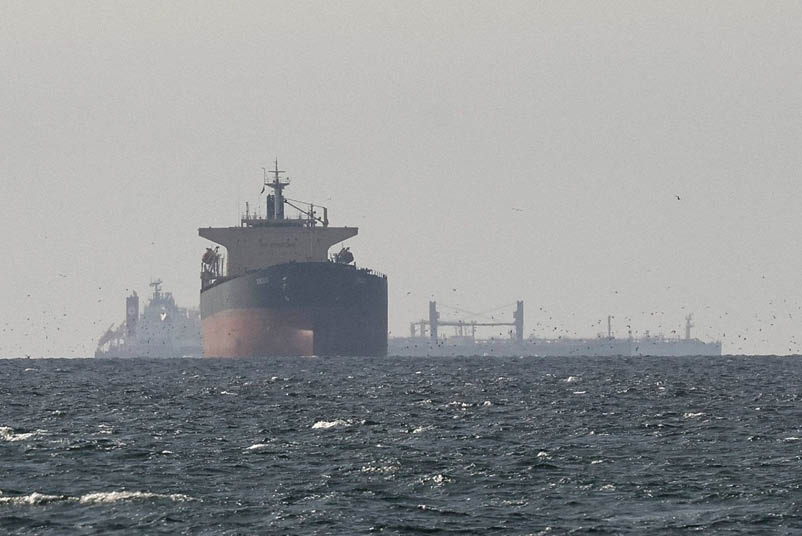
Oil made gains earlier in the day due to escalating supply risks in the Middle East after an attack by the Iran-aligned Houthis on a tanker. A cruise missile launched from Houthi-controlled Yemen struck a commercial chemical tanker, causing a fire and damage but no casualties in the latest such attack to heighten safety risks for tankers in vital shipping lanes.
Global oil demand growth is set to slow in 2024 with OPEC and the International Energy Agency split on the extent, and a recent OPEC+ deal to limit supply underwhelmed the market.
Investors were also cautious ahead of a crucial US inflation report and interest rate decision. The Consumer Price Index (CPI) report was due out on Tuesday, while the Federal Open Markets Committee’s two-day policy meeting ends on Wednesday (December 13).
Oil prices lowered despite the US efforts to replenish strategic reserves provided support, as concerns persist about oversupply and softer fuel demand growth next year. The recent price weakness drew demand from the United States, which has sought up to 3 million barrels of crude for the Strategic Petroleum Reserve (SPR) in March 2024.
Despite the Organization of the Petroleum Exporting Countries (OPEC) and allies, together known as OPEC+, having pledged to cut 2.2 million barrels per day (bpd) of production in the first quarter, investors remain sceptical about compliance. Output growth in non-OPEC countries is expected to lead to excess supply next year.
Brent and WTI crude futures slid to their lowest since late June on Thursday, a sign that many traders believe the market is oversupplied.