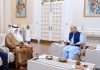
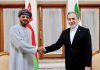
Prime Minister Nawaz Sharif recently chaired a meeting on the progress regarding the implementation of the National Action Plan (NAP) in which he pledged to make Pakistan safe for all of its citizens regardless of their religious or ethnic affiliations. The meeting was of high significance as it was also attended by other bigwigs of the government such as the National Security Advisor (NSA) and Director-General of the Inter-Services Intelligence (ISI).
The PM’s remarks on the safety of all citizens are quite positive given the fact that Pakistan has been tarnished by extremism in the form of religious fundamentalism and ethnic tensions ever since the late president General Zia-ul-Haq used religious and ethnic groups to pursue his political ambitions in the 1980s. Moreover, the fault lines of these extremist tendencies were further exploited by trouble-making elements within and outside Pakistan over the years, and law enforcement agencies (LEAs) proved to be ineffective to fight this problem.
However, with the initiation of the Operation Zarb-e-Azb in June 2014, normalcy gradually returned to most parts of the country with development becoming one of the main goals for the state. Furthermore, NAP’s introduction in January 2015 has helped LEAs contain militancy and hate speech to a great extent. Security forces and civil administration have successfully countered extremism in certain areas of the country with the arrest of members of clergy who called for sectarian strife. Not only this, hardened terrorists such as Malik Ishaq were killed for the greater good of society.
Nevertheless, NAP still requires further reforms with its implementation across the board becoming mandatory. There are still many people with extremist views such as Abdul Aziz of the Red Mosque and Aurangzeb Farooqi of the ASWJ who are actively inciting hatred and violence despite the fact that the state took notice of their nefarious activities and even arrested them a number of times.