PESHAWAR
ZuPeshawar, the operator of the BRT system, received the Prize for the Cities Award from the World Resource Institute. The worth of the award is USD 25,000, said a statement issued by the authority here on Thursday.
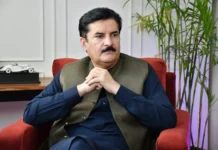
The award ceremony was held in New York, USA on 1st February, 2023 where CEO Trans-Peshawar, Fayyaz Ahmed Khan received the award on behalf of the organization.
According to the spokesperson of the BRT, the award evaluated a total of 260 projects from 175 cities and 65 countries around the world.
Five finalists were then selected from the submission pool based on an assessment by an international and multi-disciplinary evaluation team according to set criteria (innovation, impact, ripple effect etc.).
After achieving the Gold Standard BRT Award, Sustainable Transport Award and Best Smart Ticketing Program award last year, Zu Peshawar has once again brought an honor to the Country by receiving recognition.
While the Gold Standard BRT Award is limited to BRT Systems and the Sustainable Transport Award takes into account all kinds of urban mobility projects, the WRI Prize for Cities is not limited to transportation alone and takes into account all kinds of transformative projects in cities spanning over all sectors including agriculture, climate change, oceans, energy, forests, water etc.
The WRI Ross Center Prize for Cities award recognizes cutting-edge, innovative projects and initiatives for their contribution to inclusive and sustainable urban transformation.
The theme for the 2021-22 Prize for Cities award was “Thriving Together in Turbulent Times” and WRI invited submissions from initiatives and projects demonstrating how to live and thrive in turbulent times by helping cities and communities respond to uncertainty, disruption and crisis.
ZU Peshawar was appreciated on the international level for demonstrating its performance during COVID-19 (turbulent times) for facilitating women, vulnerable groups and for its mitigating role in the economic crisis.
BRT Peshawar launched its service in August 2020 and facilitated 54 million passengers during the pandemic. 80% of those facilitated in accessing the job market and health care facilities were women, vulnerable groups and people from lower income groups.
The decades-old prevalent public transport system, which was already losing its survival in the market, failed to provide safe facilitation to commuters during the pandemic, while Zu Peshawar played an effective role in safe accessibility, travel time savings and provided labor to businesses at lower cost due to lower transportation charges.
The Bicycle Sharing System provided an additional mobility option for citizens during COVID-19 lock down.
BRT Peshawar increased women’s share in ridership by more than 26% from the previous percentage of 2% thus providing additional relief to women as well as other vulnerable groups.
The project continues to facilitate the economic revival in post-covid Peshawar, by facilitating a peak number of 316,000 daily passengers, by providing them access to 70% of the city through its network of various routes.
Zu Peshawar operated as an inclusive and universally accessible system, for all giving maximum benefit to the vulnerable groups. Furthermore, scrapping close to 504 old, unsafe vehicles and replacing them with 220 clean technology buses has reduced negative impact on the environment.
The impact of the project goes beyond mobility and transportation and has a profound and lasting effect on enhancing economic activity, empowerment of women and vulnerable segments of the society.
The project was planned around inclusiveness, resilience, equity, universal accessibility and better environment.