Instead of unleashing air attacks against advancing insurgents, some airmen were fighting each other on August 15
WASHINGTON
Hours before Kabul fell to the Taliban on Aug 15, the Afghan Air Force was melting down. Instead of unleashing air attacks against advancing insurgents, some airmen were fighting each other.
At the Kabul airport, some Afghan Air Force personnel guarding the airfield tried to force their way onto a military helicopter preparing to lift off, according to the Afghan Air Force pilot flying the craft and two other people familiar with the incident. The chopper’s destination was across town, but the guardsmen were convinced it was leaving the country and were determined not to be left behind, the pilot told Reuters. Another guard, trying to stop them, pointed his gun at the cockpit.
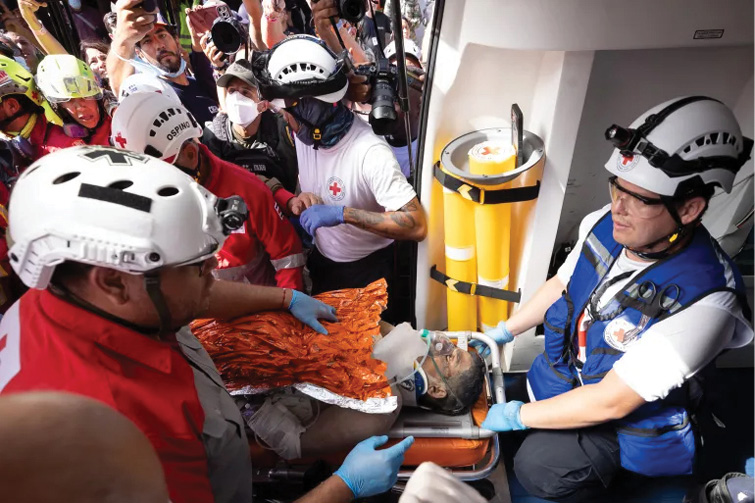
Bedlam ensued. Shots rang out. Bullets pierced the helicopter. Debris and metal flew, injuring the pilot and another airman on board; both required treatment. “My face became full of blood,” the pilot said.
Afghan President Ashraf Ghani fled the country later that day, hastening the collapse of the US-backed government faster than even the most pessimistic defense analysts had predicted. Within hours, the Taliban stormed into Kabul, triggering a chaotic American evacuation that has damaged the presidency of US leader Joe Biden.
The melee involving Afghan Air Force members ahead of Kabul’s fall hasn’t been previously reported. Reuters also learned exclusive details from airmen and former Afghan officials who participated in the secret operation to fly Ghani and his entourage to neighboring Uzbekistan on Aug 15, and the role the chaos at the airport may have played in the timing of his departure.
Those episodes are among the detailed accounts compiled by Reuters from more than two dozen people, including pilots, military personnel, government officials and other veterans of the conflict in Afghanistan and the United States. Their stories provide new insight into the final days of the Afghan Air Force, once the crown jewel of the nation’s military.
The United States had spent billions building a flying force in Afghanistan to give Kabul an edge over Islamic insurgents. Bombing raids killed countless Taliban fighters, who had no air power of their own.
But that project unraveled in just weeks after the United States began withdrawing support in mid-2021 as part of its final pullout from the country.
Militants in sneakers and battered pickup trucks swiftly seized unprotected air bases as soldiers guarding those facilities gave up, often without a fight. Ammunition ran low. Aircraft fell into disrepair. Pilots pulled functioning planes and choppers back to Kabul to protect the capital, the last government stronghold.
But they would never execute that strategy. News of Ghani’s departure triggered a mass exodus of airmen trying to save their equipment – and themselves. Pilots, aircrews and even some of their relatives piled haphazardly into aircraft and fled the country. More than a quarter of the nation’s fleet ended up in neighboring Uzbekistan and Tajikistan, Afghan and US officials say.
“To be honest, we lost control” at the end, one former Afghan Air Force official said.
The fall was so swift that the Pentagon immediately dispatched US forces to Kabul to cripple dozens of US-supplied aircraft left behind to make them worthless to the Taliban.
John Michel, a retired brigadier general who once led the US training mission for the Afghan Air Force, expressed sadness, but not surprise, at the force’s demoralised finale. He contends that the US template upon which it was modeled was not suited for a place like Afghanistan.
“It was an overly ambitious project that was, from the beginning, doomed,” Michel said.
Built to fail
The rapid disintegration was emblematic of the wider failures of the 20-year US involvement in Afghanistan.
Along with elite Special Forces units, the Afghan Air Force had been held up by the United States as proof that the drive to create a modern military to fight the Taliban was bearing fruit. The effort produced hundreds of courageous pilots who performed admirably under fire. But the force remained dependent on its American partners for core functions including aircraft maintenance and logistics. Impoverished Afghanistan, rife with corruption, lacked the military-industrial ecosystem and deep bench of talent needed for such an endeavor to stand on its own.
The Biden administration’s decision this year to withdraw from Afghanistan all US military personnel and contractors supporting the Afghan Air Force quickly exposed this weakness. Video chats with remote support staff could not replace on-the-ground help.
Asked about Reuters’ findings about the crippling effects of ending hands-on assistance, the Pentagon said it had supported the Afghan Air Force even after the withdrawal, paying airmen’s salaries, training pilots overseas, even conducting air strikes from overseas bases outside Afghanistan in support of Afghan air and ground forces into early August.
General Frank McKenzie, head of the US military’s Central Command, warned Congress in April that he was concerned about “the ability of the Afghan Air Force to fly… after we remove the support for those aircraft.”
It didn’t take long. As the Taliban rolled through Afghanistan, grabbing province after province, the Afghan Air Force was asked to do more than ever to support the floundering ground war: bombing raids, medical rescues, troop transports. Its aircraft, meanwhile, were failing from overuse and lack of maintenance. The force lost one out of five usable aircraft between the end of June and the end of July alone, according to Pentagon data.
Ammunition too, was in short supply, Reuters has learned. An Afghan pilot, who asked to be identified only by his first name, Shah, recalled flying a dangerous medical evacuation mission in July to recover wounded and dead Afghan troops in Spin Boldak, near the border with Pakistan. Shah said he had two armed MD-530 attack helicopters to escort his UH-60 Black Hawk chopper. But one of the pilots warned they were low on ammunition and might not be able to help if Shah came under Taliban fire, the airman recalled.
Shah described a desperate scramble at the recovery site. “We were piling up bodies,” he recalled. “There was even no time to check (for) their heart beat, due to high risk.” Shah is still in Afghanistan, hiding from the Taliban.