PESHAWAR
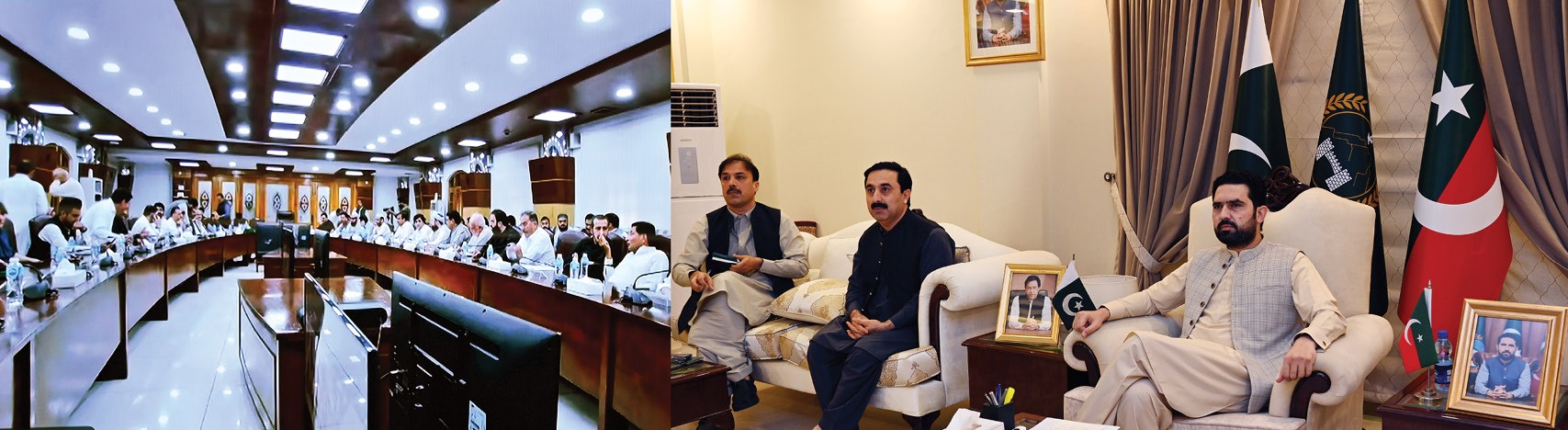
A two-day workshop on early detection and management of young-onset psychosis concluded at Khyber Medical University (KMU), Peshawar.
Psychiatrists, psychologists, and notable international and national faculty participated in the workshop.
The workshop was formally inaugurated by Secretary Health Tahir Orakzai and vice-chancellor KMU Dr. Zia ul Haq.
Dr Saeed Farooq University of Keele UK, Dr Imran Chaudhry Ziauddin Hospital Karachi, Prof Dr Sheharyar Jovendah Lahore, Dr Malik Wajid Rawalpindi, Dr Imran Khan Consultant Psychiatrist KTH, Prof Dr Wajid Ali HMC, Prof Dr Irfan Peshawar Medical College, Dr Mukhtar ul Haq LRH, Dr Jalil Khan, KMU and other faculty members and senior psychiatrists from across the province attended the workshop.
Tahir Orakzai addressing the workshop said that mental health issues were increasing day by day which is a big challenge for all of us.
He said that the research on mental health in KMU was a timely step in the right direction which would help the government to tackle this problem on a solid basis.
Prof Dr Zia-ul-Haq said that KMU is taking steps under a comprehensive approach to knowledge and research to address health issues.
He said there is no health without mental health, therefore, we are focusing on mental health education and research and the establishment of the KMU-Institute of Mental Health was a significant step towards prioritizing this neglected field.
He hoped that the research study worth Rs 188 million being conducted on mental health by KMU would lead to overcoming this health problem.
It is worth mentioning this workshop is part of THE HOPE program of research which KMU is running in collaboration with the University of Keele UK, University of Kent, and funded by the Medical Research Council UK. The study will be carried out in the provincial capital Peshawar.
The proposed study revealed that traditional healers working with primary care and mental health professionals for early intervention in psychosis (THE HOPE) is an innovative approach.
It will involve traditional and spiritual healers (TSH) working collaboratively with primary care practitioners (PCPs) through task shifting for early detection, referral, and treatment of the first episode of psychosis.
Experts HOPE will help to prevent long-term consequences of untreated psychosis, which on average remains undiagnosed and untreated for over two years in low-and middle-income countries in young persons.
They said that the prevalence of psychosis increases rapidly from age 14 onwards with a peak incidence in the late teens and early 20s.
A meta-analysis based on community samples (n=29517) found that about 10pc of children and adolescents reported significant psychotic experiences.