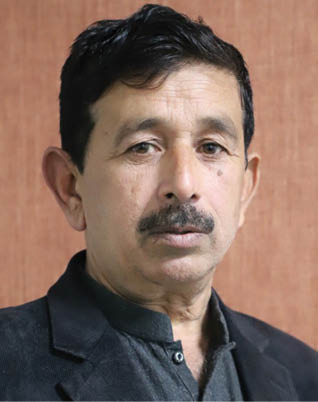
Shahidul Alam is a free man. At least for now. THE Bangladeshi photo journalist and social activist has been released from prison after failing to secure bail on four previous occasions. That being said, 100 days is a long time to spend in incarceration. Especially for the sole ‘crime’ of criticising a government that is heading to the polls next month in a bid to maintain the charade offered by parliamentary democracy.
Back in July, two students were killed by a speeding bus in Dhaka. This prompted mass street protests in a country where some 25,120 people have been killed in road accidents over the last three-and-a-half years; with 64, 482 injured. Alam’s mistake was to give an interview to international broadcaster Al Jazeera to offer the perspective from the ground. And it is one that painted a picture of an “unelected government” that increasingly relies on brute force to cling to power. Unelected because the opposition boycotted the 2014 polls due to concerns of widespread rigging that ultimately returned Sheikh Hasina to the premiership for a third time. Alam also went on to accuse her regime of large-scale corruption and of fostering a system based on corruption. All of which prompted the student protests even as Dhaka insisted the agitation was exclusively related to road safety. Then there was the matter of armed police and other actors attacking unarmed students. Despite being severely beaten while in prison, Alam was one of the fortunate ones. In as much as he is an internationally renowned photographer and part of the cultural urban elite.
The lessons for Bangladesh are not dissimilar to those for Pakistan. Namely, that when the media is censored; when representatives of the fourth estate are picked up and tortured for not toeing the regime’s line; when the state employs all its might to prevent journalists from doing their job — the democratic paradigm exists on paper only. And when this happens there is little difference in terms of the fate that awaits journalists in countries like Saudi Arabia and here in South Asia. Indeed, Alam is not out of the woods yet. If convicted under Section 57 of the country’s Information Communications Technology (ICT) Act — described as a broad law against electronic communication that “tends to deprave or corrupt” the image of the state — he could face up to 14 years in prison.
Both Bangladesh and Pakistan must understand that an independent media is an important benchmark of democracy; if, that is, the latter is to flourish in any real and lasting sense. Central to this is the keeping of checks-and-balances on the distinct branches that represent separation of powers. For when the state engages in a violence to silence a critical media — it becomes guilty of violating its own mandate. Thereby risking charges that it is itself engaging in subversive actions. Against society’s fourth pillar.