MURREE
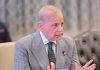
Shahid Khaqan Abbasi, the head of the Awam Pakistan Party (APP), has harshly criticized the current central government, claiming it lacks both the mandate and the governance necessary to provide stability in the country.
Speaking with a private TV channel, Abbasi stated that the government believes it has achieved stability due to the incompetence of the Pakistan Tehreek-e-Insaf (PTI), but emphasized that true political power stems from both a legitimate mandate and strong governance, neither of which, according to Abbasi, the current government possesses.
“The government is strong when the country is strong. It is clear that this government does not have either the mandate or the performance,” Abbasi said, highlighting that effective governance requires both a solid mandate and the ability to deliver results, which he believes the present administration lacks.
In response to ongoing discussions regarding the privatization of Pakistan International Airlines (PIA), Abbasi expressed skepticism over the government’s expectations of raising 85 billion rupees from the sale of the national carrier.
He suggested that the market was not inclined to accept such a high valuation and that a more realistic figure for PIA’s privatization would be around 10 billion rupees, which he still considered excessive given the airline’s current financial structure.
Abbasi also took aim at the role of the opposition in current Pakistani politics. Criticizing PTI’s approach, he argued that the party was more focused on securing the release of its leader, Imran Khan, from prison, rather than addressing the pressing issues facing the nation. “The opposition’s primary goal today is not to engage with the country’s problems. PTI is obsessed with getting Imran Khan out of jail, and they continue to hope for external intervention, particularly from figures like Donald Trump, to force Pakistan to release him. This is a crude illusion,” he remarked.
He added that the opposition should be focusing on the country’s economic challenges, governance issues, and social problems, rather than fixating on the fate of one individual. Abbasi argued that it was misguided for PTI to rely on foreign pressure, calling such hopes “unrealistic” and counterproductive to the nation’s interests.
Abbasi’s comments reflect ongoing dissatisfaction with both the current government and the opposition’s role in Pakistan’s political landscape. His remarks also shed light on the growing frustration over the lack of meaningful political discourse in the face of the country’s deepening economic crisis and political turmoil.