ISLAMABAD
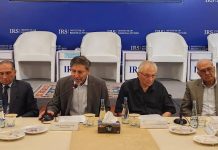
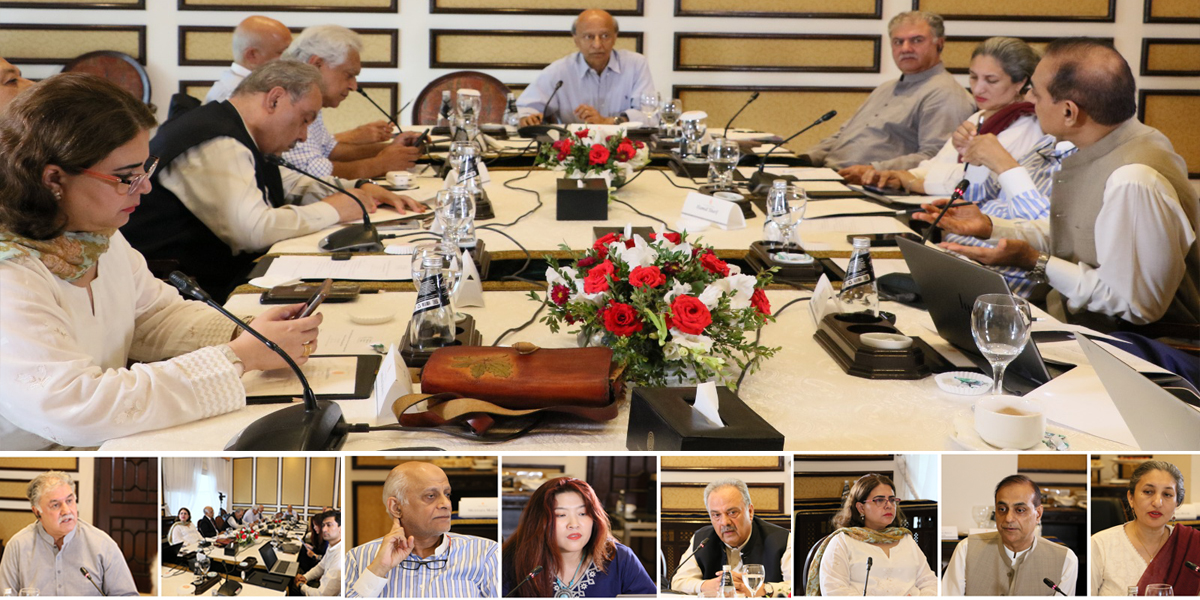
Pakistan and Afghanistan must move beyond a predominantly security-driven paradigm and instead cultivate their relationship in sustained dialogue, socioeconomic cooperation, and pragmatic regional engagement to prevent bilateral tensions from hardening into prolonged hostility, speakers said at a roundtable titled “Pakistan-Afghanistan Relations: What Next? Towards Pragmatic Policy Pathways in a Shifting Regional Order”, convened by the Center for Research and Security Studies (CRSS).
Bringing together experts and former officials from Pakistan, Afghanistan, China, and Uzbekistan, the discussion examined the persistent trust deficit, the TTP challenge, border closures, trade disruptions, and the wider implications of strained Pakistan-Afghanistan relations for regional connectivity.
Participants acknowledged Pakistan’s legitimate security concerns but cautioned that prolonged border restrictions, reactive policies, and an excessive focus on government-to-government engagement risked deepening economic hardship, humanitarian suffering, and political estrangement.
The speakers called for a calibrated policy framework that combines verifiable action against cross-border militancy with continued trade, people-to-people contact, Track 2 engagement, and greater involvement of regional and multilateral institutions. They stressed that geography made sustained engagement unavoidable and that economic interdependence should serve as the foundation for a more stable and functional relationship.
Maj. Gen. (R) Inam Ul Haque argued that Pakistan-Afghanistan relations have been viewed too narrowly through a government-to-government lens, while it primarily needs to be seen through business-to-business and people-to-people ties–that bind the two countries–as the paradigm of engagement. He stressed that conflict is not the natural course of bilateral relations and called for socioeconomic considerations to take precedence over geopolitical calculations. However, he cautioned that the TTP issue remains the principal source of contention and that unless it is addressed, relations are likely to remain marked by an uneasy peace in the years ahead.
Abdul Waheed Waheed, Afghan scholar, argued that the deeper problem lies in the inconsistent and frequently changing policy choices pursued by both countries over the past five decades, which have repeatedly generated mistrust and instability. While the current terrorism challenge has placed the TTP at the centre of bilateral discourse, both sides must abandon the blame game, accept the undeniable reality of a permanent neighbourhood, and pursue solutions through sustained engagement and policy consistency.
Pakistan’s Former Special Envoy for Afghanistan, Ambassador Asif Durrani, argued that, for Pakistan, the TTP constitutes the central issue in relations with Afghanistan, with most other bilateral tensions linked to the group’s presence inside Afghanistan and use of Afghan territory to launch cross-border attacks against Pakistani civilians and security personnel. He maintained that meaningful improvement in relations required concrete action to disarm the TTP and deny it safe havens.
Drawing on his tenure, he said the Afghan authorities had repeatedly offered verbal assurances, but stressed that these needed to be translated into commitments under a written and verifiable mechanism. He also described dialogue with the TTP as deeply problematic because of the group’s rejection of Pakistan’s constitutional order and its rigid ideological position.
Lt. Gen. (R) Asif Yasin Malik underscored the importance of Track 2 dialogue, citing its past contribution to resolving people-to-people issues. Drawing on his experience of dealing directly with the TTP, he said that no externally supported insurgency could succeed without a conducive domestic environment. He called for measured, consistent policymaking rather than knee-jerk reactions, arguing that Pakistan-Afghanistan relations could not remain security-driven and must instead be anchored in socioeconomic cooperation.