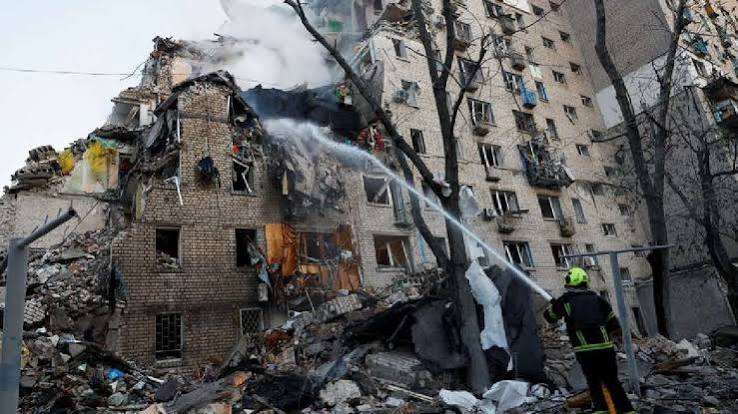
On Saturday, President Asif Ali Zardari warned Kabul that it had crossed a red line by launching drone attacks on civilian areas in Pakistan – a chilling new tactic in the Taliban’s proxy war. Security forces intercepted the rudimentary aircraft, preventing greater calamity, though falling debris still injured four civilians. It was not a military strike. It was an attempt to spread fear from the sky. The military’s media wing condemned the “failed attempt to harass civilian populations,” pointing to the “terrorist mindset” behind the drones. Hours later, Pakistan carried out strikes in Kandahar targeting a military facility allegedly used by Afghan Taliban and affiliated militant groups to support attacks against Pakistani civilians.
These drones are only the latest export of violence from Afghanistan. Since the Taliban reclaimed Kabul in 2021, Pakistan has witnessed a sharp resurgence of the Tehreek-e-Taliban Pakistan insurgency. Terror attacks in Pakistan more than doubled from 517 in 2023 to 1,099 in 2024, while terror-related deaths rose 45 per cent to more than 1,000. The TTP now accounts for over half of Pakistan’s terrorism fatalities. Every corner of the country has felt the impact, though the heaviest toll falls on Khyber Pakhtunkhwa and Balochistan, the provinces bordering Afghanistan. Islamabad once hoped a friendly government in Kabul would restrain militant groups operating along the frontier. The opposite has occurred. Pakistanis have endured this horror for too long, and their patience is wearing thin. As our forces fight back, the conflict has also become a war of narratives. The Afghan Taliban’s official accounts have pumped out brazen disinformation, even claiming to capture Pakistani outposts and kill scores of soldiers with no evidence. Islamabad swiftly rubbished these as “false, fabricated and designed to mislead”, at times publicly fact-checking Taliban statements in real time. Interestingly, Iran’s IRGC-linked news agency has also echoed some of the Taliban’s bogus claims, underscoring how far the propaganda has spread. Yet Pakistan is determined to set the record straight. It will not allow a myth of Taliban invincibility to take hold. The government faces hard choices in its security doctrine. It cannot sit back and allow Kabul’s regime to play games with Pakistani lives. The counterterrorism operation must continue unless and until the Taliban provide written, verifiable guarantees to dismantle the TTP’s sanctuaries. Short of that, talk of peace is empty. Military action alone will not resolve the problem. The state should also challenge the ideological narrative that militant groups use to justify their violence. These actors cloak themselves in religious language while targeting fellow Muslims in mosques, schools and markets. Religious scholars, educators and media voices need to expose that contradiction clearly and consistently. At the end of the day, a clear-eyed, fact-based approach is needed as years of friendly overtures and wishful thinking have failed to temper the Taliban’s behaviour. Now, only a position of strength will work. Kabul’s rulers must realise that exporting suicide bombers and drones is a dead-end road. Pakistan will defend itself.