Fazle Rabi Momand
On 7th August 2026, in the sacred city of Mecca, the heads of state of Pakistan, Saudi Arabia, and Turkey signed a document which could very well go down in history as one of the most significant strategic gambits in this decade. The “Mecca Joint Defense Agreement” or the trilateral defense alliance, whereby an attack on any one of the three states will be considered as an attack on all three, is an alliance between three countries whose strategic strength, in terms of economic and military power, cannot be overstated.
The agreement did not arise out of thin air. Rather, it is built upon the Strategic Mutual Defense Agreement between Pakistan and Saudi Arabia, which was signed in Riyadh in September 2025 and formalizes an almost eighty-year-long period of military cooperation between the two countries. The addition of Turkey, which had been expected for a while and was reported to have been in negotiations since early 2026, creates a NATO-like security triangle that emerges in the context of the broader war in Iran, which started in February 2026.
The Powers and Their Advantages
What makes this alliance different from an ordinary diplomatic effort is the fact that the three states possess complementary strengths. The first is Pakistan which is the only nuclear power in the Muslim world, while its armed forces, as the result of decades-long active counter-insurgency and conventional engagement, are among the most battle-hardened in the region. The second is Turkey, the long-time member of NATO that possesses a self-reliant modern defense-industrial sector. The third is Saudi Arabia, the world’s biggest oil exporter, whose importance for international energy and diplomacy makes its financial capabilities indispensable.
As one commentator explained to Al Jazeera after the signing of the pact, “it will bring together the military and financial strengths of each country” combining military experience and strategic potential of Pakistan with the defense-industrial capabilities of Turkey and the financial and diplomatic strength of Saudi Arabia. It is precisely the combination of these factors – weapons, money, and practical experience on the battlefield – which make this agreement so significant for some observers that they refer to it as a step towards rethinking the regional security architecture.
Why This Is Important for Pakistan
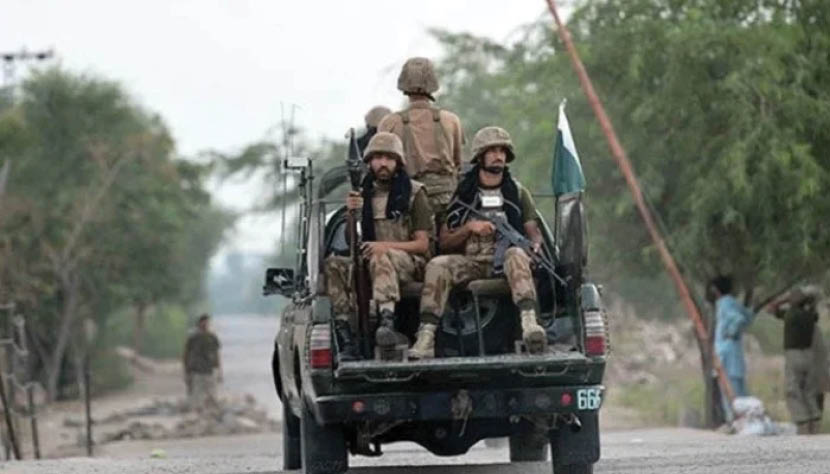
The pact represents a considerable strategic win for Pakistan because it cements and solidifies Pakistan’s pre-existing security partnership with one of the Gulf region’s most powerful countries and creates new possibilities of increased defence industry cooperation between Pakistan and Turkey and also makes Islamabad an essential security partner to the two of the most important cities in the Islamic world. In the past months, Pakistan has already sent its troops, fighter jets, drones, and air defense system to Saudi Arabia while talks on a similar security arrangement with Kuwait have been initiated in July 2026.
From a strategic point of view, this pact serves to strengthen Pakistan’s regional position during this period when tensions are running high on the eastern border of Pakistan with India. The establishment of a collective defense pact with two capable and resourceful partners serves to increase Pakistan’s ability to deter any future escalations from India. In a statement issued by the Ministry of External Affairs of India, it was declared that India will “study the implications” for India’s national security and regional stability.
Regional and Economic Ripple Effects
Beyond the military dimension, the pact carries substantial economic and geopolitical implications. A trilateral framework linking Gulf capital, Turkish defense manufacturing and Pakistani manpower and expertise could accelerate joint ventures in defense production, technology transfer and energy cooperation — potentially drawing in other Gulf and Muslim-majority states, as Kuwait’s engagement already suggests. For a region absorbing the shocks of the Iran war and instability in Yemen, a credible collective-deterrence framework anchored by three major powers may also offer a stabilizing counterweight, even as some analysts caution that its practical, operational impact will take time to materialize.
Officials from all three countries have been at pains to stress that the pact is not aimed at any particular country, nor does it constitute a sectarian or nuclear-linked bloc. Saudi Arabia’s deputy minister for public diplomacy described it as being about “building sustainable, self-reliant capabilities” rather than an arms race, while Turkish President RecepTayyipErdoğan called it a framework for “collective deterrence” that remains open to “brotherly countries” sharing its goals of peace and stability. Whether the alliance is read in New Delhi, Tehran or Washington as purely defensive will, in practice, depend less on these assurances than on how the pact is operationalized in the months ahead.
Shifting Landscape
The only thing that is certain about the Mecca Joint Defense Agreement is that it represents a fundamental change in the security architecture of the Middle East and South Asia. Nuclear deterrence, high-tech defense systems, and Gulf money have been brought together under one collective defense umbrella for the first time, and in so doing, gives Pakistan a better position in the game of regional politics. A country used to maneuvering in a tough neighborhood by using only its own resources has entered a new level of the game.