Reports show Netanyahu was persuasive but did not force US action, say sources
washington
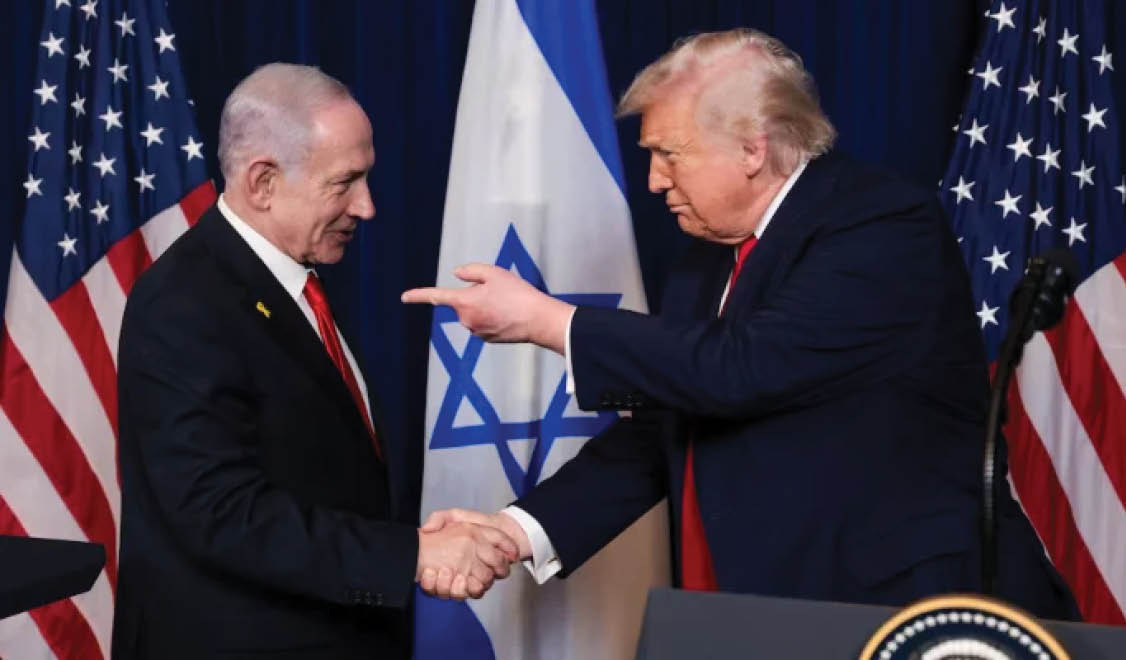
Less than 48 hours before the US-Israeli strike on Iran began, Prime Minister Benjamin Netanyahu spoke by phone to President Donald Trump about the reasons for launching the kind of complex, far-off war the American leader once had campaigned against.
Both Trump and Netanyahu knew from intelligence briefings earlier in the week that Iranian Supreme Leader Ayatollah Ali Khamenei and his key lieutenants would soon meet at his compound in Tehran, making them vulnerable to a “decapitation strike” — an attack against a country’s top leaders often used by Israelis but traditionally less so by the United States.
But new intelligence suggested that the meeting had been moved from Saturday night to Saturday morning, according to three people briefed on the call.
The call has not been previously reported.
Netanyahu, determined to move forward with an operation he had urged for decades, argued that there might never be a better chance to assassinate Khamenei
By the time the call took place, Trump already had approved the idea of the United States carrying out a military operation against Iran but had not yet decided when or under what circumstances the United States would get involved, said the sources, who spoke on condition of anonymity to discuss sensitive internal deliberations.
The US military had for weeks built up a presence in the region, prompting many within the administration to conclude it was just a matter of when the president would decide to move forward. One possible date, just a few days earlier, had been scuttled because of bad weather.
Reuters was unable to determine how Netanyahu’s argument affected Trump as he contemplated issuing orders to strike, but the call amounted to the Israeli leader’s closing argument to his US counterpart.
The three sources briefed on the call said they believed it — along with the intelligence showing a closing window to assassinate Iran’s leader — was a catalyst for Trump’s final decision to order the military on February 27 to move ahead with Operation Epic Fury.
The first bombs struck on Saturday morning, February 28. Trump announced that evening that Khamenei was dead.
In response to a request for comment, White House spokeswoman Anna Kelly did not directly address the call between Trump and Netanyahu but told Reuters the military operation was designed to “destroy the Iranian regime’s ballistic missile and production capacity, annihilate the Iranian regime’s Navy, end their ability to arm proxies, and guarantee that Iran can never obtain a nuclear weapon.”
Neither Netanyahu’s office nor Iran’s UN representative responded to comment requests.
Netanyahu in a news conference on Thursday dismissed as “fake news” claims that “Israel somehow dragged the US into a conflict with Iran. Does anyone really think that someone can tell President Trump what to do? Come on.”
Trump has said publicly that the decision to strike was his alone.
Reuters reporting, with officials and others close to both leaders speaking mostly on condition of anonymity given the sensitivity of internal deliberations, does not suggest that Netanyahu forced Trump to go to war.
But the reporting shows that the Israeli leader was an effective advocate and that his framing of the decision — including the opportunity to assassinate an Iranian leader — was persuasive to the president.
Defence Secretary Pete Hegseth in early March suggested that revenge was at least one motive for the operation, telling reporters, “Iran tried to kill President Trump, and President Trump got the last laugh.”
June attack targeted nuclear sites
Trump ran his campaign in 2024 based on his first administration’s foreign policy of “America First” and said publicly that he wanted to avoid war with Iran, preferring to deal with Tehran diplomatically.
But as discussions over Iran’s nuclear programme failed to produce a deal last spring, Trump began contemplating a strike, according to the three people familiar with White House deliberations.
A first attack came in June, when Israel bombed Iran’s nuclear facilities and missile sites, and killed several Iranian leaders. US forces later joined the attack, and when that joint operation ended after 12 days, Trump publicly reveled in the success, saying the US had “obliterated” Iran’s nuclear facilities.
Yet months later, talks began again between the US and Israel about a second aerial attack aimed at hitting additional missile facilities and preventing Iran from gaining the ability to build a nuclear weapon.
The Israelis began to plan their attack on Iran under the assumption they would be acting alone, Defence Minister Israel Katz told Israel’s N12 News on March 5.
But during a December visit to Trump’s Mar-a-Lago estate in Florida, Netanyahu told Trump that he was not fully satisfied with the outcome of the joint operation in June, said two people familiar with the relationship between the two leaders, speaking on condition of anonymity.
Trump indicated he was open to another bombing campaign, the people added, but he also wanted to try another round of diplomatic talks.
Two events pushed Trump toward attacking Iran again, according to several US and Israeli officials and diplomats.