By Nariman Bisma
Framed as a breakthrough, Donald Trump’s proposed “peace plan” for Gaza has reignited debate over whether it offers a genuine path to stability or merely a politically convenient blueprint designed to enhance his image as a global peacemaker.
The timing and presentation of the plan suggest an effort to project statesmanship on the world stage, even as the plan risks repeating the familiar pattern of externally imposed settlements that exclude those most affected. Trump had called for Hamas to respond to the plan within a deadline. While indicating agreement on the points of ceasefire, releasing hostages, and handover of civil administration to an independent Palestinian body, Hamas rejected key provisions around the governance model and disarmament as incompatible with Palestinian sovereignty; insisting that remaining issues be decided through broader Palestinian consensus. This conditional approach highlights the absence of direct engagement among the conflicting parties and weakens the plan’s moral and political foundation.
The plan’s framework itself raises questions about its credibility and inclusiveness. It envisions a technocratic Palestinian committee overseen by an international “Board of Peace,” chaired by Trump and including former UK Prime Minister Tony Blair. Yet there is little clarity on whether Arab or regional leaders would hold substantive roles in this body. Several Muslim countries including Egypt, Jordan, Saudi Arabia, Türkiye, and Pakistan have expressed readiness to cooperate with Washington toward the plan’s implementation. However, their endorsements remain cautious as many shared that the final version of the peace plan diverged from earlier drafts on which the countries had been consulted.
From observation of U.S. foreign policy and its frequent controversies, it becomes clear that Washington’s approach to conflict resolution is often driven more by strategic interest than by impartial mediation; a pattern the Trump plan mirrors. Strategically, it enhances the U.S leverage in the Middle East, particularly in countering Iran, while drawing Arab states closer to its orbit. Domestically, it reinforces Trump’s “deal-maker” persona. Economically, it opens potential pathways for U.S. firms to take part in reconstruction and development tied to the plan. Seen this way, the proposal appears as much about consolidating influence as alleviating Palestinian suffering.
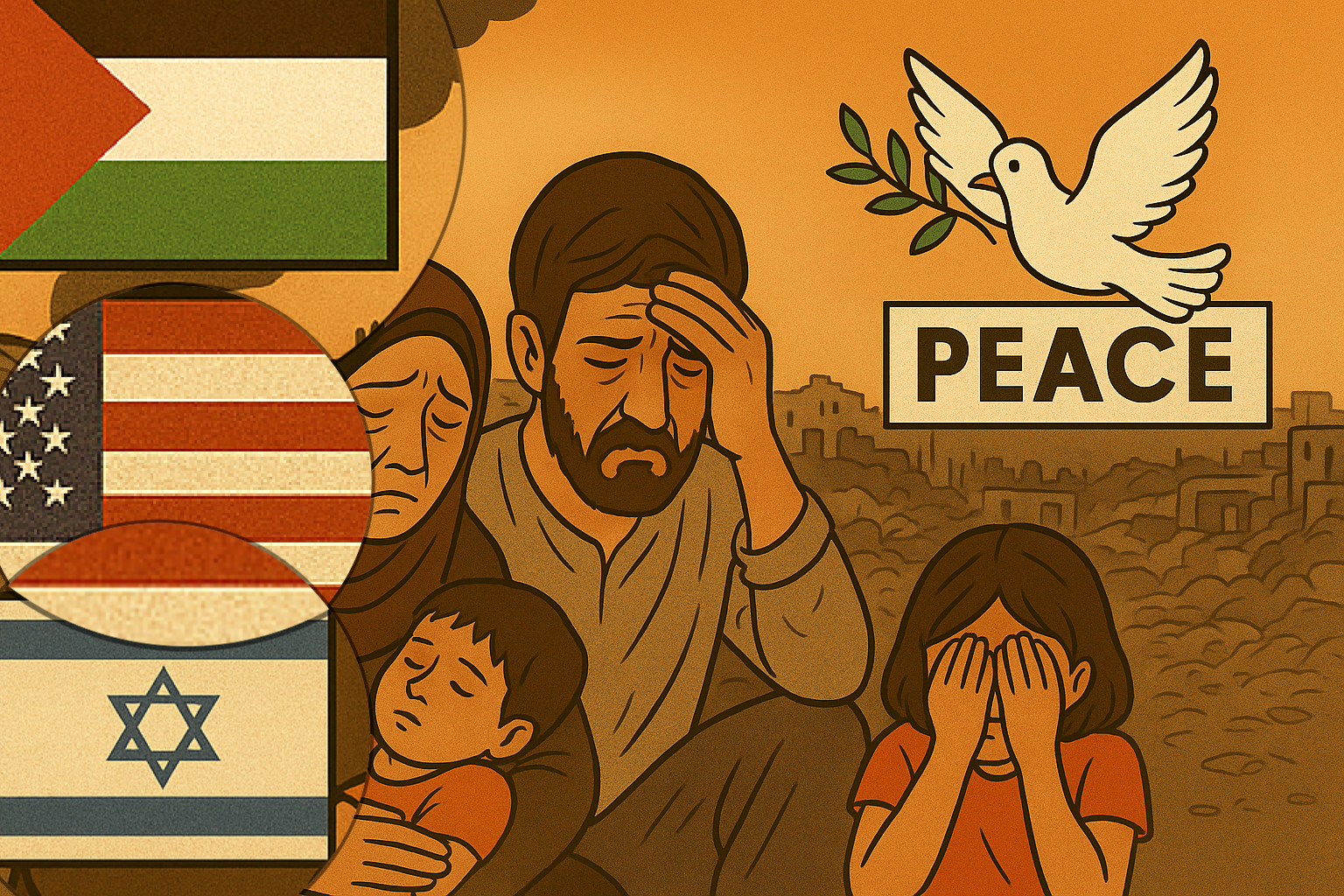
Needless to say, for the muslim and majority non muslim countries, the humanitarian dimension remains most urgent. Gaza’s devastation has left innocent civilians especially women and children enduring displacement, loss of livelihood, and restricted access to healthcare. Yet the plan’s emphasis on governance and economic incentives does little to address immediate humanitarian needs. Recent restrictions on aid convoys, alongside limited international condemnation, underscore the gap between rhetorical concern and genuine defence of civilian protection.
Recognition of peace through economic opportunity and regional cooperation remains essential, yet without guarantees of dignity, rights, and sovereignty, such measures may look transactional rather than transformative. Trump’s plan, while presented as an opportunity, ultimately illustrates the difficulty of forging peace without full participation. Until negotiations are anchored in justice, equality and legitimate aspirations, peace will stay aspirational. What is required is not a blueprint designed for political optics but a sustained, inclusive process capable of transforming conflict into coexistence. It is, however, a matter of relief that Israeli bombardments are expected to cease, raising hopes that innocent children, women and men may finally be spared further bloodshed.
The writer is a Chevening Scholar and development practitioner with extensive experience in governance, gender equality, and humanitarian response, having worked with the UN and international NGOs.