Haroon Shuaib
For many consumers, choosing a beverage is an ordinary decision. Yet in Pakistan’s growing informal market, it can also be a decision with serious consequences for their health.
Recent enforcement operations across Pakistan have exposed the disturbing scale of the country’s counterfeit and substandard beverage market. In March, the Punjab Food Authority uncovered a facility in Lahore where approximately 15,000 litres of counterfeit cold drinks were reportedly being prepared for sale around Eid.
The operation also recovered chemical mixtures, empty bottles and machinery used to manufacture and package beverages resembling well-known brands. Weeks later, another consignment of counterfeit soft drinks was intercepted in Attock, where laboratory testing found that the products failed to meet prescribed safety and quality standards.
These are not isolated trademark violations. They represent a direct threat to public health.
Counterfeit beverages are often manufactured outside regulated facilities, without reliable oversight of ingredients, water quality, hygiene, storage or expiry dates.
Consumers may have no way of knowing what chemicals, colors or sweeteners have been used, whether bottles have been safely cleaned, or whether the product has undergone any quality testing. The consequences can range from stomach infections and food poisoning to more serious health complications, particularly for children and other vulnerable consumers.
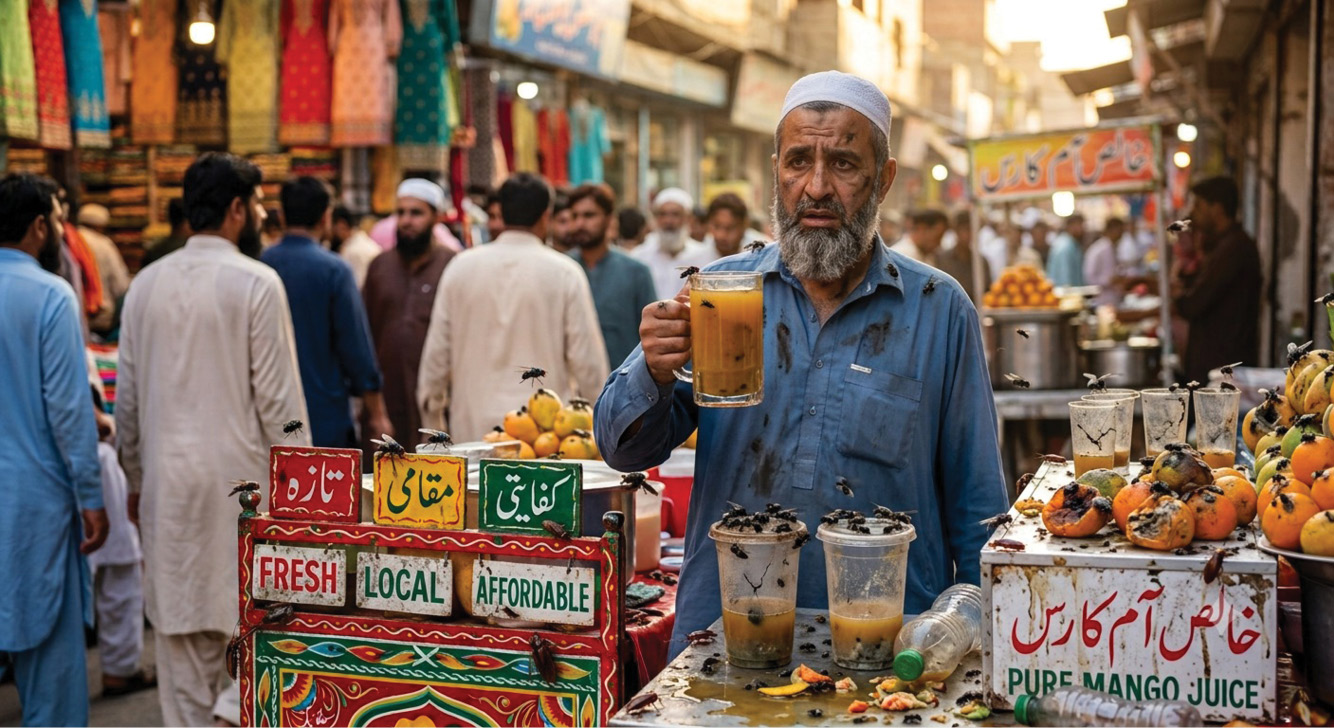
The risk extends beyond products disguised as famous brands. In April, authorities seized 3,744 litres of substandard juice from a manufacturing unit in Lahore after identifying regulatory and food-safety violations. Such incidents reveal a broader informal market in which low prices can come at the expense of basic safeguards.
Enforcement is essential, but raids alone cannot address the economic conditions that allow this market to thrive. Pakistan must also examine how taxation affects consumer choices. Regulated beverage manufacturers operate within documented supply chains, pay taxes and invest in quality control, approved ingredients, hygienic production and traceability.
When substantial taxes are added to their products, brands such as Coca-Cola, Pepsi and Nestlé become more expensive for ordinary consumers. Informal and counterfeit producers, meanwhile, evade these costs along with the standards that legitimate manufacturers are required to meet.
For households already struggling with inflation, the difference of even a few rupees can influence a purchase. Consumers may turn to cheaper, unfamiliar or loosely packaged alternatives without fully understanding the associated risks.
High taxation does not create counterfeit products, but it can widen the price gap that makes the informal market more competitive. A tax policy intended to advance public health must therefore be careful not to make properly regulated products less accessible while unsafe alternatives remain widely available.
Pakistan needs a coordinated response combining stronger market surveillance, meaningful penalties, consumer awareness and a more balanced tax structure.
Tax policy should distinguish among products according to their composition and nutritional profile while ensuring that compliant manufacturers are not placed at an overwhelming disadvantage against untaxed operators.
A recent policy discussion hosted by SDPI similarly called for a more nuanced approach to beverage taxation, particularly for juices with higher fruit content and little or no added sugar.
The cheapest beverage on the shelf may ultimately carry the highest cost. Protecting consumers requires not only shutting down illegal factories, but also building a market in which safety, quality and affordability can coexist.