DLP Report
PESHAWAR
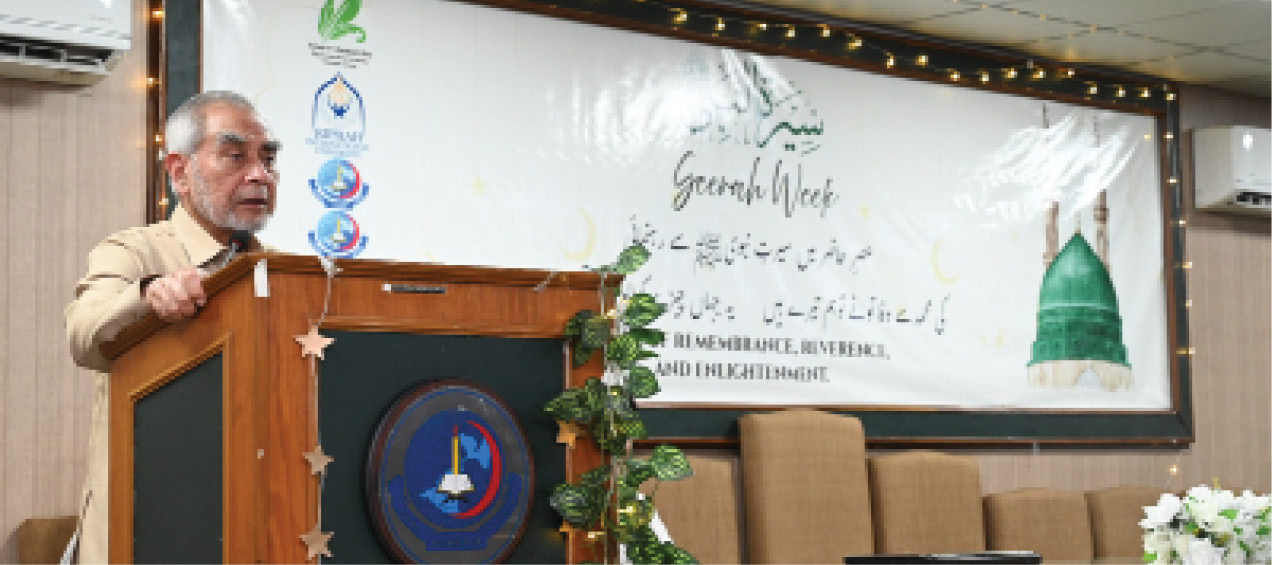
The week-long Seerat-un-Nabi activities organised by the Literary Society of Peshawar Medical College (PMC) concluded here on Thursday with a ceremony in which 263 students from 43 educational institutions participated in various competitions aimed at promoting understanding of the life and teachings of the Holy Prophet Muhammad.
Professor Dr Anees Ahmad, Vice Chancellor of Riphah International University, Islamabad, was the chief guest at the concluding ceremony and distributed prizes among the winners.
The winners of the English and Urdu Seerat competitions were awarded cash prizes of Rs100,000, Rs75,000 and Rs50,000 for the first, second and third positions, respectively. Prizes were also distributed among successful participants in other competitions.
Speaking at the ceremony, Prof Dr Anees Ahmad said the study of Seerat-un-Nabi should not be treated merely as a historical account but as a practical and living source of guidance for confronting the challenges of the contemporary world.
He said the life of the Holy Prophet represented the most comprehensive practical manifestation of the teachings of the Holy Quran and embodied mercy for all humanity.
The chief guest said Seerat-un-Nabi offered timeless lessons in determination, perseverance, courage, hope and reliance on Allah Almighty. These values, he added, were particularly relevant at a time when individuals and societies faced uncertainty, despair, conflict and a crisis of values.
Prof Dr Anees appreciated PMC for organising Seerat Week and suggested that similar initiatives should be replicated by educational institutions across the country.
He stressed that love and reverence for the Holy Prophet should go beyond speeches and expressions of devotion and be reflected in personal character, conduct, relationships and service to others.
He also proposed that Seerat-related activities be made a regular feature of the annual academic calendar so that the positive spirit generated by the week-long programme could be sustained.
Prof Dr Anees further called upon educational institutions, particularly those working with young people, to make Seerat-un-Nabi an integral part of character-building and leadership development.