Anjum Nisar calls for urgent reforms to strengthen agriculture and ensure food security
ISLAMABAD
The Businessmen Panel (BMP) of the Federation of Pakistan Chambers of Commerce and Industry has voiced serious concern over the sharp increase in Pakistan’s food import bill and the steep decline in exports of agricultural commodities, urging the government to take immediate and comprehensive steps to reverse the trend.
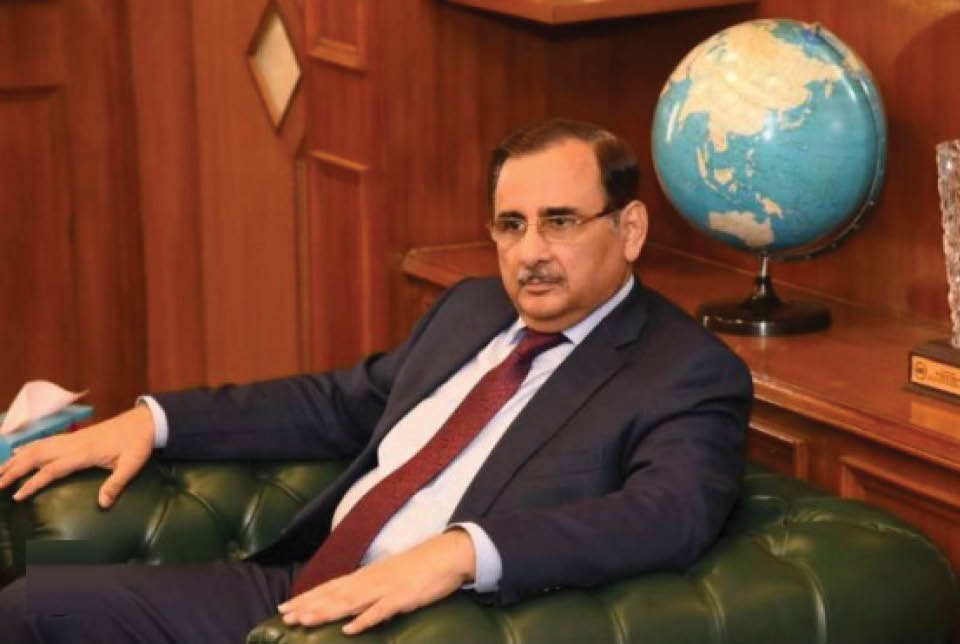
In a detailed statement, BMP Chairman and former FPCCI President Mian Anjum Nisar said that the latest figures reflect structural weaknesses in the country’s agricultural sector and highlight the urgent need for policy reforms, investment, and modernisation to restore balance in the food economy.
He noted that Pakistan’s food import bill has surged to $7.09 billion during the first nine months of the current fiscal year, registering a significant increase compared to the same period last year.
At the same time, exports of raw food items have dropped sharply to $3.80 billion, reflecting a contraction of nearly one-third. This widening gap, he said, is a matter of serious concern for both economic stability and food security.
Mian Anjum Nisar pointed out that the surge in imports is largely driven by increased purchases of essential commodities such as sugar, palm oil, pulses, and tea. He observed that while such imports may provide temporary relief in stabilising domestic prices and addressing shortages, they place additional pressure on the country’s foreign exchange reserves and increase dependence on global markets.
“The reliance on imported food items is rising at an alarming pace,” he said. “This trend is not sustainable and exposes the economy to external shocks, especially in times of global uncertainty and price volatility.”
He emphasised that the extraordinary increase in sugar imports is particularly concerning, as it reflects serious inefficiencies in domestic production, planning, and supply chain management.
Similarly, the continued rise in palm oil imports indicates a growing dependence on external sources for edible oil requirements, despite Pakistan’s potential to enhance local production.
On the export side, the BMP chairman expressed deep concern over the broad-based decline in key agricultural exports, including rice, vegetables, and spices. He noted that rice exports, both basmati and non-basmati, have witnessed a sharp drop, undermining one of Pakistan’s traditionally strong export sectors.
“The decline in rice exports is a major setback,” he said. “It not only affects foreign exchange earnings but also signals a loss of competitiveness in international markets.”
Mian Anjum Nisar added that vegetable exports have also fallen drastically, while other sectors such as tobacco and spices have recorded declines. Although some categories like meat, fruits, and fish have shown modest growth, these gains are not sufficient to offset the overall decline in exports.
He attributed the worsening situation to a combination of factors, including low agricultural productivity, outdated farming techniques, inadequate storage and transportation facilities, rising input costs, and the impact of climate change. He said that these challenges have reduced output quality and quantity, making it difficult for Pakistani products to compete globally.
The BMP chairman stressed that Pakistan must prioritise agricultural reform as a cornerstone of economic policy. He called for the introduction of modern farming practices, improved irrigation systems, and better access to high-quality seeds, fertilisers, and machinery for farmers.
“We need to shift from traditional methods to modern, technology-driven agriculture,” he said. “This is essential to increase yields, improve quality, and reduce production costs.”
He also highlighted the importance of strengthening the supply chain, including storage, processing, and transportation infrastructure, to minimise post-harvest losses and ensure timely delivery of goods to markets.
Mian Anjum Nisar further emphasised the need for value addition in the agriculture sector. He said that instead of exporting raw commodities, Pakistan should focus on developing food processing industries to enhance export value and create employment opportunities.
“Value addition can significantly boost export earnings and make our products more competitive,” he said. “It is an area that requires immediate attention and investment.”
In addition, he urged the government to ensure policy consistency and provide incentives to encourage private sector participation in agriculture and agribusiness.
He noted that uncertainty and frequent policy changes have discouraged investment and hindered long-term planning.
The BMP chairman also called for improved coordination between federal and provincial governments to implement a unified strategy for agricultural development. He stressed that collaborative efforts are essential to address the challenges facing the sector and achieve sustainable growth.
He further suggested that Pakistan should actively explore new export markets and strengthen trade relations with existing partners to increase demand for its agricultural products. Trade facilitation measures, improved quality standards, and better marketing strategies, he said, can help regain lost ground in international markets.
While acknowledging the government’s efforts to stabilise domestic food markets through imports, Mian Anjum Nisar reiterated that such measures should only be temporary and accompanied by long-term strategies to enhance self-sufficiency.
“Imports can provide short-term relief, but they cannot replace a strong domestic production system,” he said. “We must focus on building resilience within our own economy.”