DLP Report
PESHAWAR
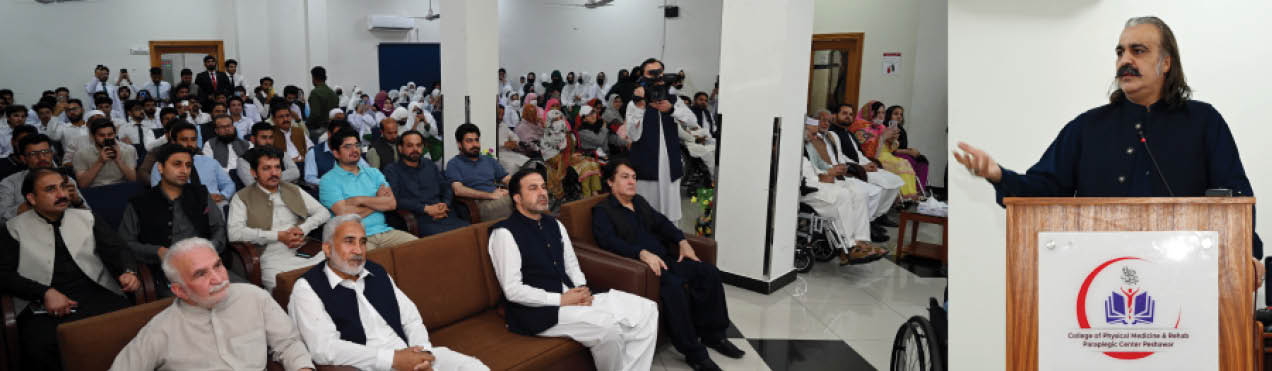
Khyber Pakhtunkhwa Chief Minister Ali Amin Khan Gandapur on Wednesday visited the Paraplegic Center Peshawar, where he announced a special grant of Rs 50 million and significant enhancements in funding and facilities for the rehabilitation center.
Accompanied by provincial cabinet members Barrister Muhammad Ali Saif, Ehtisham Ali, and Humayun Khan, the Chief Minister took a detailed briefing from officials regarding the center’s operations, available facilities, and the challenges faced in providing treatment and care to patients.
During the visit, CM Gandapur toured various sections of the Paraplegic Center and reviewed the medical and rehabilitation services provided to patients. Expressing satisfaction with the work being done, he announced that the center’s annual regular grant would be increased from Rs 300 million to Rs 400 million in the upcoming provincial budget.
He also instructed the immediate release of the remaining Rs 75 million from the center’s current annual grant and announced that essential treatment facilities offered at the Paraplegic Center would be included under the Sehat Card Plus program. Furthermore, he directed authorities to ensure prompt payment for the land acquired for the center’s expansion.
“The Paraplegic Center is a unique and vital institution for the rehabilitation of persons with disabilities, and the provincial government is committed to supporting it in every possible way,” the Chief Minister stated. He added that the facility would be expanded to 500 beds to meet growing demands.
In a broader healthcare initiative, CM Gandapur also revealed that kidney, liver, and bone marrow transplants, as well as implant procedures, have been added to the Sehat Card to reduce the financial burden on citizens. In the next phase, treatment and rehabilitation for thalassemia patients and drug addicts will also be included in the health coverage scheme.
The Chief Minister expressed special gratitude to philanthropists and social welfare organizations supporting the center and emphasized the importance of collective responsibility in uplifting people with disabilities.
“Disability should never be seen as a limitation. We must serve these individuals wholeheartedly, and with a collective spirit of compassion and service, we can achieve real progress,” he said.