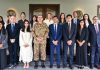
Pakistan-Denmark green energy cooperation
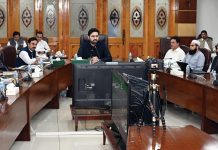
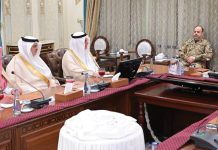
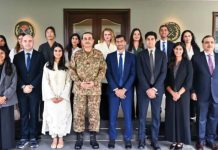
A team of the Danish experts in energy sector held a two-day workshop and training sessions with the Pakistani officials from power and energy sectors to support the country’s transition to green and clean energy.
Since Pakistan has adopted an ambitious policy for Alternative and Renewable Energy (ARE) to transform its energy sector and generate 60% of all energy through clean and renewable sources by 2030, Denmark, which is a global leader in green energy has entered into a collaboration with Pakistan and the country’s experts will are exchanging relevant technical knowledge and the Danish authorities are providing technical assistance under the Danish Energy Transition Initiative (DETI).
The collaboration was formally agreed and signed on 14 July 2021 by Energt Minister Hammad Azhar and Denmark Ambassador Lis Rosenholm in the presence of several high-level civil servants from relevant Pakistani and Danish energy.
Lead Pakistan interviewed Danish and Pakistani experts (from Denmark side) Director, Global Cooperation, Danish Energy Agency (DEA) Mr Anton Beck, Country Manager, Global Cooperation, DEA, Mr Nadeem Niwaz, Deputy Head of Mission (DHM), Royal Danish Embassy
DHM, Mr Simon Kjeldsen, (from Pakistan’s side), CEO, Alternative Energy Development Board (AEDB) Mr Shah Jehan Mirza, Managing Director (MD) National Energy Efficiency and Conservation Authority (NEECA) Dr Sardar Mohazzam and Deputy Director National Transmission & Despatch Company (NTDC) Muhammad Adil and tried to learn about this latest cooperation between Denmark and Pakistan and its impact on country’s economy and energy sector.
Anton Beck while highlighting various projects successfully executed by DEA in around 19 countries of the world said DEA looked forward to supporting the high ambitious Renewable Energy (RE) targets for Pakistan based on Danish experiences during decades.
Giving an example, he said almost 50% of the total Danish power system is based on wind power and at the same time the Danish security of supply in the power sector has been stable at 99.997 percent, which corresponds to an average Danish consumer being without electricity for around 40 minutes a years; and in practice many consumers never experience an outage during the course of a year.
About the present cooperation with Pakistan, he said we had a very good dialogue since last year with Pakistan energy authorities and jointly identified three prioritized areas: Energy planning and modelling, flexibility in the power sector to avoid curtailment of wind and solar production and energy efficiency in energy intensive industry.
About Pakistan’s RE targets, he said the targets for 2030 were definitely very ambitious but a newly-published World Bank study showed the targets could be met in a cost-efficient way. “We are happy to share the Danish experiences to support the green transition of Pakistan energy sector,” said Anton Beck.
Mr Nadeem Niwaz who is also special adviser to DEA while responding to a question held the new exclusive collaboration (DETI) aimed at assisting and providing the Technical Advice (TA) which is needed to implement the policy and green transition in Pakistan.
Mr Nadeem Niwaz was also of the view that the Pakistan’s renewable energy targets were achievable on the conditions that stabile regulatory frameworks were in place and implemented as well as the necessary investments are made.
However, Pakistan has to act now in order to reach both the short term and long term renewable energy targets (e.g. 20% in 2025 and 30% in 2030), he said.
From the Danish side, we will conduct multiple technical missions where we will provide technical advise to the Pakistani Energy Authorities in the above mentioned areas, he said.
This will make a great platform for knowledge-sharing and learning from our experiences within green transition.
About cooperation with Pakistan, he said we would start with some introductory training workshops followed by a study tour to Denmark in the middle to show some of the Danish core energy competencies in renewable energy and energy efficiency in practice.
We also expect events around the missions to further enhance ties in relation to green tech and the financial as well as commercial side where Denmark also has a lot of high-quality solutions to offer. And then we will end with a final high-level reporting workshop/meetings summarizing the main findings of the project.
Shah Jehan Mirza was of the view Pakistan had a huge potential of RE from wind and solar which could supplement the thermal power and hydro power in the country.
For many years now wind and solar has been more cost-effective compared to new coal power plants, meaning consumers may receive cheaper electricity prices in addition to the obvious environmental benefits, he said.
Dr Sardar Mohazzam was of the view that from a socio-economic perspective there were also huge environmental benefits by replacing coal power with renewables leading to less air pollution in the cities and reducing health issues.
“Let me add, that the benefits from this kind of cooperation will not only be for Pakistan and Denmark, but also for the world and future generations,” he said.