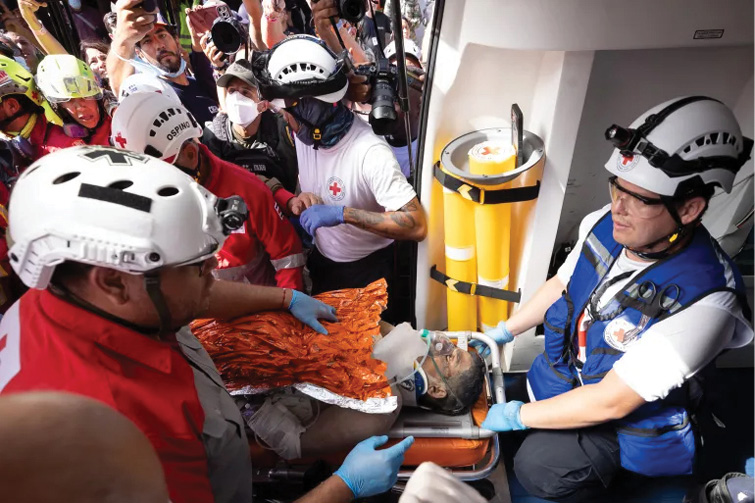
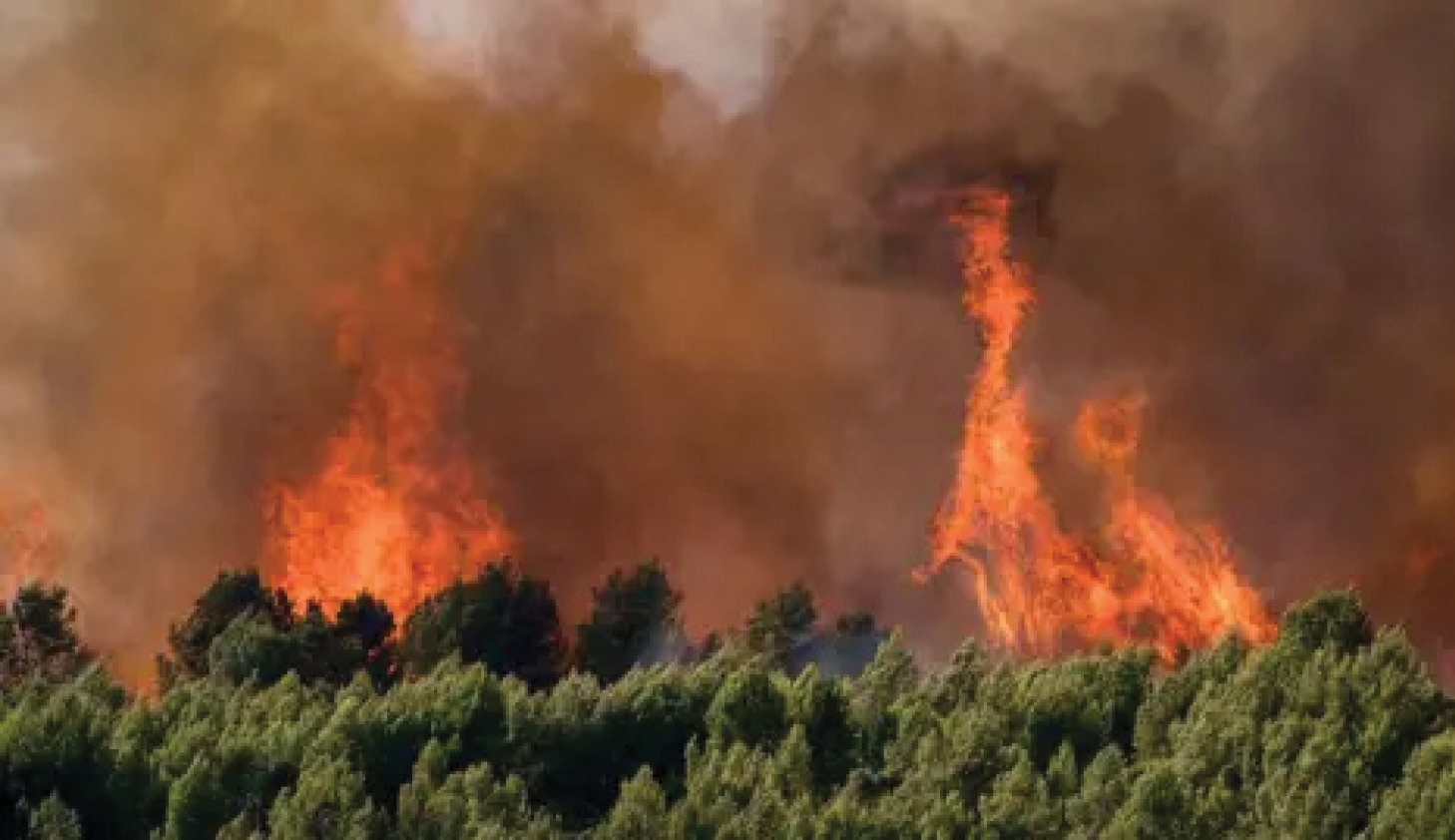
Karachi’s Gul Plaza blaze has become an unthinkable tragedy: more than 21 dead, scores still missing, hundreds of livelihoods erased, as the gutted walls of a decades-old commercial block stand as sombre testimony to deeper failings. The fire started late Saturday night and blazed for more than 24 hours in a complex of roughly 1,200 shops, trapping people as smoke and heat overwhelmed interior spaces. Rescue workers have warned that unstable structures and debris continue to hinder search efforts as families wait for news of loved ones.
In the upper house of Parliament, Senator Sherry Rehman urged colleagues not to “politicise” the fire, urging colleagues to treat it as a collective lesson, asking that no fingers be pointed. Such restraint is understandable in a moment of collective shock. And yet the most political act after such a calamity is to ask what structural reforms will prevent the next one: To treat those questions as somehow improper is to consign Pakistan’s cities to repeat the same cycles of loss.
Karachi is not an outlier. It is a prism through which the nation’s policy vacuum on urban safety becomes visible. Experts have long warned that roughly 70 to 80 per cent of residential, commercial and industrial buildings lack adequate fire safety arrangements, including basic fire exits, alarms and emergency response protocols. Many structures rely on outdated wiring and have limited ventilation, making short-circuits and rapid smoke buildup deadly.Pakistan Travel Guide
Fires have erupted across residential, commercial and industrial sites (from blazes consuming huts near Gulistan-i-Jauhar to warehouse and container terminal fires), and the city has seen these conflagrations occur regularly over recent years. Despite this frequency and scale, accountability has remained elusive; investigations rarely conclude, and recommendations are seldom implemented, leaving hazards unaddressed and citizens vulnerable to repeated tragedy.
Pakistan’s fire safety regulations exist, but enforcement is weak and fragmented across agencies. Commercial buildings are supposed to have fire detection systems, emergency exits and regular inspections. Many do not. Statutes obliging routine drills and certifications are seldom enforced, and the absence of a national incident reporting and accountability regime means that data gaps persist, weakening any case for evidence-based reform. This is not about assigning political blame to one government at a single moment; it is about recognising that patterns of avoidable urban catastrophes have emerged across cities and years.
If Pakistan’s urban centres are to bear the economic and demographic weight of the future–rising populations, expanding commercial districts, intensifying industrial activity–then complacency is no longer an option. Effective fire safety demands both robust legislation at the national level and the political will to enforce it uniformly across provinces and cities. It also demands transparent data, independent audits, and a culture where compliance isn’t an afterthought but a governance priority rooted in law, enforced by institutions, and embraced by citizens.