Afghanistan moot
FMs of neighboring states call for Afghan reconciliation
TUNXI
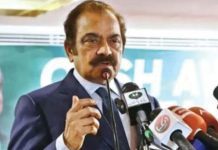
Pakistan on Thursday has called for assisting Afghanistan to stand on its own feet. Addressing the third meeting of Neighbouring Countries of Afghanistan Foreign Minister (FM) Shah Mahmood Qureshi said there is a historic opportunity after forty years of conflict to finally establish sustainable peace in Afghanistan. The process could be consolidated by working together in a constructive partnership. Shah Mahmood Qureshi also said beyond the immediate humanitarian question, we need to think of long term economic sustainability and development. The lives of the ordinary Afghans will not improve until the wheels of commerce and industry are allowed to spin.
The Foreign Minister said only a viable and prosperous Afghanistan in the long run will serve as a trade and energy corridor for the entire region. He therefore stressed that promotion of regional connectivity and energy projects in Afghanistan should remain the cherished goals. He underlined that the frozen Afghan foreign bank reserves belong to the Afghan nation and their utilization should be the sovereign decision of Afghanistan. We will continue to support Afghanistan’s access to its frozen assets so that these precious resources can be utilized for the welfare of Afghans.
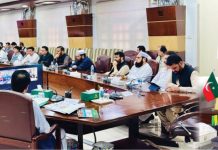
The foreign ministers of the Afghanistan’s neighboring countries Thursday reiterated their call for national reconciliation in Afghanistan through dialogue and negotiation besides the steps for ensuring women’s rights and children’s education. Foreign Ministers’ Meeting among the Neighboring Countries of Afghanistan was held in Tunxi, Anhui Province in China. The third
The foreign ministers or senior representatives of seven countries, namely China, Iran, Pakistan, Russia, Tajikistan, Turkmenistan and Uzbekistan, attended the meeting. The participants called for establishing a broad-based and inclusive political structure, adopt moderate and sound domestic and foreign policies, and grow friendly relations with all countries, especially its neighbors.
They also emphasized the necessity for all sides to strengthen dialogue and communication with Afghanistan for the above purposes. The meeting called for further actions to be taken to improve people’s livelihood, safeguard the fundamental rights of all Afghans, including ethnic groups, women and children. Chinese President Xi Jinping sent a congratulatory message to the meeting. The UN Secretary-General Antonio Guterres delivered remarks via video link. The participants reaffirmed respect for the independence, sovereignty, territorial integrity and national unity of Afghanistan, support for the Afghan people and the basic principle of “Afghan-led and Afghan-owned”.
They urged the countries mainly responsible for the current predicament in Afghanistan to earnestly fulfill commitments on the economic recovery and future development of Afghanistan. They believed that a peaceful, stable and prosperous Afghanistan served the common interests of regional countries and Afghanistan. The foreign ministers’ meeting reaffirmed opposition to attempts at politicizing humanitarian assistance, and reiterated respect and support for the central role of Afghanistan in distributing and using the humanitarian assistance.
The participants expressed deep concern over the humanitarian situation, economic and livelihood plight in Afghanistan and announced readiness to provide further humanitarian assistance to the people of Afghanistan. They appreciated the support for the key role of the UN in providing humanitarian assistance to Afghanistan, and called on the international community in particular the UN agencies and relevant members of the UN Security Council to step up emergency humanitarian assistance to the people of Afghanistan. They expressed readiness to help Afghanistan enhance capacity in health care and COVID-19 containment.
Expressed support for Afghanistan’s efforts toward self-generated development, and undertook to support the economic recovery of Afghanistan at both bilateral and multilateral levels. They reaffirmed commitment to deepen cooperation within such frameworks as the Belt and Road Initiative, as well as regional cooperation organizations, and to include Afghanistan in the regional connectivity, energy and transport networks, economic and trade systems. Discussing the counter-terrorism strategy, the participants noted commitments and pledges made by Afghanistan to the international community that the territory of Afghanistan would not pose any threats to the neighboring countries and no place will be given to terrorist groups on the Afghan territory.