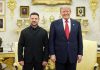
Trump and Putin’s meeting is always big news for the world, no matter how productive (or unproductive it remains). The Kremlin has hinted that Russian President Vladimir Putin and US President Donald Trump may meet again soon.
Moscow says the meeting could be organised quickly, just as their last summit in Alaska was set up at short notice. Trump himself has confirmed he plans to speak with Putin “very soon.” At the centre of these talks is the ongoing war in Ukraine.
Trump’s diplomacy has been uneven and unpredictable. On one day, he pushes for peace; on the next, he blames Europe for not doing enough.
Recently, he told reporters he wanted to talk to Putin again to decide “what we’re going to be doing.” But when asked if he would impose harsh sanctions if Putin keeps delaying peace, Trump avoided giving a straight answer.
Trump’s main message to Europe is clear: stop buying Russian oil. According to the White House, Europe bought fuel worth $1.1 billion from Russia in just one year – money that Trump says is funding Moscow’s war machine.
He also called on Europe to pressure China, accusing Beijing of supporting Russia’s war efforts. On the surface, Trump has a valid point. If European nations feel threatened by Russia, it seems contradictory that they continue to buy Russian energy.
Yet his position also carries contradictions. While urging Europe to confront China, Trump himself has avoided sanctioning Beijing. Trump wants Europe to carry the burden of isolating Russia and even China, while the US hesitates to take equally tough steps.
What emerges is a pattern: Trump speaks loudly but acts cautiously. His words raise expectations of a breakthrough, but his actions rarely follow.