ISLAMABAD
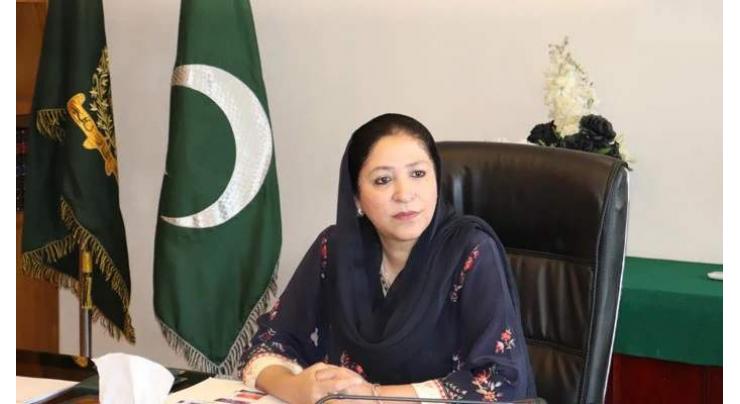
Minister of State for Federal Education & Professional Training Wajiha Qamar on Wednesday said the launch of HEC’ integrated automation suite “MAKTAB” marks a new era of digital efficiency and a game-changer for higher education, initially implemented in 25 public universities to enable hassle-free degree verification and streamlined academic management. In an exclusive interview with a local news channel, Minister of State Wajiha Qamar described the launch of HEC’ s integrated automation suite “MAKTAB” as a revolutionary step in higher education.
She said the initiative, initially launched in 25 public universities, is aimed at ensuring hassle-free degree verification, boosting academic efficiency, and modernizing university administration, with plans to gradually expand across all public universities nationwide. Calling it a pioneering initiative under the government’s reform agenda, the minister emphasized that MAKTAB will bring transparency, secure faculty data and streamlined governance to universities, she added.
“This transformative platform is aimed at digitizing our education ecosystem, ensuring reliable academic records, and simplifying processes for students and staff alike,” she highlighted. The minister highlighted that the suite will not only reduce bureaucratic delays but also strengthen the credibility, accountability and operational efficiency of Pakistan’s higher education sector.
Responding to a query, she said that under MAKTAB, all student-related records including challans, fees, degree verification and attestations will be fully digitalized, making academic processes faster and more transparent.
She added that teachers’ pay slips, as well as administrative data such as procurement and furniture purchases, will also be maintained digitally, ensuring efficient management, accountability, and streamlined record-keeping across universities.
Responding to another query, she assured that the system will provide real-time data updates, ensuring all academic and administrative records remain current. She added that while the platform is initially focused on new students, the records of existing students will gradually be integrated, creating a comprehensive digital database for all university students. — DNA