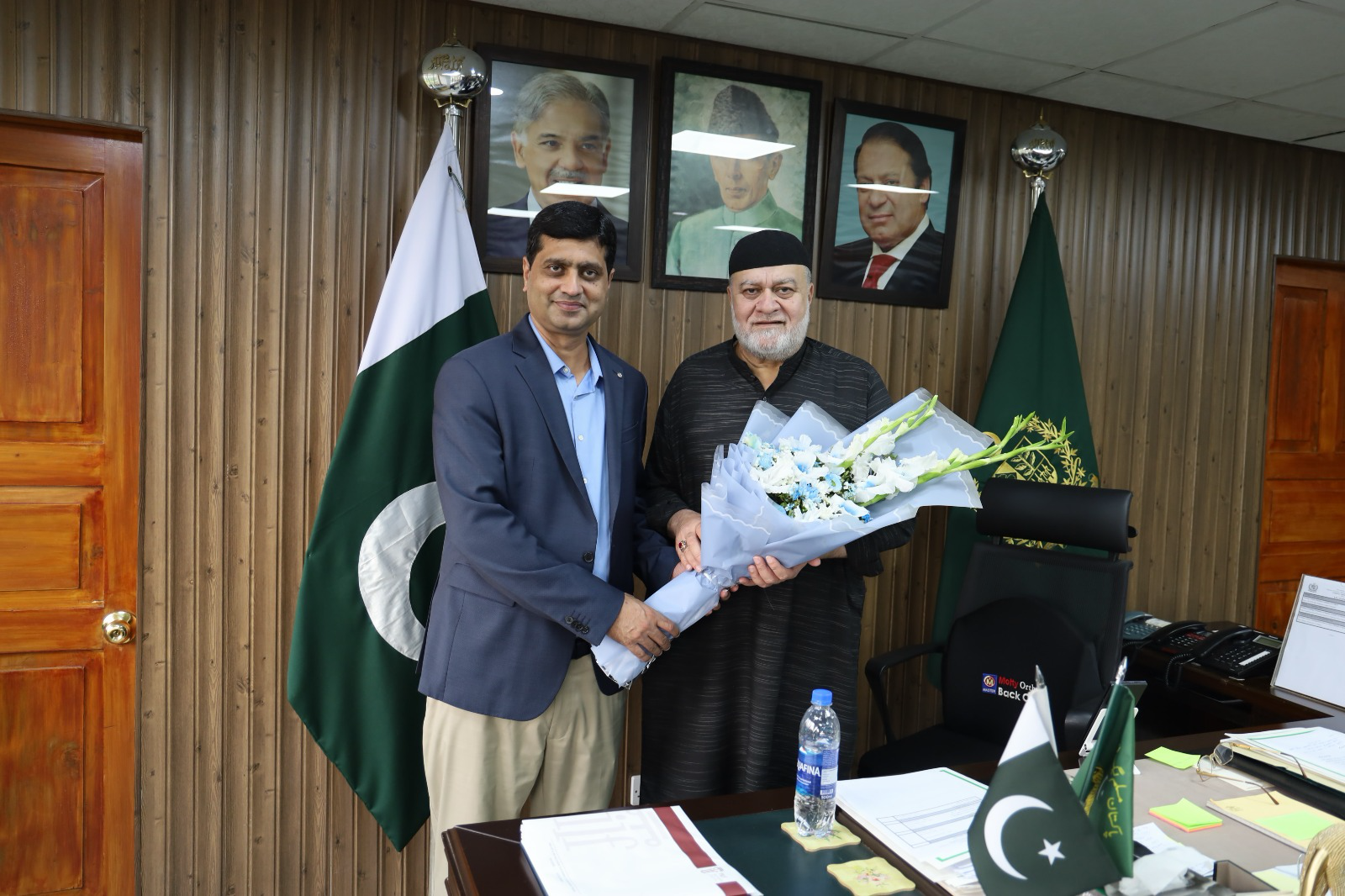
ISLAMABAD: Federal Minister for Poverty Alleviation and Social Safety Syed Imran Ahmad Shah met with Vice Chancellor, National Skills University (NSU) Islamabad, Prof. Dr. Saud Altaf, during the latter’s visit to the Ministry of Poverty Alleviation and Social Safety. The meeting focused on strengthening linkages between social protection, skills development, employability, and sustainable economic empowerment of youth and vulnerable segments of society.
Federal Minister Syed Imran Ahmad Shah highlighted the Government’s commitment to protecting vulnerable and underprivileged communities and stressed that sustainable poverty alleviation requires creating opportunities that enable people to become economically productive and self-reliant. He emphasized the importance of education, skills development, and employability-oriented interventions in complementing social protection initiatives and creating long-term pathways towards improved livelihoods.
Prof. Dr. Saud Altaf highlighted the critical role of National Skills University in equipping youth with market-driven, industry-relevant, and emerging technology skills. He emphasized that skills development can serve as an effective bridge between social assistance and economic self-reliance, enabling individuals from low-income and deserving families to progress from beneficiaries of social support to skilled professionals, entrepreneurs and productive contributors to the national economy.
The Vice Chancellor further underscored the potential for developing targeted initiatives in digital skills, emerging technologies, entrepreneurship, vocational and technical training, and employment-oriented short courses for deserving youth. He stated that NSU is committed to supporting national efforts aimed at transforming Pakistan’s demographic potential into a skilled and economically empowered workforce.
Both sides emphasized the importance of greater institutional collaboration to connect poverty alleviation with skills, employment and entrepreneurship, thereby creating sustainable livelihood opportunities and contributing to inclusive economic growth and a more skilled, empowered and self-reliant Pakistan.