BANFF, CANADA
Talks among G7 finance ministers faced challenges Wednesday as the group worked to overcome divides on thorny issues like the impact of US President Donald Trump’s tariffs and support for Ukraine.
With discussions set to close Thursday, hopes for a final communique reflecting unity among the Group of Seven advanced economies remained uncertain, as tensions persist on Trump’s trade policies.
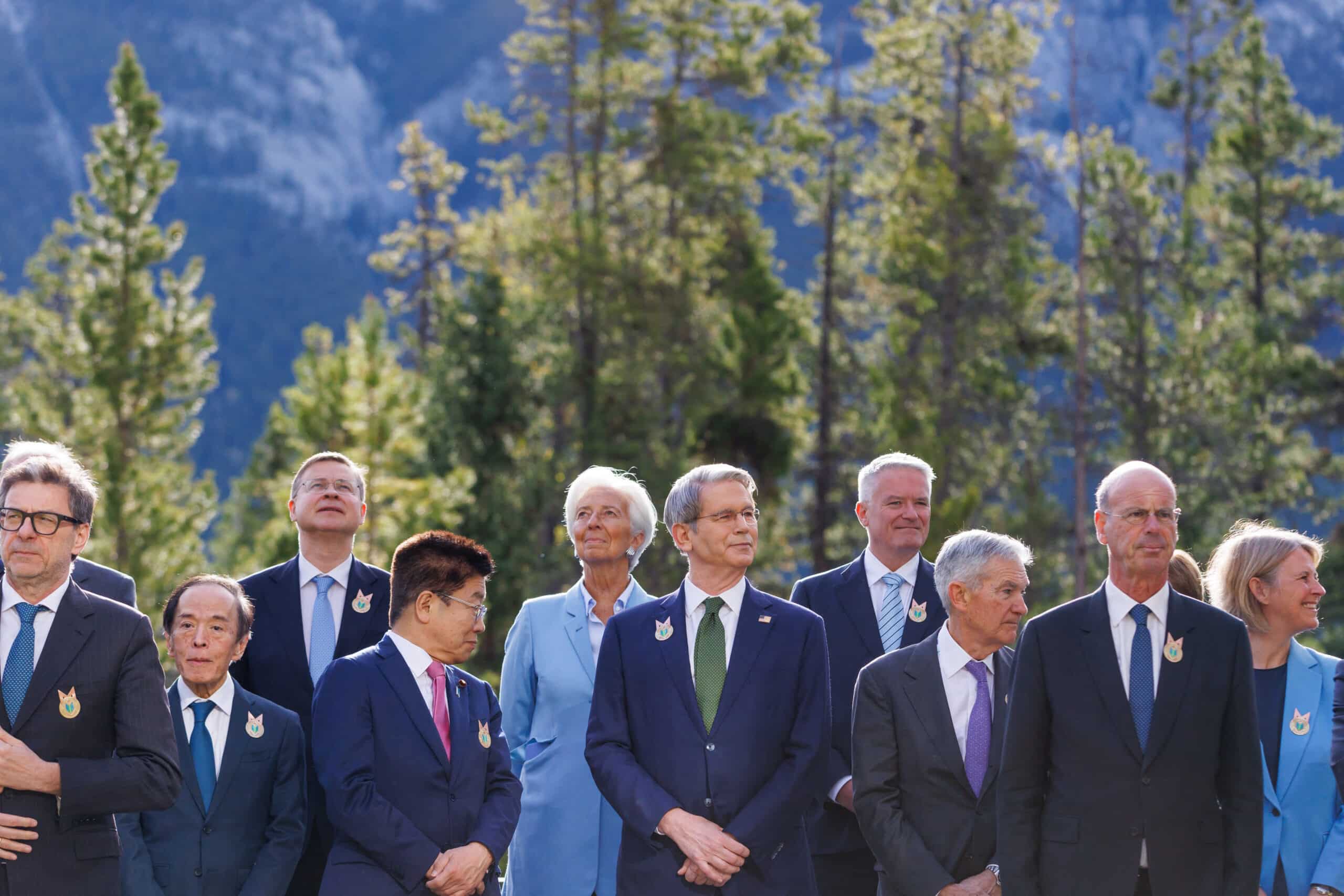
The day began with an exchange of pleasantries and the traditional group photo in front of snow-capped mountains at a hotel in western Canada’s Banff National Park. But friction among the group — comprising Britain, Canada, France, Germany, Italy, Japan and the United States — emerged shortly after meetings began. Italian Finance Minister Giancarlo Giorgetti said the start of the talks faced “some difficulties.” But he added that the group was “able to overcome these differences,” and voiced hope a final statement reflecting G7 unity could be reached.
Few concrete details emerged from Wednesday’s talks but US Treasury Secretary Scott Bessent had been expected to face pushback on Trump’s tariffs, which threaten to drag down global economic growth. Bessent described Wednesday’s talks as “very productive.”
The meeting’s host, Canadian Finance Minister Francois-Philippe Champagne, declined to say whether he raised the issue of tariffs in his bilateral meeting with Bessent, but insisted the pair “get along very well.”
Asked about friction in the talks, Champagne said: “That’s why we have meetings, we have frank discussions.””We’re both pleased about the progress we’re making and the sense of unity of the G7,” Champagne told reporters. Japanese Finance Minister Katsunobu Kato told reporters that during his meeting with Bessent, he affirmed that US tariffs were “extremely regrettable” and “not always an appropriate measure to adjust trade imbalances.” Trump has repeatedly complained about US trade deficits, and at times implied his global tariffs were partly aimed at balancing US exports and imports.