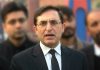
Information Minister Marriyum Aurangzeb announced on Thursday that the government has imposed a ban on the import of all non-essential luxury items under an “emergency economic plan”.
She made the announcement while addressing a press conference in Islamabad. Shortly after, Prime Minister Shehbaz Sharif took to Twitter to say that the decision would “save the country precious foreign exchange”.
“We will practice austerity and financially stronger people must lead in this effort so that the less privileged among us do not have to bear this burden inflicted on them by the PTI government,” he said, adding that the nation would overcome these challenges with “resolve and determination”.
The government’s decision comes as the dollar has witnessed a meteoric rise against the rupee over the past few weeks on account of the country’s rising import bill, growing current account deficit and depleting foreign exchange reserves. On Thursday, the dollar shattered all records and soared to Rs200 in the interbank market.
During her press conference, the information minister assured the nation that PM Shehbaz was “working day and night to stabilise the economy”.
Aurangzeb said that in light of this, it was decided to impose a ban on the import of all non-essential luxury items. “These items are those which are not in use of the general public,” she said as she identified imported vehicles as one such item.
List of banned items
Cars
Mobile phones
Dry fruits
Home appliances
Crockery
Private weapons
Shoes
Decoration items
Doors and window frames
Sauces
Frozen meat
Fruits
Carpets
Tissue paper
Furniture
Make-up
Chocolates, confectionary items
Shampoos
Sunglasses
Cigarettes
Musical instruments
She declared that it was “an emergency situation” and Pakistanis would have to make sacrifices under the economic plan, adding that the impact of this measures would be around $6 billion.
She also said that import orders where the letter of credit had been opened or where payment had been made would be processed but no further ones would be placed.
“We will have to reduce our dependency on imports,” she said, adding that the government was now focusing on exports. The minister said that under the government’s economic plan, local industries would prosper while employment opportunities would also arise.
She went on to say that this would also have an impact on the current account deficit, adding that this step had been taken under an “emergency economic plan”. She said that a meeting would also be held later today on how to reduce the impact of energy prices on consumers.
Lashing out at the PTI, Aurangzeb said that former prime minister Imran Khan had put all the cases against his government on the backburner. She held the PTI government responsible for the exponential rise in inflation and for committing “economic terrorism”.
“He promised an unfunded [fuel] subsidy and played with the economy. He tried to trap the incoming government,” she claimed, adding that Imran was woefully unaware of the country’s economic problems.
Rejecting the PTI’s continuous calls for conducting early elections, the minister asserted that the government and its allies would make a decision in this regard, not the other way around. “It is our decision when to hold elections […] If you intended to hold elections, you would have done so before the no-trust motion was submitted.”
Aurangzeb maintained that only the current government could steer the country out of the current economic crisis. The prime minister is working on reducing inflation but such decisions require round-the-clock efforts, she said.
“We have the capacity and experience to fix the current economic issues. The step taken to ban imported items is aimed at stabilising the economy.”
Responding to a question, the minister also said that PM Shehbaz would address the nation in a day or two and “explain the entire situation”.